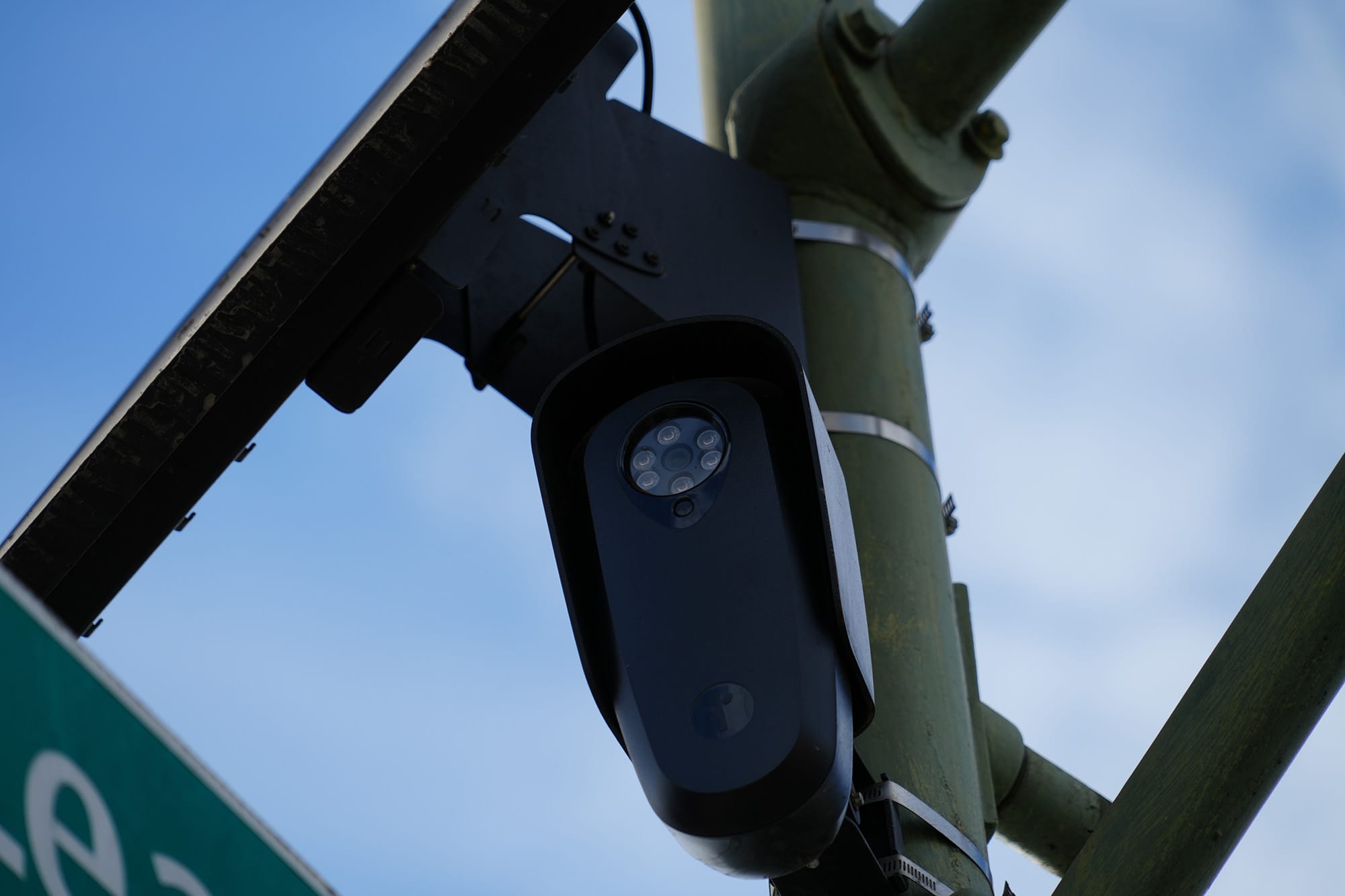

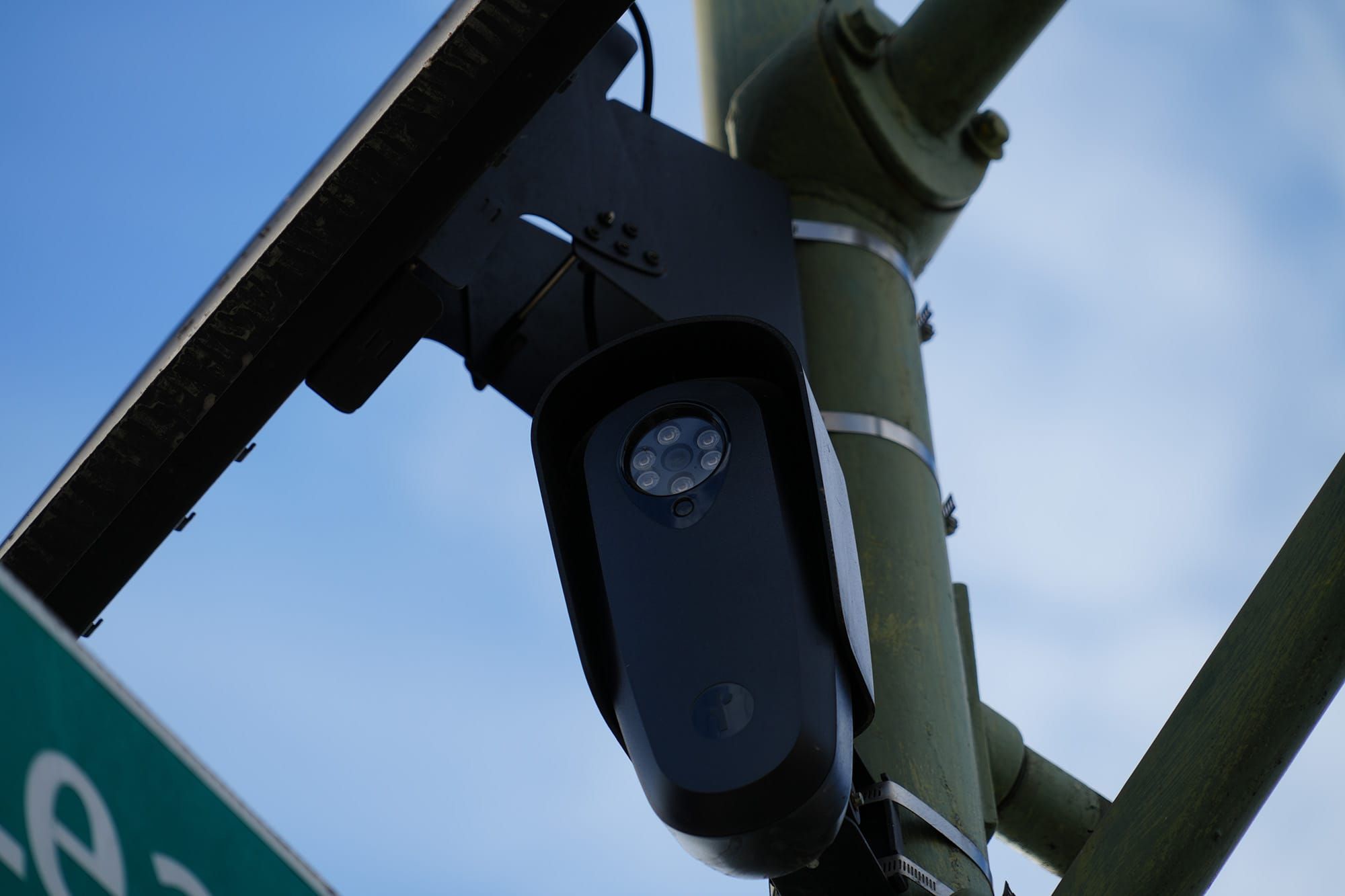
VALLEJO - Amid growing controversy over the use of Flock Safety surveillance technology, Vallejo’s Police Oversight and Accountability Commission heard from the police department on the policies guiding use of the tech on Thursday.
Vallejo Police Lt. Josh Caitham described the policies guiding placement and monitoring of surveillance equipment and the storage and release of data obtained using video surveillance, Automated License Plate Reader (ALPR) technology and Flock’s “Raven” gunshot detection technology.
The commission sought to gather information ahead of a joint meeting with the Surveillance Advisory Board next week to discuss the same policies, months after the City Council asked for a joint effort to make recommendations about the use and governance of the technology.
At least 20 cities in California and many more across the country have ended contracts and relationships with Flock. Vallejo officials have heard concerns over how the company’s data is accessed and stored by law enforcement officials and whether Flock enabled unlawful data-sharing between California law enforcement and out-of-state police and federal officials.
Caitham described how Flock technology has been used by the police department, including in different homicide investigations. For example, he said this year, Flock was used in five out of nine homicide investigations conducted between January and August, with three of those five resulting in an arrest. It was not clear if the Flock technologies used in all of those investigations were ALPR cameras or Raven detection equipment.
He noted that Flock is a privately-owned company and even if the city cannot under current state law share with agencies outside the state, Flock can share with others. “It is up to them who they share it with,” Caitham said.
In addition, out-of-state agencies which do not have the same data sharing restrictions as California can share their data freely with Vallejo, and have in the past for different investigations, he said. There are hundreds of outside agencies able to share with the city.
Asked by Commission Chair John Lewis about how much the department could track a person, Caitham said that, for example, if Lewis’s license plate number were placed on the hotlist, for 30 days the department could see and track every movement of his vehicle, including getting notifications about its location.
“It’s the same as if you put a GPS tracker on my car,” Lewis said.
Caitham said, “Yes, and we don’t do that without a warrant.”
The Vallejo Police Department currently conducts about 20,000 searches in Flock per year, Caitham said. It then conducts both internal and external audits of technology usage.
Lt. Jason Martinez, who oversees all audits in the Internal Affairs division, explained that internal audits involve randomly looking at different searches which police officers initiated by pulling three months of Flock Safety camera data and selecting 30 random individual searches at a time, to determine if use of the technology is in compliance with current policies.
During an internal audit, staff review whether an officer correctly tied a search to a particular case number and other pieces of information which are required, and any missing pieces are flags, Martinez said.
“If the red flags are there and I can’t justify it, we will initiate an internal investigation to go deeper into what may have occurred,” Martinez said.
He said in the most recent internal audit, “We didn’t find any policy issues. We found some documentation issues, but we’re attributing that to a training issue.”
Martinez’s division also handles external audits, which review how other agencies are accessing and using data the police department shared. He said any agency can be immediately cut off if there are flags that the data could be used inappropriately, which he said has happened.
Assistant City Attorney Randy Risner noted that while there are various public records requests received for Flock data, such requests are typically rejected pertaining to people’s personal information.
However, while these recordings cannot be shared publicly, people also cannot opt out of being recorded by these systems when they are traveling on public roadways, Risner said.
“If you’re in the public and other people can see you, you don’t have an expectation of privacy,” Risner said.
In public comment, resident Richard Hybels said the city needs to have the Flock ALPR cameras to deal with crime, in order to keep up with the level of technology other cities like Berkeley have. “I think we have to have a Flock system, or something very close to it,” he said. “We cannot hobble ourselves any further by taking away these things. I don’t think the police are getting much support.”
A software developer who identified himself as Mac Molly said he was very concerned about how Vallejo Police Department described its security around the use of Flock technology. He said, for example, he hoped the city will use more secure login systems to enter the system to pull data, recommending two-factor authentication.
“You can say you have control over this data, but from what I’ve heard, the only people in charge of this data are Vallejo Police Department and Flock,” he said. “That does not sound like a very good review system.
He also criticized the current system of sharing between the police department and Flock, with the former handling all of the audits of the relationship, calling it “a self-feeding loop.”
“In removing this layer of privacy from people, we’re adding another layer of maintenance with the police, and with the history of Vallejo’s police, that doesn’t seem like a good idea,” he said.
Molly also criticized what he said was not enough information presented about the efficacy of Flock technology, saying the department should present the full scope of the use of ALPRs, including any drawbacks or "false positives.”
The department has, in previous meetings with the Surveillance Advisory Board, been asked to provide more comprehensive reports with data showing how the Raven gunshot detection technology is being used.
City staff said that more detailed information about the efficacy of using Raven, which the department is contracted through half of next year to detect gunshots fired across four square miles of “high gunshot areas” in Vallejo, will be presented at the joint meeting with the Surveillance Advisory Board on Oct. 15.
Independent local news depends on you
The Vallejo Sun is supported by readers who value reliable, in-depth local news. Your support helps us continue investigating important issues and keeping Vallejo informed.
Become a member today- policing
- government
- Vallejo
- Vallejo Police Department
- Community Police Oversight Accountability Commission
- surveillance
- Vallejo Surveillance Advisory Board
- Flock
- Josh Caitham
- Jason Martinez
- John Lewis
- Richard Hybels
- Randy Risner

Natalie Hanson
Natalie is an award-winning Bay Area-based journalist who reports on homelessness, education and criminal justice issues. She has written for Courthouse News, Richmondside, ChicoSol News, and more.
follow me :