
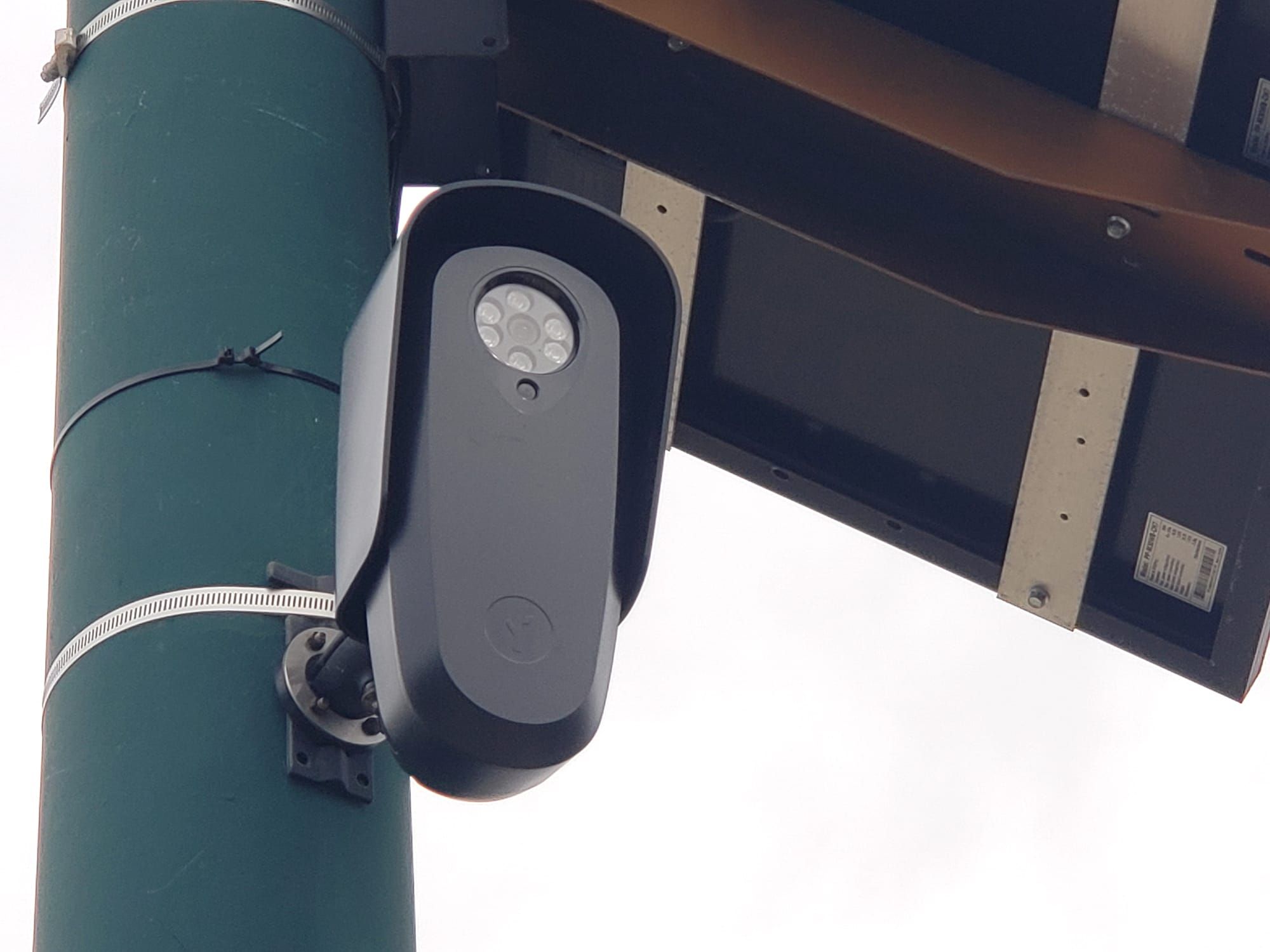
VALLEJO – Amid growing public concern about Flock Safety and its surveillance cameras, Vallejo is looking at how often and why its police officers access that footage, and if Flock data should be available for public review.
Vallejo’s contract with Flock for Automated License Plate Recognition cameras is currently under review by the City Council, which is planning to meet with the city’s Surveillance Advisory Board and the Police Oversight and Accountability Commission to discuss the technology and the budget for it.
At its July 16 meeting, the Surveillance Advisory Board heard from Vallejo Police Department staff about how they review footage gathered by various Flock cameras in the city. Staff reported that the current quarterly review process involves pulling three months of Flock Safety camera data and selecting 30 random individual searches at a time, to determine if use of the technology is in compliance with current policies.
To do this, for the last month the city has been using a tool called “Flock Audit Assist.” Police department staff showed that the data is typically organized in spreadsheets, and an officer can listen to the stored audio recorded from different incidents.
Staff added that alerts from Flock’s Raven gunshot detection technology cannot be exported to the spreadsheet, and must be reviewed individually. The city has a contract for use of the company’s Raven technology through half of 2027 to detect gunshots fired across four square miles of “high gunshot areas” in Vallejo.
Public concern over how law enforcement officials access data gathered by the mass camera network that the company operates — including that Flock has enabled unlawful data-sharing between California law enforcement and out-of-state police — has been building in cities across California, and has even led to some cities ending contracts with the company.
Representatives for the company did not attend the board meeting Thursday.
Members of the board voiced doubt over whether police officers are following the same rules for accessing city data — to protect the privacy of users, among other legal requirements — when they access the Flock data. They also questioned whether Flock employees are following the city’s privacy rules when they access police data.
“That’s the problem people are having with Flock,” said board member Tony Stewart. “If we have protections, but someone else doesn’t, then they’re not following the rules we set in place for our system.”
Board members also raised concerns about whether the police officers in charge of reviewing Flock data are being properly monitored. Chair Simon Lee said there should be flags built into the system to help warn or track suspicious use of the footage, such as when a user repeatedly searches for a single license plate.
“A lot of the misuse of the systems involve officers spying on their exes,” Lee said, referring to recent investigations of police officers in other cities who were found to use Flock cameras to stalk people. “So the volume of searches for a case number could be a proxy for obsession.”
When Stewart asked who is notified when there is a flag or trigger, police staff said that there aren’t automated flags for repeated access. Currently, city employees have to proactively be looking at the system to notice unusual behavior.
The police department said the employees handling the analyses of Flock data are also balancing other tasks due to understaffing, noting the department's obligations under the standing agreement with the Department of Justice. The Vallejo Police Department is required under a settlement agreement with the Department of Justice to implement multiple reforms, with an evaluator hired to report back to the state about progress making those changes.
In response, Stewart said, “While I respect that, our task respectfully is not your staffing. Our task is the privacy and the use of surveillance.”
Lee asked if they could hire more crime analysts to work on the system audits, but chief assistant city attorney Randy Risner said that would need the approval of both the city manager and Police Chief Jason Ta. Risner added that staffing issues are outside the board’s purview, but they could consider requesting volunteers. He noted the city council recently reduced staffing in all departments “to take care of budget issues.”
The board also heard an update on creating a public-facing Flock audit page, and what data people could be allowed to review.
Stewart questioned whether the city had the ability to efficiently redact certain pieces of information, like someone’s face or a license plate, before the data is published for the public’s viewing.
Risner said that process must be done manually by the police department, and the city has not found success using AI tools: “They redact stuff you don’t want redacted, or miss stuff you do want redacted.”
Lee said that due to the difficulty in mass redaction efforts, he wants the public to understand the staffing needed to implement that work. The board did not vote on the item nor set a date for when they’d vote on creating an audit page.
In public comment, some residents voiced concerns about the current system and how the Vallejo police were accessing the Flock data. Brianna Rogers said officers are not above human error, and that she wanted to hear a solid accountability plan “with a rubric.”
“If we’re going to take up equipment and use it to keep our city safe, I think it’s important we have due diligence and explicit systems of accountability, given our history,” Rogers said. “What I’m hearing feels very shaky. It doesn't feel solid.”
“I’m skeptical that these cameras are doing any good,” said resident Rebecca Hartman Baker. “But in any case, there’s a lot that is easily automated, and it would be better to have a report of suspicious activities that would be automated rather than putting it on somebody's performance plan to do.”
Vincent Hartman Baker said the website deflock.org has a community-maintained map of all Flock cameras, and said when he looked at his route to college in Napa, he realized he would pass 11 license plate reader cameras that could track his location: "I feel this is an extreme violation of my right to privacy.”
The board also discussed establishing an ad hoc committee on facial recognition technologies, following a previous discussion about using technologies that have the feature enabled. The police department said it does not use technology which has facial recognition enabled, but the plan is to preemptively anticipate future use. Lee nominated Commissioners Owen Russell and Stewart for the task.
Independent local news depends on you
The Vallejo Sun is supported by readers who value reliable, in-depth local news. Your support helps us continue investigating important issues and keeping Vallejo informed.
Become a member today- government
- policing
- Vallejo
- Vallejo Surveillance Advisory Board
- Flock
- Flock Technology
- Vallejo Police Department
- Tony Stewart
- Simon Lee
- Randy Risner

Natalie Hanson
Natalie is an award-winning Bay Area-based journalist who reports on homelessness, education and criminal justice issues. She has written for Courthouse News, Richmondside, ChicoSol News, and more.
follow me :