
SOLANO COUNTY – As Fairfield grapples with a proposed data center project that could move forward “by right” and without significant public review, Benicia took steps on Tuesday to require public review of any such projects.
The Benicia City Council voted 4-1 to introduce an ordinance that would require developers to obtain a conditional use permit for data center projects. That process will entail public notice for the proposed project, public review of the proposal and review under the California Environment Quality Act.
Councilmember Terry Scott opposed the motion because he was concerned that the final vote to adopt the ordinance, scheduled for the following week, did not allow enough time to incorporate community concerns expressed during the meeting.
“The first thing that I think people have to understand is that one of the purposes of this action tonight is to be sure that what happened to Fairfield does not happen here,” Mayor Steve Young said. “This is a way of trying to close that loophole, if you will.”
Details of the Fairfield proposal were revealed by the Vallejo Sun in August based on promotional materials distributed by the developers, which shows they are considering a project for a 150 MW data center in Northwest Fairfield.
According to city emails released in a public records request, the developer has been working with the city for over a year and a half to confirm that a data center would meet the requirements of an approved master planned unit development permit. The approvals already granted under that permit include traffic patterns, infrastructure needs, design elements and conceptual building footprints for a 289-acre industrial park.
Fairfield spokesperson Bill Way said that any project proposed for the industrial park planning area would still need to undergo several review steps to confirm that the project meets zoning, environmental, design and site plan requirements. The developer would also need to obtain final building and engineering permits from the city’s building and public works departments.
However, Way said that each of these steps is a by right ministerial or administrative process in which planning staff or the planning commission reviews the project based solely on whether it meets the established requirements.
The planning area is already zoned for heavier industrial activities, Way said. “As long as the developer's plans meet every exact metric, setback, height limit, and submittal requirement established by the Master PUD, the city is legally required to issue the permits,” he said.
Benicia’s ordinance is designed to update the city’s industrial zoning classification, which has not changed since the original zoning ordinance was adopted in 1987, according to Benicia Assistant City Manager and Development Services Director Suzanne Thorsen.
“A data center would be classified as ‘technology industry,’ which is a permitted use in our industrial districts,” Thorsen said. “Under today's regulations, a data center could locate in the industrial park without any public hearing, use standards, or environmental analysis.”
The ordinance provides a set of standards for the public review process, including prohibition of combustion equipment such as diesel back up generators, requirements for water conservation practices as well as lighting and noise limitations. It also establishes a monitoring process to ensure that the project continues to meet the standards during operation.
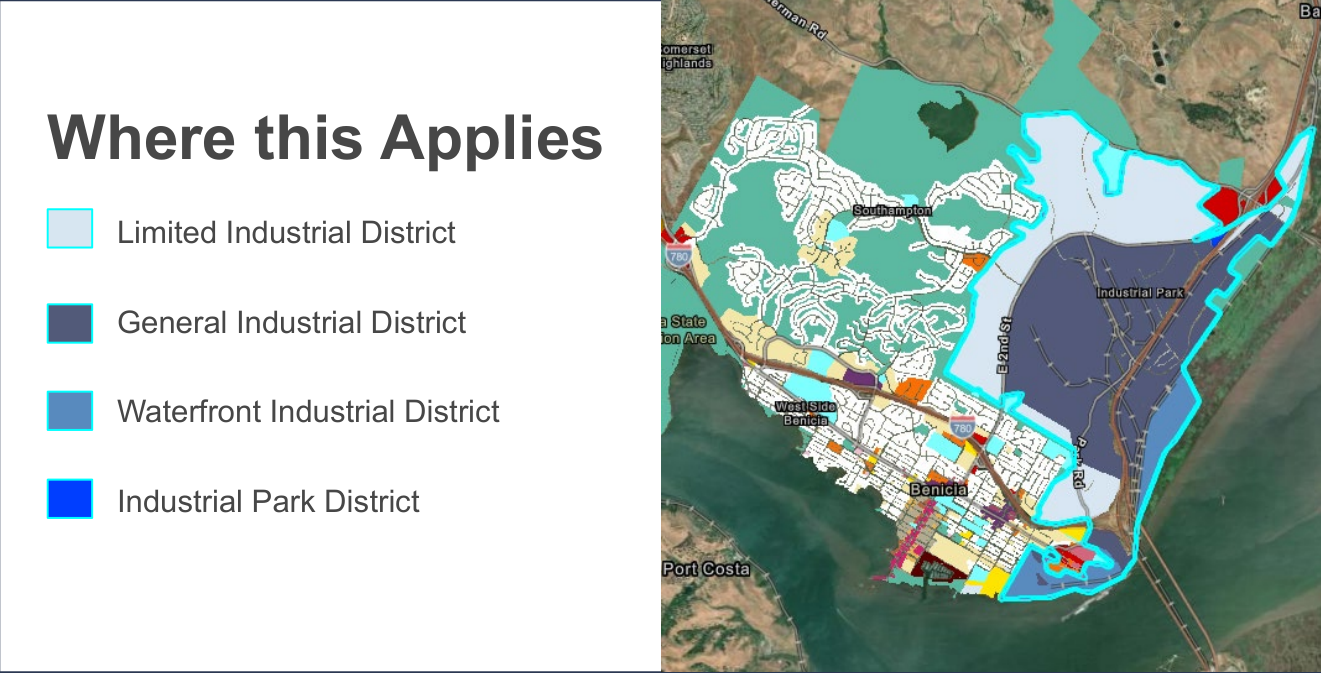
Under the ordinance, data center projects would only be allowed in the city’s four industrial districts that include the port, the refinery and the industrial park areas along East 2nd Street and I-680. Data centers would not be permitted in commercial or residential districts and in the industrial districts data center projects are limited to 20 MW.
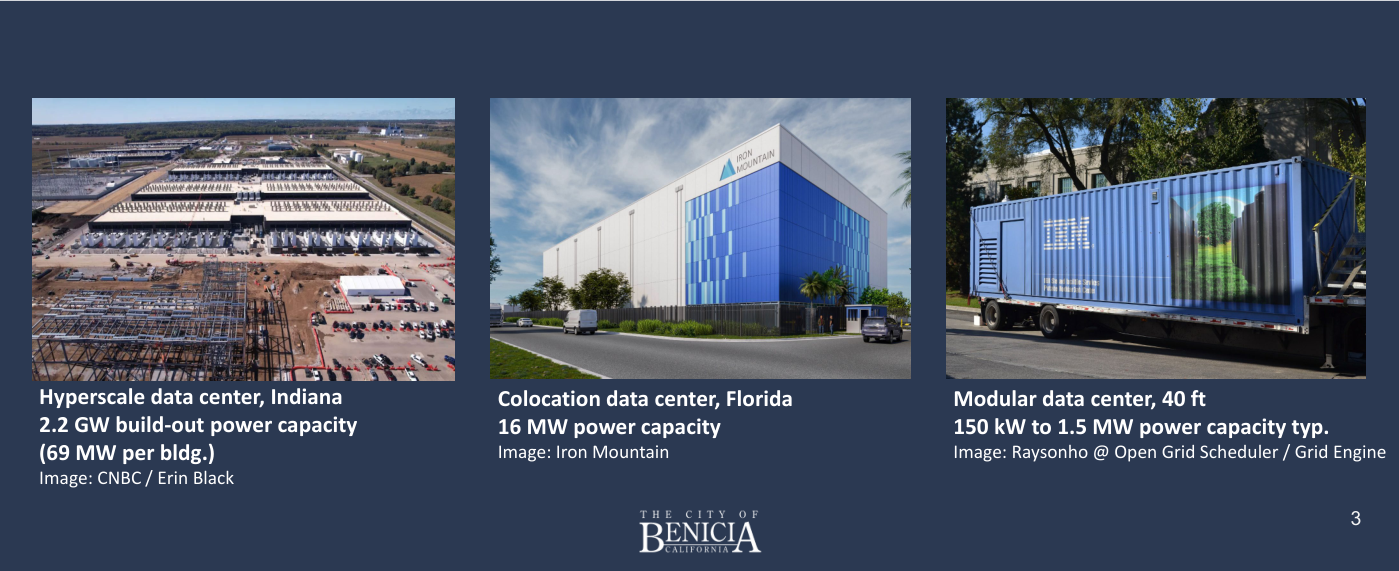
Thorsen said that it is helpful to understand the scale and the typical uses of the data centers that would be permitted under the ordinance. For example, a hyperscale facility with a power capacity of 2.2 GW may have multiple buildings and cover an area the size of a small town. These facilities are generally used for training AI models or cryptocurrency mining, she said.
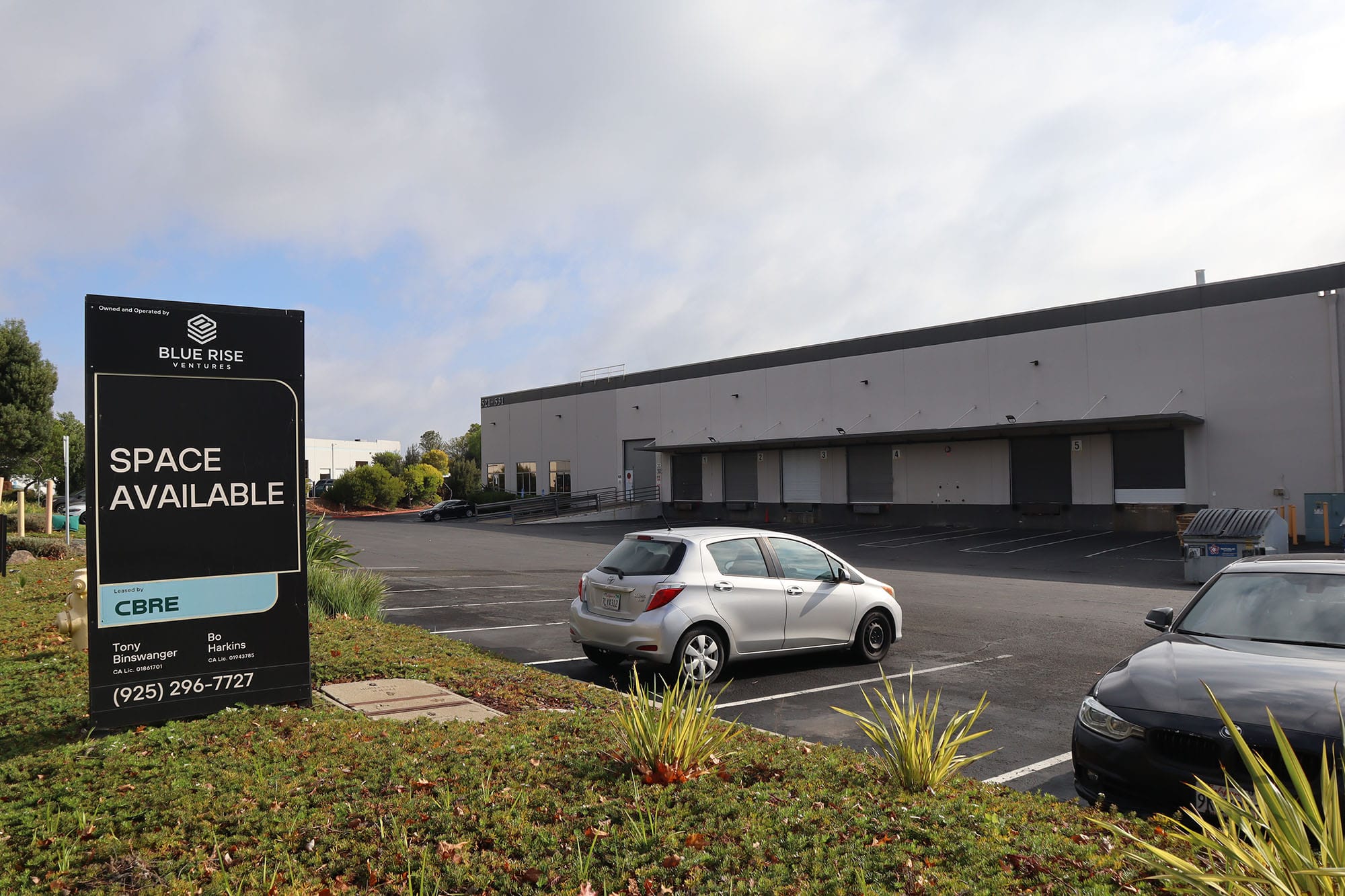
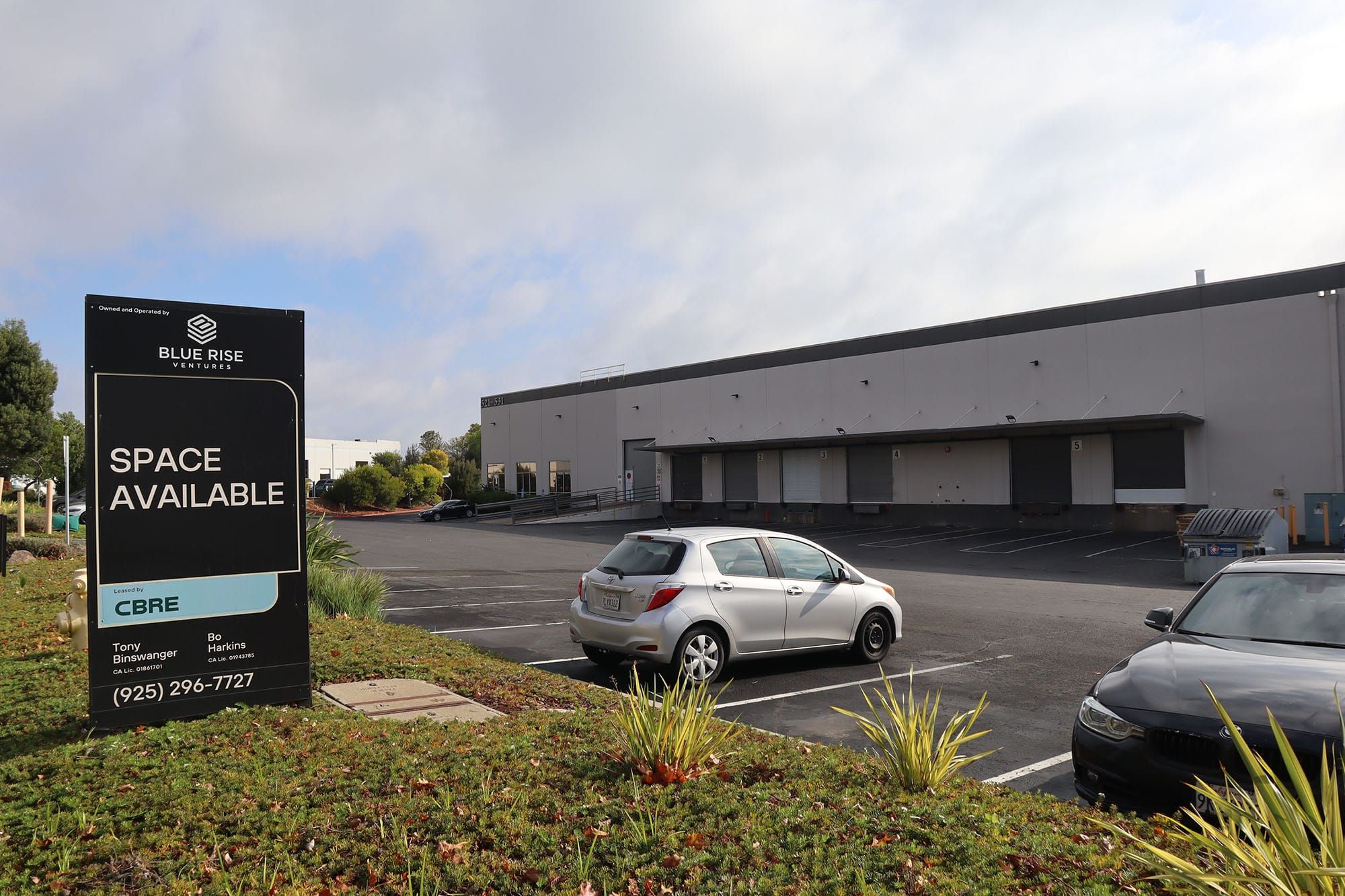
By contrast, Thorsen estimated a 16 MW colocation facility housed in a warehouse could be 150,000 to 200,000 square feet. She said that facilities this size are “used for queries or processing of information from equipment to the internet and they provide computing power and process information, reducing delay in computing.”
Thorsen said that the planning department is proposing the 20 MW limit because this size tends to serve a more practical purpose for local users and would ensure that data center projects support the manufacturing and technology industries that the city seeks to attract.
Thorsen also pointed out that data centers can be small enough to fit inside a shipping container. She provided an example of a 15 MW modular unit which she said typically serves similar functions to the colocation facility but on a smaller scale.
Several community members raised concerns about the ordinance and proposed ways to strengthen it.
Former Benicia Councilmember Tom Campbell said that water could be an issue in drought years. He recalled a prior agreement with Valero which did not require the refinery to participate in water rationing when necessary. He recommended a provision in the ordinance that would require data centers to ration water if residents were required to do so.
Kathy Kerridge, a board member with the Benicia Community Air Monitoring Program, noted that the California Environment Quality Act does undergo changes and recommended that the ordinance include a point of reference to ensure that the environmental review is conducted based on an adequate version of the law. She also recommended language holding data center owners responsible for any chemical clean up that is necessary over the lifetime of the project.
Benicia Councilmember Kari Birdseye said that the city staff has been working on the policy with consultants for six months and that she has brought the assistant city manager information from her day job at the Natural Resources Defense Council where she is engaged in policy battles over hyperscale data centers that are taking place across the country.
“What we have before us is an industry standard,” Birdseye said. “These are the most protective guardrails.” She added that she liked some of the suggestions from the community and acknowledged one community member’s question about tax revenue by noting that early estimates indicate that the city could bring in $5 to $10 million a year from the utility user tax on a data center.
The council made one modification of the ordinance on Tuesday, to require that all data center projects be reviewed by the Planning Commission; the previous version allowed data centers of less than 5 MW to be reviewed by the Development Services Director.
The council also requested several other changes but opted to make those adjustments through amendments. Those remaining changes required review by the Planning Commission, which would have delayed enactment of the ordinance.
Meanwhile in Fairfield, several concerned community members urged the City Council to impose a moratorium on data centers during public comment at Tuesday’s meeting.
“We need to understand the full impact of these facilities before allowing them into our community,” said Ann Fisher, who lives at the One Lake Community about three-quarters of a mile from the data center project site. “Our homes and neighborhoods should be protected. The residents of Fairfield deserve transparency, a meaningful voice in these decisions, and the assurance that their health, safety, and financial interests are being taken seriously.”
Fairfield councilmembers directed staff to agendize a discussion of a potential moratorium or data center policy that would prevent “by right” approval. The council is expected to consider the issue at a special meeting on Nov. 10.
Independent local news depends on you
The Vallejo Sun is supported by readers who value reliable, in-depth local news. Your support helps us continue investigating important issues and keeping Vallejo informed.
Become a member today