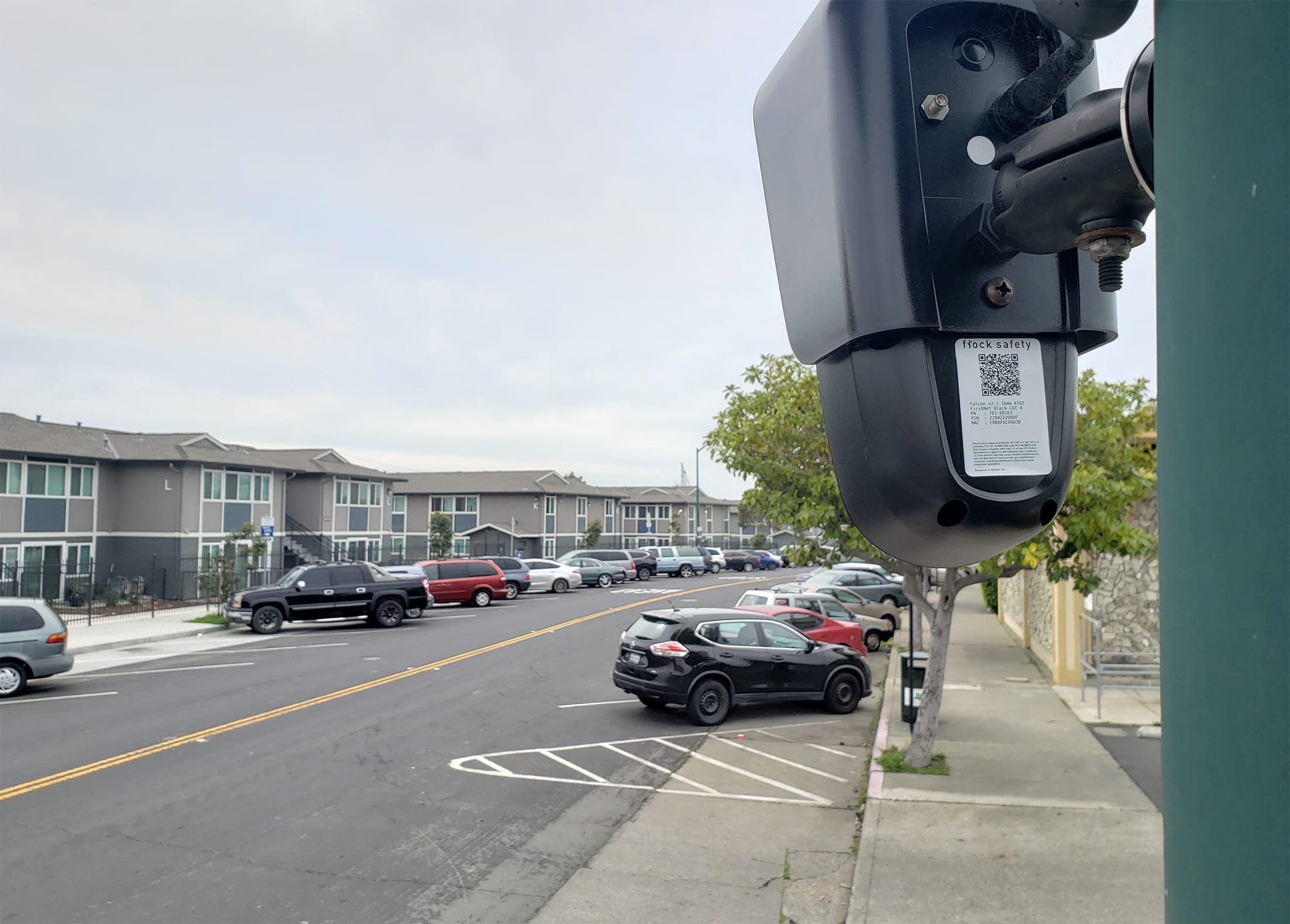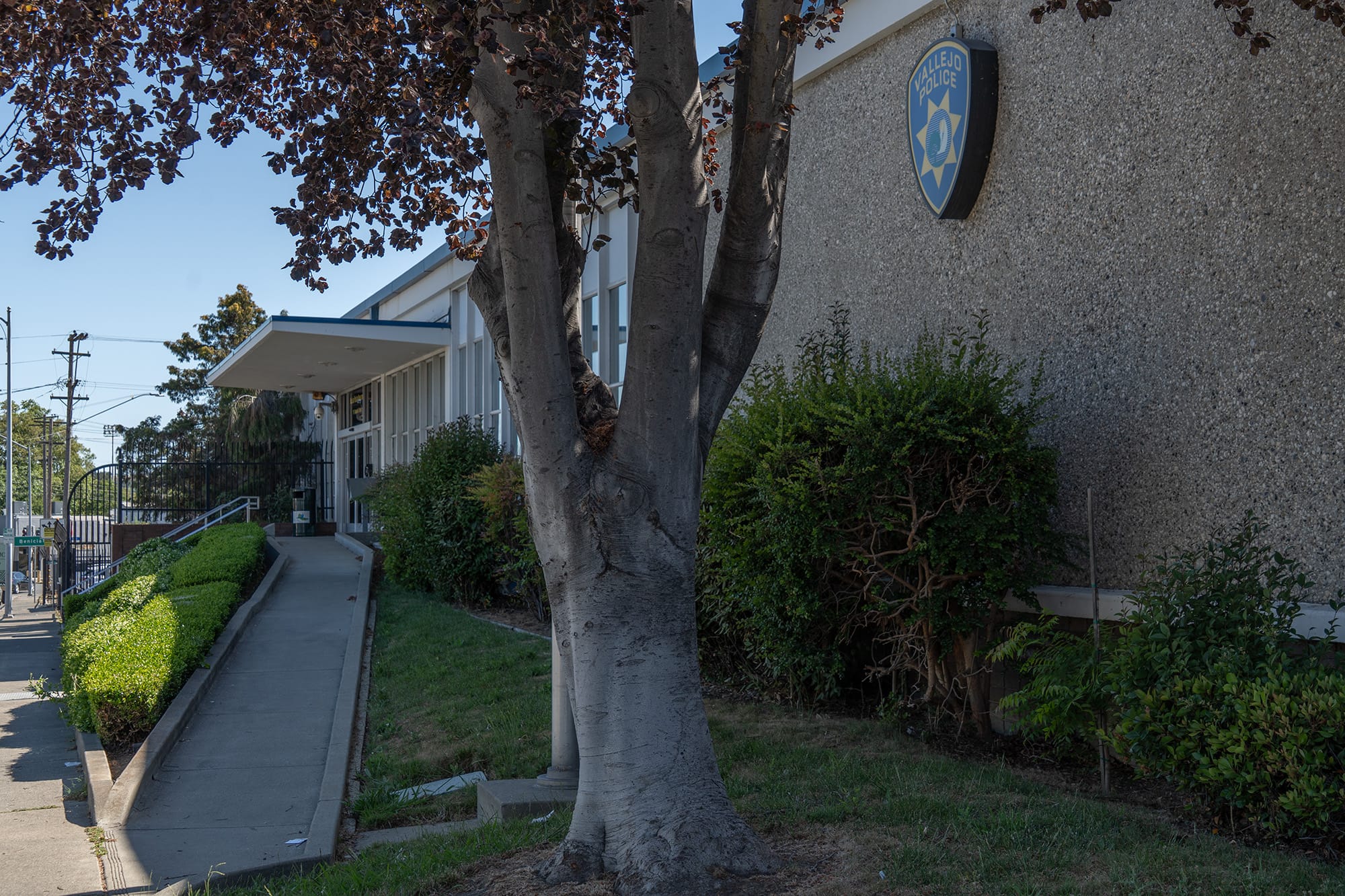

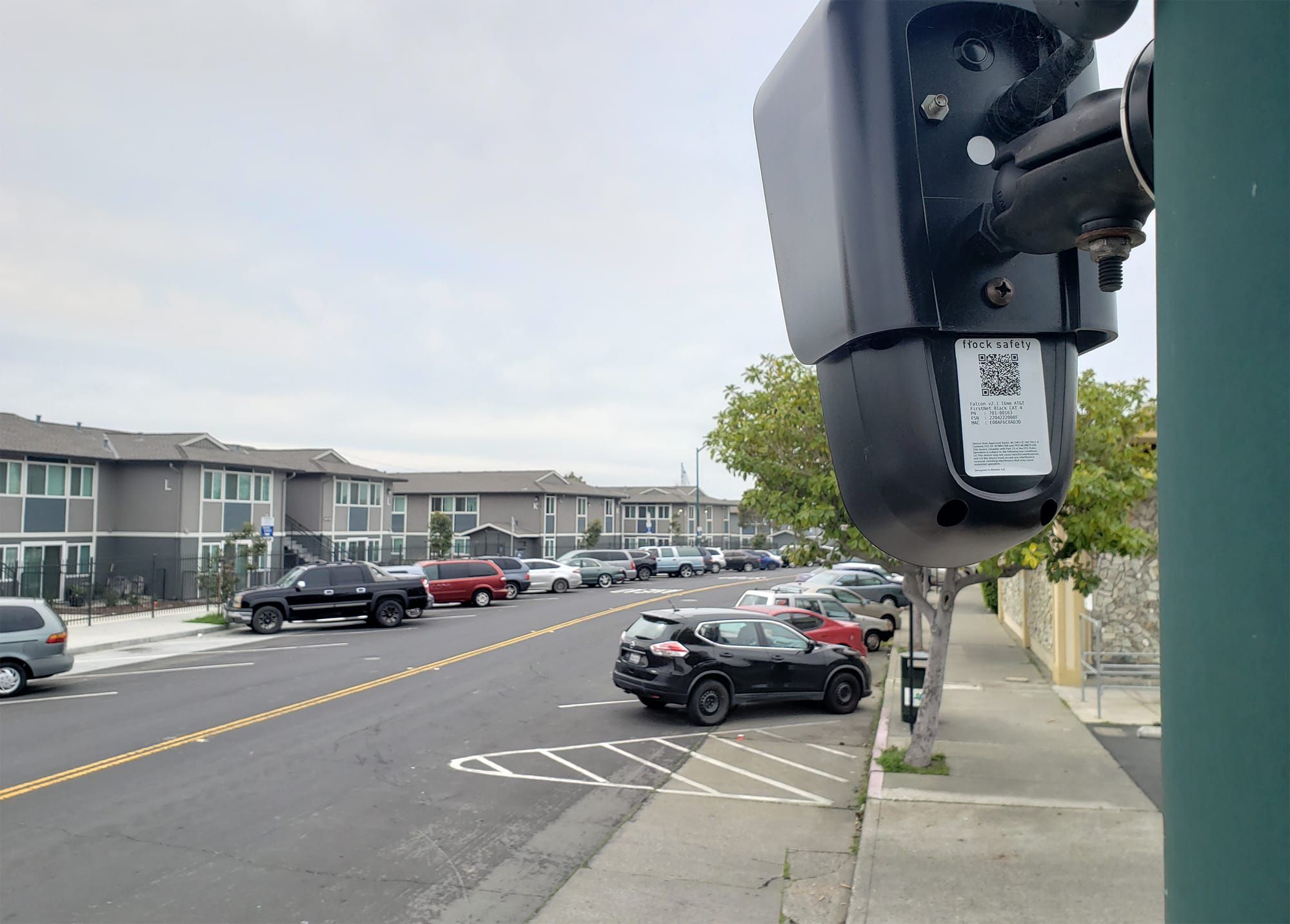
VALLEJO – Members of the Police Oversight and Accountability Commission (POAC) and Surveillance Advisory Board (SAB) scrutinized the Vallejo Police Department’s policies and auditing methods around Flock Safety’s automated license plate reader (ALPR) system at a meeting Thursday night.
The joint group held an information-only meeting to review the policies and Vallejo Police Department’s plan for auditing use of Flock technology, and has not yet made recommendations to the City Council about whether the city should continue its contract with the company. Months ago, the council asked for both bodies to look at three use policies for use of the company’s technology and make a recommendation on whether the city should renew its contract with Flock.
The Police Oversight and Accountability Commission also independently reviewed the policies last week without making a recommendation. It is unclear when the issue will be brought back to the City Council.
The debate over continuing to use Flock Safety products has stemmed from concerns about the security of the data collected by the company, as at least 20 cities in California and more than 200 cities or law enforcement agencies ended license plate reader contracts in August, according to Secure Justice, a group led by Bay Area privacy advocate Brian Hofer.
For more than a year, Vallejo officials have heard concerns from residents over how the company’s data is accessed and stored by law enforcement officials, and whether Flock enabled unlawful data-sharing between California law enforcement and out-of-state police and federal officials. Opposition to license plate readers is also growing in and beyond California.
The joint bodies first considered the police department’s audit plan, which consists of randomly looking at different searches which police officers initiate by pulling three months of Flock Safety camera data and selecting 30 random individual searches at a time, to determine if use of the technology is in compliance. The audit plan also reflects the use of Flock Assist, a built-in program from the company to help with the process of reviewing different case searches.
Vallejo Police Department’s report noted there is no legal requirement to obtain a search warrant before accessing Flock data.
POAC Chair John Lewis said the audits may not be looking at a large enough sample of random cases, given there are about 5,000 Flock searches each quarter. POAC Commissioner Naomi Yun agreed, saying she wants a larger sample size for audits.
But police department staff said the sampling size and method was based on the department’s current staffing levels. Police Lt. Jason Martinez, who oversees all audits in the Internal Affairs division, said manually pulling the data is “labor-intensive.”
Police Lt. Josh Caitham, who works in investigations, agreed: “It takes a long time. We’re doing the best we can.”
Capt. Jerome Bautista next presented on the three current Flock policies the city holds. His report from the police department stated that the city has 99 standard ALPR cameras, called “Falcons,” and two portable versions; 15 pan-tilt-zoom cameras; and 213 gunshot detection tools, called “Raven.”
Bautista said there are seven administrators managing use of the system by 163 people who conduct searches and create “hot lists” of license plates being monitored. Flock data gathered by Vallejo Police Department is stored for 30 days and then purged.
He said there are 293 agencies that share their data with Vallejo Police Department, including 271 in-state and 22 outside the state. The department shares data with 31 California agencies.
There are also 24 Flock cameras owned by private businesses and Homeowner Associations within Vallejo that share their data with the department, Bautista said. The department’s report noted that if a private organization or neighborhood installs a Flock camera, that customer owns the data and controls who can view it, and can choose whether or not to share with local law enforcement.
Bautista’s report noted federal agencies are excluded from nationwide and statewide surveillance networks. Flock auto-blocks sharing requests from federal agencies where prohibited by law, and Vallejo Police Department opted to block sharing requests from federal agencies.
Flock also recently added new safeguards, including that federal agencies cannot discover or broadly request data sharing in California and immigration-related and reproductive care-related searches are automatically blocked in the state. Cities and counties retain full administrative control over their data and determine who it is shared with.
Bautista added that “Vallejo has no plans right now to use facial recognition.”
He said the department conducted a community survey to gather feedback about the use of ALPR cameras, distributed Aug. 26 to members of the local community watch program. It got 45 responses, with the most, 14 each, from Districts 1 and 2. Eight people did not provide their district. Asked if they do not support ALPR camera use, the majority cited concern over potential misuse, followed by privacy concerns.
SAB chair Simon Lee suggested putting together a community-wide survey to better reflect Vallejo residents’ opinions on ALPR cameras.
When POAC vice chair Renee Sykes asked about the cost of terminating the Flock contract and how California’s laws around use of Flock compared to other states, SAB member Alejandro Bras said the City Council should look at the cost and California may have the strongest regulations over Flock camera use.
California has one of the strictest statutes regulating ALPR camera use in the nation. However, California legislators this year killed a bill that would have strengthened current privacy protections on how license plate data is collected, shared, and accessed by law enforcement officers. Since 2022, all bills state lawmakers have proposed to reform regulations on license plate tracking by law enforcement agencies have failed to pass.
Bras added that many cities have gotten rid of Flock technologies and replaced them with Axon products. However, he said while the companies’ technologies are different, “With respect to privacy concerns, they operate the same.”
In public comment, some residents criticized the use of ALPR cameras throughout their neighborhoods, saying they feel their privacy is being violated in favor of mass surveillance. A student representing a group from Cal Poly Maritime Academy expressed concern about cameras conducting surveillance nearby and around the campus, recording people’s vehicles and identities.
Sana Sethi, an organizer with American Civil Liberties Union of Northern California, said the ACLU opposes the use of ALPR cameras, calling them “a dangerous dragnet technology” as they track people and store information that is “susceptible” to unauthorized access.
Resident Richard Hybels said there have been positive uses of Flock’s cameras, like using them to arrest suspects in homicide cases, and he said he often hears from Vallejo residents who support using the technology for that reason.
A speaker who identified himself as Mac Molly said he thinks the police department’s random sampling method of auditing Flock use is not being done in a scientifically robust way, based on how department staff answered questions about sampling from Councilmember Tonia Lediju.
“It’s apparent to me you guys are not qualified or properly staffed to utilize this technology in a way that would truly keep Vallejo citizens safe,” he said, adding that “you guys have this really powerful technology that you don’t necessarily understand.”
Independent local news depends on you
The Vallejo Sun is supported by readers who value reliable, in-depth local news. Your support helps us continue investigating important issues and keeping Vallejo informed.
Become a member today- policing
- government
- Vallejo
- Vallejo Police Department
- Community Police Oversight Accountability Commission
- Vallejo Surveillance Advisory Board
- surveillance
- Flock
- Flock Technology
- John Lewis
- Naomi Yun
- Jason Martinez
- Josh Caitham
- Jerome Bautista
- Brian Hofer

Natalie Hanson
Natalie is an award-winning Bay Area-based journalist who reports on homelessness, education and criminal justice issues. She has written for Courthouse News, Richmondside, ChicoSol News, and more.
follow me :