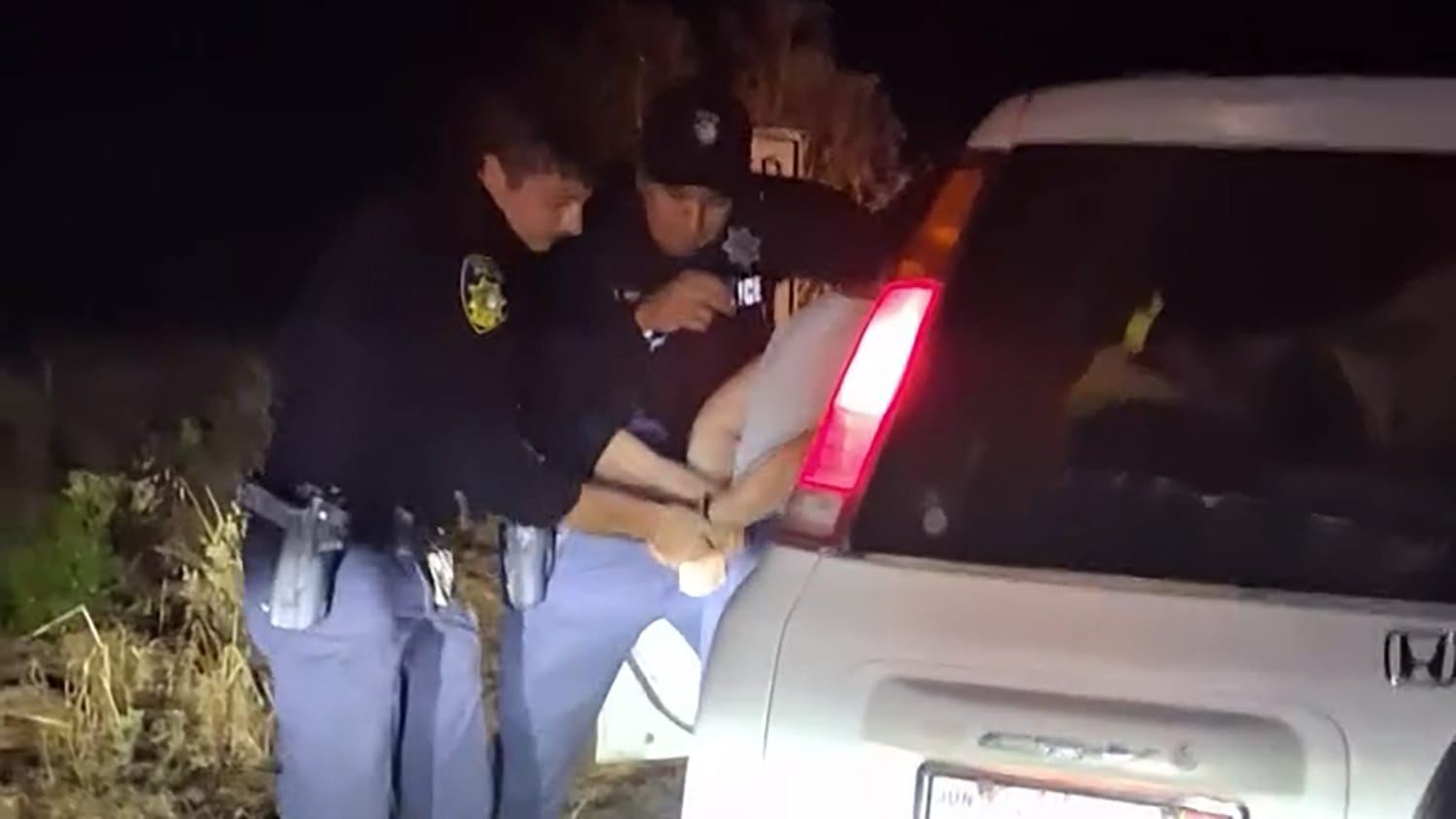
VALLEJO - For the first time since reports of officers bending the tips of their badges to mark shootings were made public six years ago, Vallejo’s police chief, city attorney, city manager and several councilmembers joined a town hall alongside police reform advocates to answer questions about city policing and the badge bending practice.
The city in June finally released its investigation into the nearly two-decades -long practice of Vallejo police officers bending the tips of their badges to commemorate shootings. But by the end of the town hall on Wednesday evening, some promises for reform from city leaders drew criticism from families of people killed by Vallejo police officers.
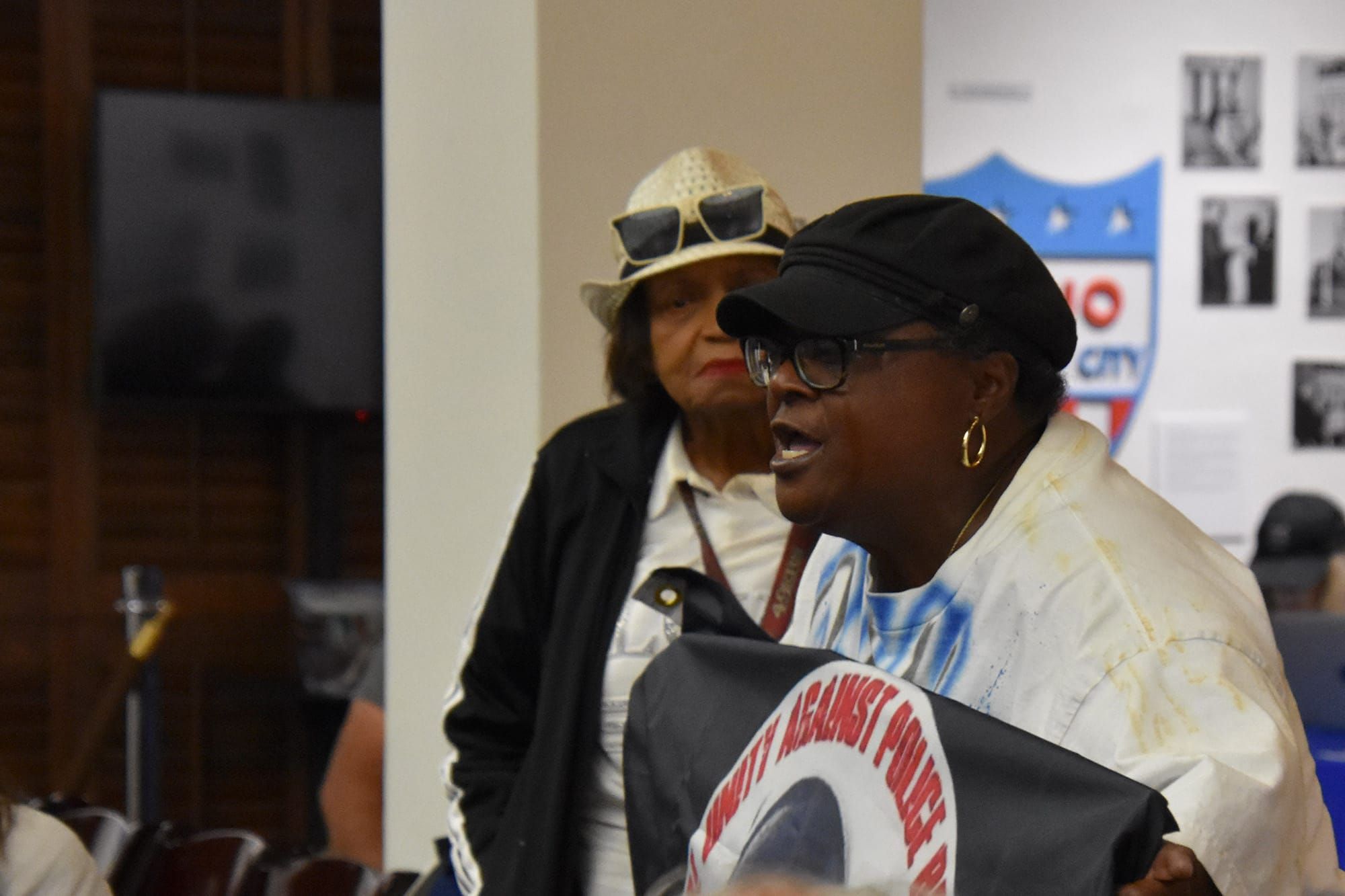
As city leaders and stakeholders spoke on a panel about allegations against Vallejo police officers and reform efforts, Angela Sullivan, whose nephew Ronell Foster was killed in 2018 by Vallejo police officer Ryan McMahon, interrupted, saying what happened to Foster was “fucking murder.” She described how McMahon Tased Foster, hit him with a flashlight and then shot him “in six minutes and 47 seconds.”
“My mother died four months later from a broken heart. I watched her grieve to death,” she sobbed. “Put the motherfuckers in jail and I’ll believe it’s a good start. You make it make sense to me.”
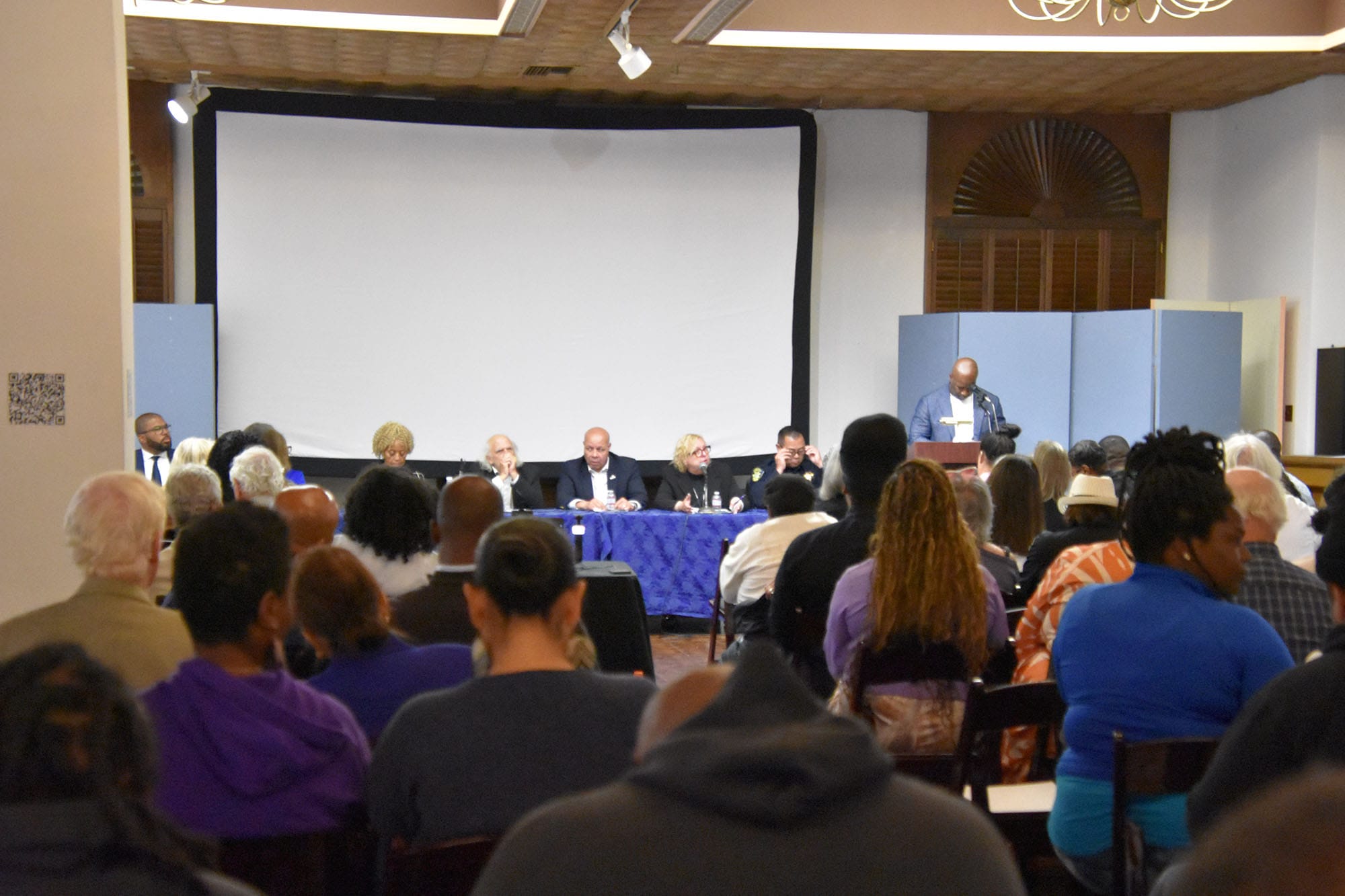
At least 50 residents, and more than 40 more online, attended the town hall at the Vallejo Naval & Historical Museum, which was organized by the NAACP Vallejo. NAACP chapter president Patricia Hunter told the Vallejo Sun that the organization’s goal is to open conversations with city officials, stakeholders and residents around police reform, with “badge bending” allegations at the center of the discussion.
“If we really want to know what’s going on, we have to ask the questions,” Hunter said. “It’s going to take more than one night. The NAACP is not soft on reform, and definitely not soft on badge bending.”
Moderator Landis Graden, a former member of the Vallejo Planning Commission and the CEO and founder of the real estate firm DCG Strategies, said he hoped the town hall would help answer some community members’ questions about police reform and the city government’s role facilitating them.
“I think people tend to hide behind protest, and I think the community is the greatest victim because it doesn't understand what true accountability is,” he said. “What I want to happen too is the city being held accountable for a conversation about what is true police accountability and city government.”
The fallout of “badge bending”
The recent release of the report on the badge bending practice was a focal point, as the renewed focus on details in the investigation revived calls for accountability from families of people killed by police officers,
Police Oversight and Accountability Commission chair John Lewis said the practice has been talked about for five years, because “Nobody has stepped up and said, ‘We screwed up, we’re deeply sorry, and this is what we’re going to do to fix it.’”
Civil rights attorney Melissa Nold said to bring about change, the city must be honest about what has happened. She cited years of testimony reflecting a toxic policing culture that resisted change and retaliated against whistleblowing.
Of city leadership, she said, “Whatever they want to do, to whitewash and pretend it didn't mean they were trophy hunting Black and Brown men in this community, that’s what it meant. They were trophy hunting our sons. Nobody will tell the truth.”
City Manager Harry Black said he’d be supportive of a policy prohibiting badge bending. But he noted the department’s 60-page settlement agreement with the California Department of Justice, saying it will put in place practices “that are indicative of 21st century constitutional policing” and prevent badge bending from occurring.
“It’s an experience that organically will transform the department,” he said. “We can see it already happening. It’s a rigorous process.”
When Graden asked if any officers will face discipline for the allegations in the investigation, police Chief Jason Ta said some officers already did.
However, Ta said, “There are statutory limitations that govern the ability to impose discipline,” which he said restricted the department’s ability to discipline officers named in the allegations due to how long the investigation took. He referred to the Peace Officer Bill of Rights, which generally has a one-year statute of limitations to complete an internal misconduct investigation.
Nold pushed back, saying the scope of the investigation “was not intended to get to the answers” and left out broad pieces of information that gave insight into what the officers who were involved were doing. She said there are exceptions police departments can rely on to address allegations of misconduct to demote an officer, claiming, “You can discipline someone no matter how long it has been.”
The California Court of Appeal in Garcia v. State Department of Developmental Services held that when one investigation entails separate acts of misconduct discovered on different dates, the one-year statute of limitations will apply separately to each act and run from the date each act was discovered by a person authorized to initiate an investigation.
Ta responded, “We looked very closely to see if there were some exceptions so we could exercise some disciplinary action. As I understand it, I'm not an attorney, but that litigation has to be specific to that employee. We did not see that there were any exceptions we could exercise to bypass the one-year limitation.”
Graden said as a result, police officers named in the report continue working on Vallejo’s streets. He asked how the city will ensure the public’s trust if such an investigation were to be required again.
City Attorney Veronica Nebb noted recent state legislative changes, saying Attorney General Rob Bonta has the ability under Assembly Bill 1506 to conduct investigations into a use of force incident where a person is unarmed. She also pointed to the Commission on Peace Officer Standards and Training decertification process, which can open investigations into whether an officer should be decertified.
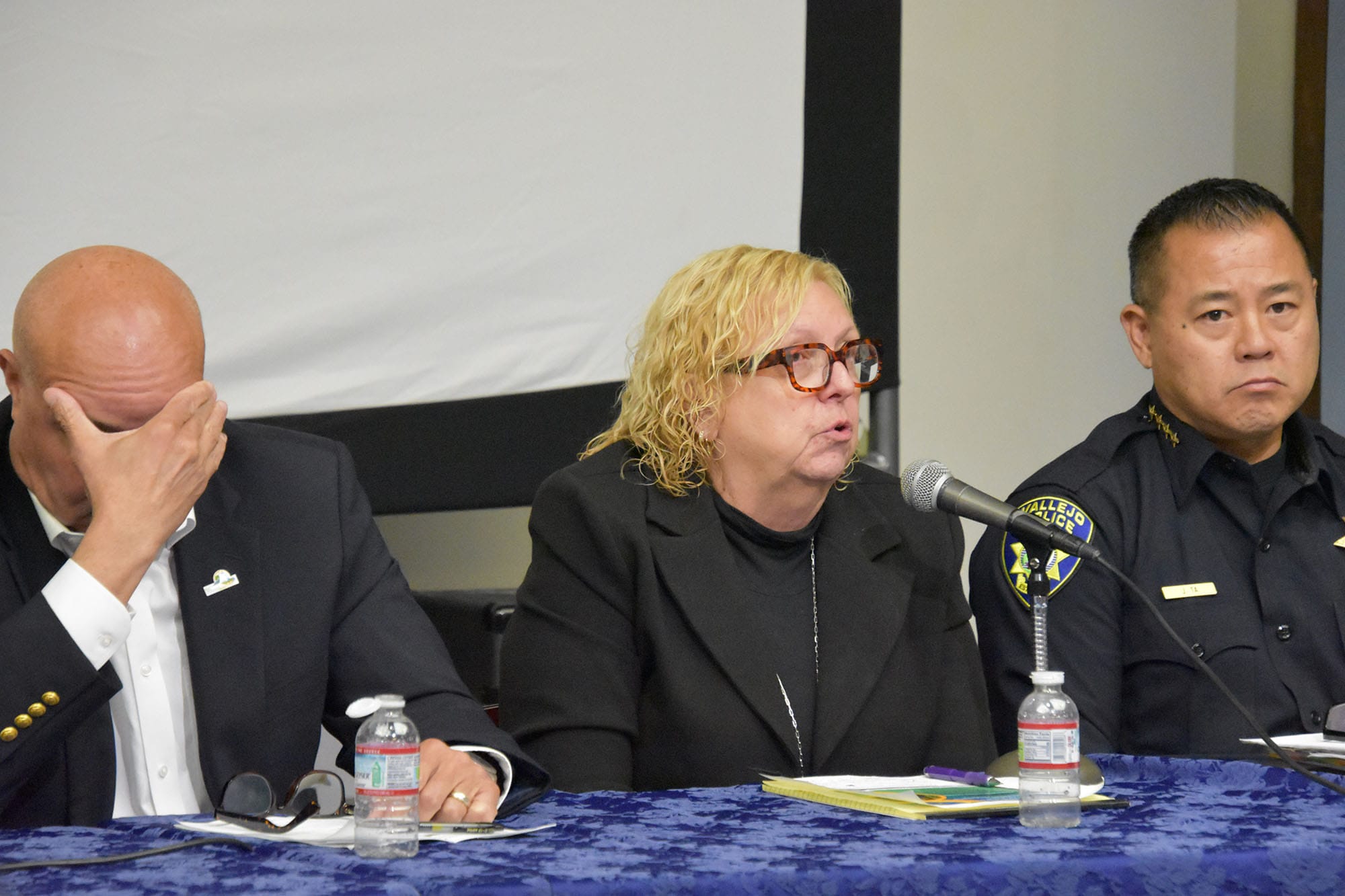
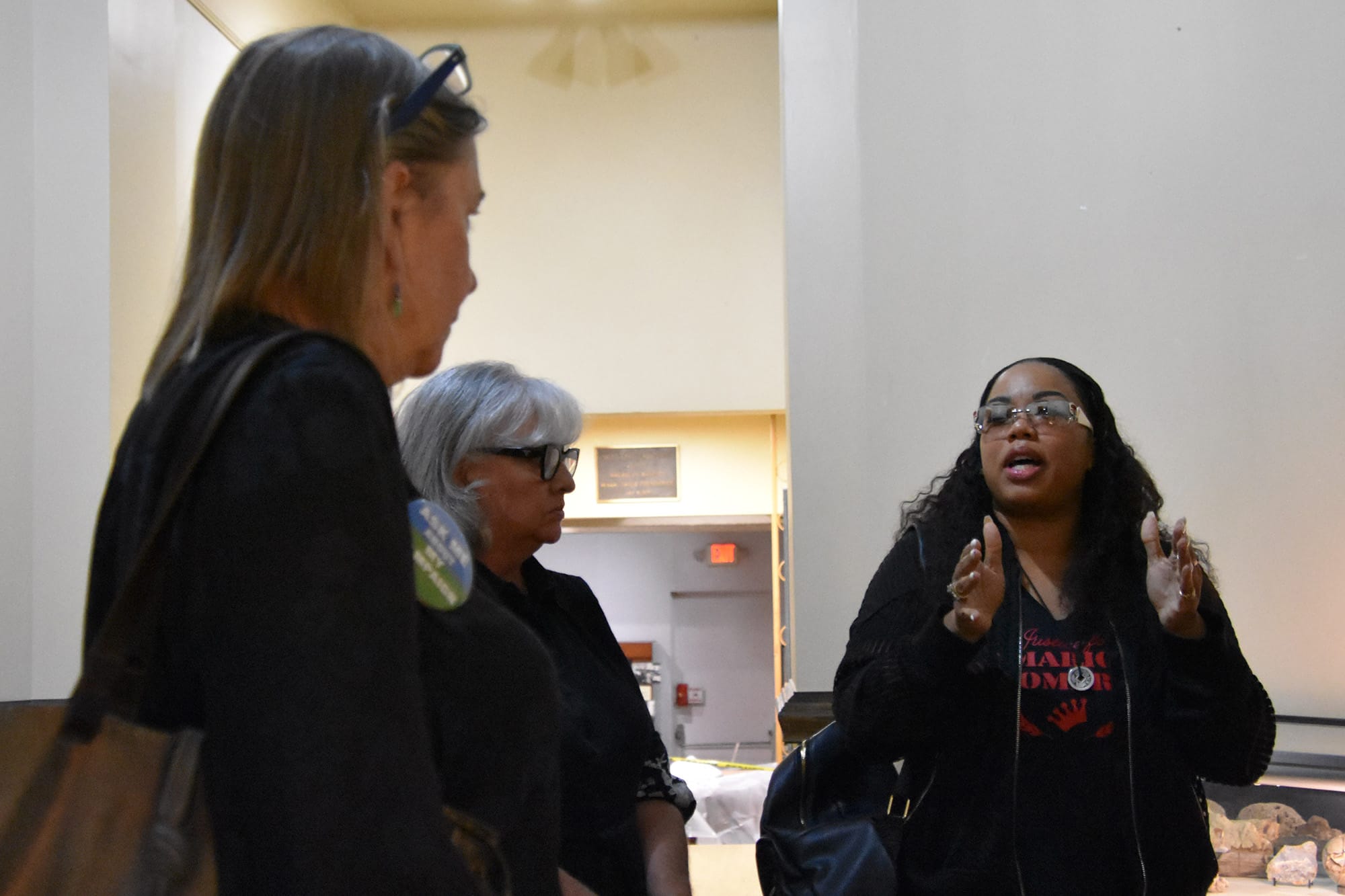
Nebb was interrupted when Kris Kelley, whose brother Mario Romero was shot and killed by Vallejo police officers in 2012, shouted, “She is a part of the problem.” Kelley left, and remained in the hall outside shouting at city officials.
The town hall grew more heated as the panel fielded questions about the handling of evidence in police shooting cases. When Graden asked what is done to avoid evidence in serious incidents being tampered with by an officer “covering for another officer,” Ta said the police department holds evidence from critical incidents until all court processes are over.
Bridget Doherty asked about a 2021 incident when the city allowed the destruction of evidence in Romero’s shooting. Nebb’s office said an employee “inadvertently” destroyed audio and video records in five police shooting investigations from the department’s most violent two-year span before the material would have been publicly released as required by law.
According to the city’s retention schedule, it is required to retain such records for five years following closure of the case, short of the 25 years recommended by the state Department of Justice.
While Graden tried to move on from the question, saying “this is not a government body, this is a community town hall,” Nebb responded as vocal protests from participants grew.
“This statement is not true,” Nebb said. She said in the Romero case, “there was a request on whether the case was concluded and the evidence could be removed,” and she said at the time, “there was no more litigation on the evidence related to that case.” She said while a former city employee destroyed everything in the record, “We never signed off on the destruction of the record.”
However, records show that Assistant City Attorney Katelyn Knight approved the records’ destruction.
Controversy over police reform
The city officials and other speakers also discussed how police reforms can take place in Vallejo, compared to other cities facing calls for reform.
“We have to develop a whole different way of policing our community,” LaTressa Wilson Alford, president of the Napa/Solano chapter of Black Women Organized for Political Action, said. She said American policing started as a result of slave patrols “built to enslave and capture Black people, punish them, enforce control over their bodies,” citing the 1987 book “Black Robes, White Justice.”
“Holding our police accountable starts with us,” Alford said. “We have to protect our children as well.”
Councilmember Tonia Lediju said she thinks the city’s leadership has not been held accountable for handling of police misconduct. However, she added that she thinks “We are moving in the right direction,” noting the recent selection of an independent police auditor. She said she wants to see how the auditor works with impacted families and all local organizations “to center the community voice in what community policing really looks like.”
Graden compared Vallejo to Oakland, where the city amended its charter to allow the police commission power to fire the police chief. He asked if Vallejo could amend its charter in the future.
Black said the city could put anything on the charter if desired, and that it’s up to Ta to ensure “the right people are being promoted to the right positions.” He said no matter what system is in place, the people in charge matter.
“It’s only going to be as effective as the people involved in the process,” he said. “If you don’t have the right people … the results are going to be bad.”
Black said the city is currently in negotiation with the Vallejo Police Officers Association for a new contract, which he said opens the door to negotiate everything. That includes the former contract’s binding arbitration clause, which has allowed fired officers to return to work, including the officer who shot and killed Sean Monterrosa in 2020, who was later promoted to sergeant.
Graden noted that as a result of past decisions and policies, some officers on the force who have been involved in multiple shootings have remained in service longer than multiple city managers and staff.
“We still have a number of bad actors that are likely to outlast everyone up here,” he said. “How do we change that if they’re still on the force? I know we have the hope for reform, but I just don’t foresee that unless we have some real change to the city charter … until we have some real accountability.”
Ta said he saw the situation differently. “You have to put processes in place that outlive the people that are here,” he said. “Reforms are basically policies, and I think one of the pitfalls of this agency was that the policies did not evolve in the same way that it evolved in other agencies.”
Nold said the city cannot expect patience for reform from people who not only lost family members in shootings, but who lived through years of being ignored by city officials.
“They got rid of a few real loud racists,” she said. “But now we have the quiet ones who smile in your face and shake your hand and are just as diabolical. We can’t keep doing this, we can’t afford to keep doing this.”
Hunter said the next town hall will be held during the NAACP’s meeting in the museum Aug. 27. She said impacted families will be invited to an upcoming round table discussion, when they are ready.
“I’m looking for the truth,” Hunter said. “The city should not move forward until we get justice for these families, for the community.”
Independent local news depends on you
The Vallejo Sun is supported by readers who value reliable, in-depth local news. Your support helps us continue investigating important issues and keeping Vallejo informed.
Become a member today- policing
- government
- Vallejo
- Vallejo Police Department
- Vallejo Police Officers Association
- Angela Sullivan
- Ronell Foster
- NAACP
- Patricia Hunter
- Landis Graden
- Vallejo Naval and Historical Museum
- Community Police Oversight Accountability Commission
- John Lewis
- Harry Black
- Jason Ta
- Veronica Nebb
- Melissa Nold
- Tonia Lediju
- Bridget Doherty
- Latressa Wilson Alford
- Black Women Organized for Political Action