VALLEJO – As the city of Vallejo has struggled to come up with comprehensive solutions to a growing homeless population in the city, some local churches have sought to help bridge the gap either by allowing RVs to park on their property or taking on affordable housing construction projects under new state legislation.
But maintaining their efforts or even getting the projects off the ground has led to difficulties, in part because of confusion and mixed messages from the city and state regulators.
While the city has opened some new spaces to help alleviate homelessness in recent years, its projects still fall short. The county’s 2024 point-in-time report found that there are 727 homeless residents in Vallejo, but the city’s latest housing projects and navigation center combined provide shelter for only about half of that number.
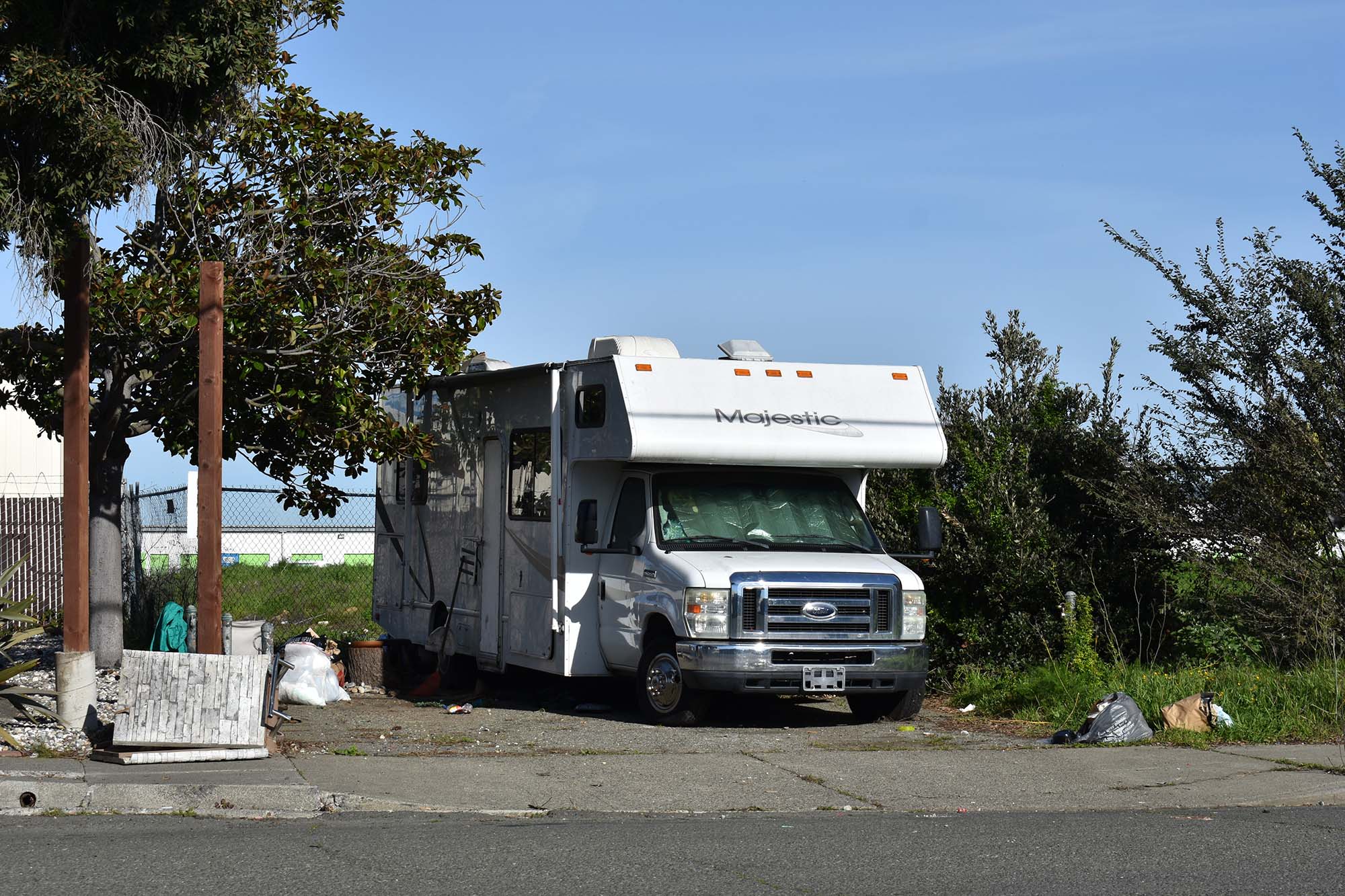
One solution the city has considered to bridge the gap is safe parking zones for RVs and other vehicles used as housing, as similar programs have been implemented in cities like Oakland, Mountain View, Palo Alto, and San Jose. The Vallejo City Council most recently discussed the idea last year, when city staff presented several possible spaces and estimated yearly upkeep for each site could be around $2.4 million a year.
Due to the cost and difficulties associated with developing each site, the council decided not to move ahead with any of the designated safe parking options. Instead, they agreed with the staff’s recommendation to reach out to crucial partners who possibly had the extra land and the willingness to help unhoused people: local churches.
But one Vallejo church that has already allowed RV parking on its property was warned by the city that it was a code violation last year, and residents were told last month to vacate under threats of daily fines.
Meanwhile, new state legislation passed in 2023, intends to make it easier for churches to build housing “by right,” meaning development proposals would be reviewed by city staff but wouldn’t need planning commission or city council approval, especially if local zoning laws normally don’t allow it.
While a handful of Vallejo churches have shown an interest in building under the new law, no projects in Vallejo are off the ground yet as the churches wade through layers of local and state regulations.
Vallejo evicts church's safe parking
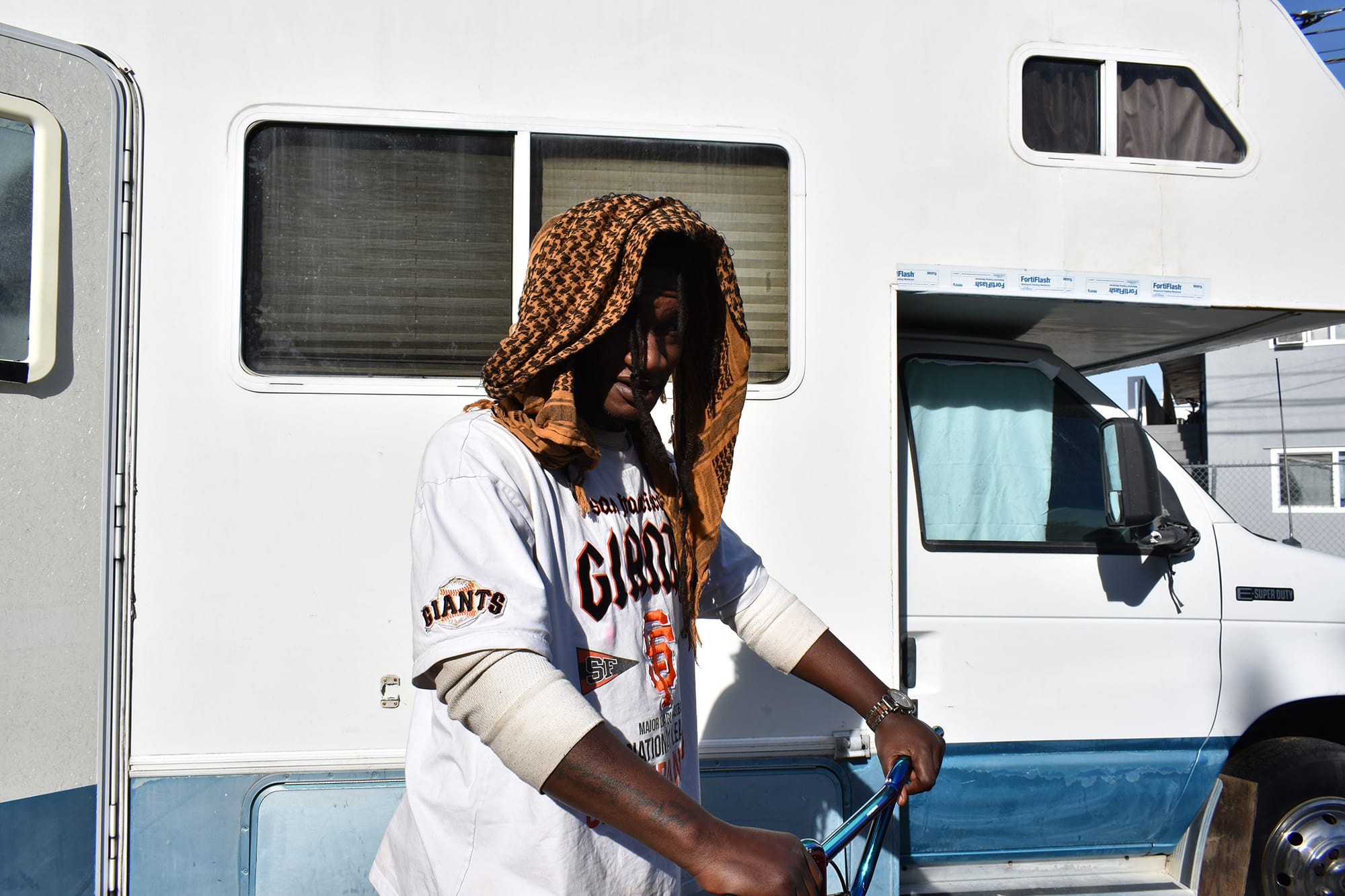
For the last 10 months, Mike Harper has been one of six people living out of an RV in the parking lot of the Church of the Nazarene on Amador Street. He used to live in what he calls the Island, a wetlands area that’s home to a large encampment.
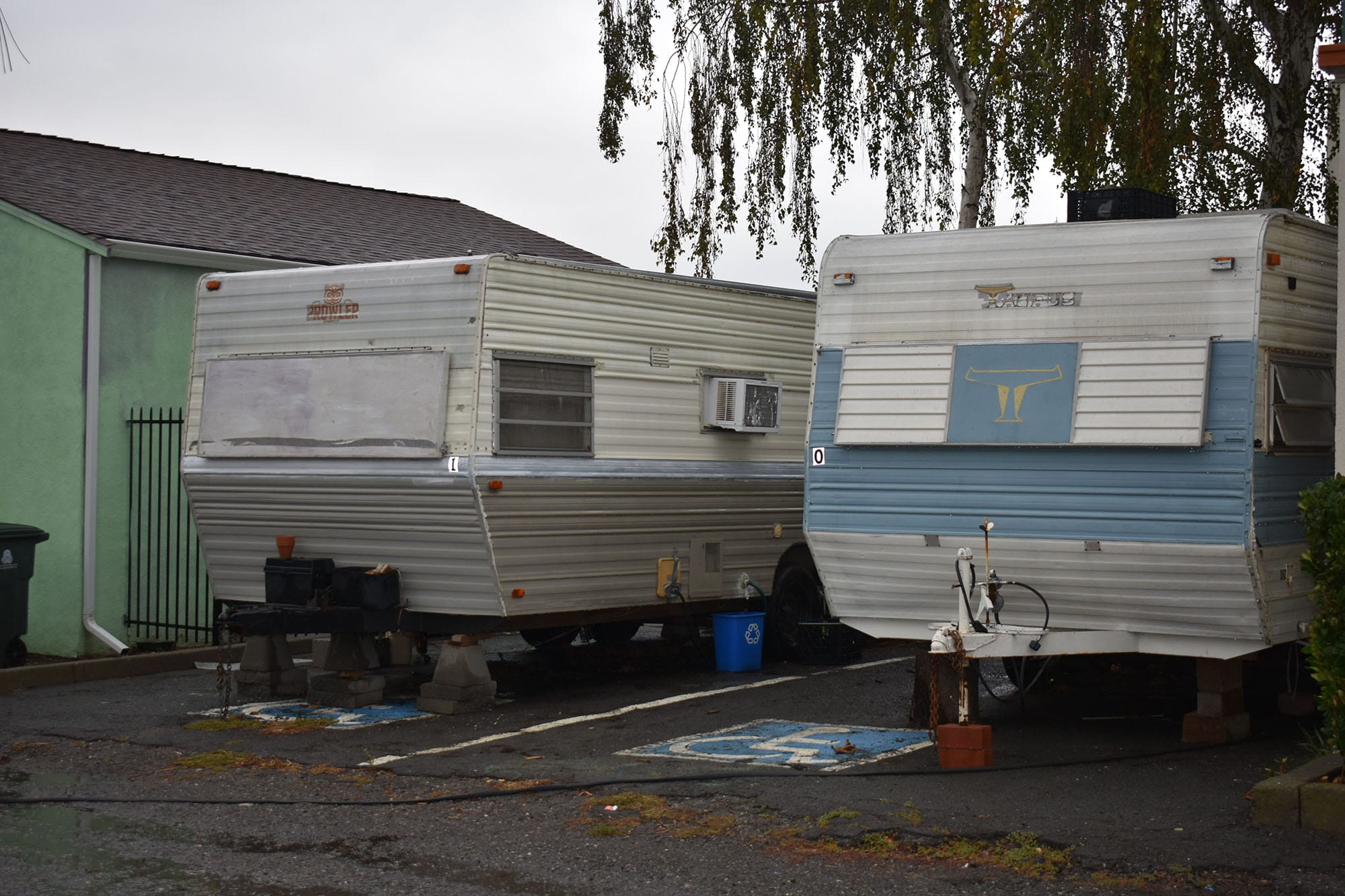
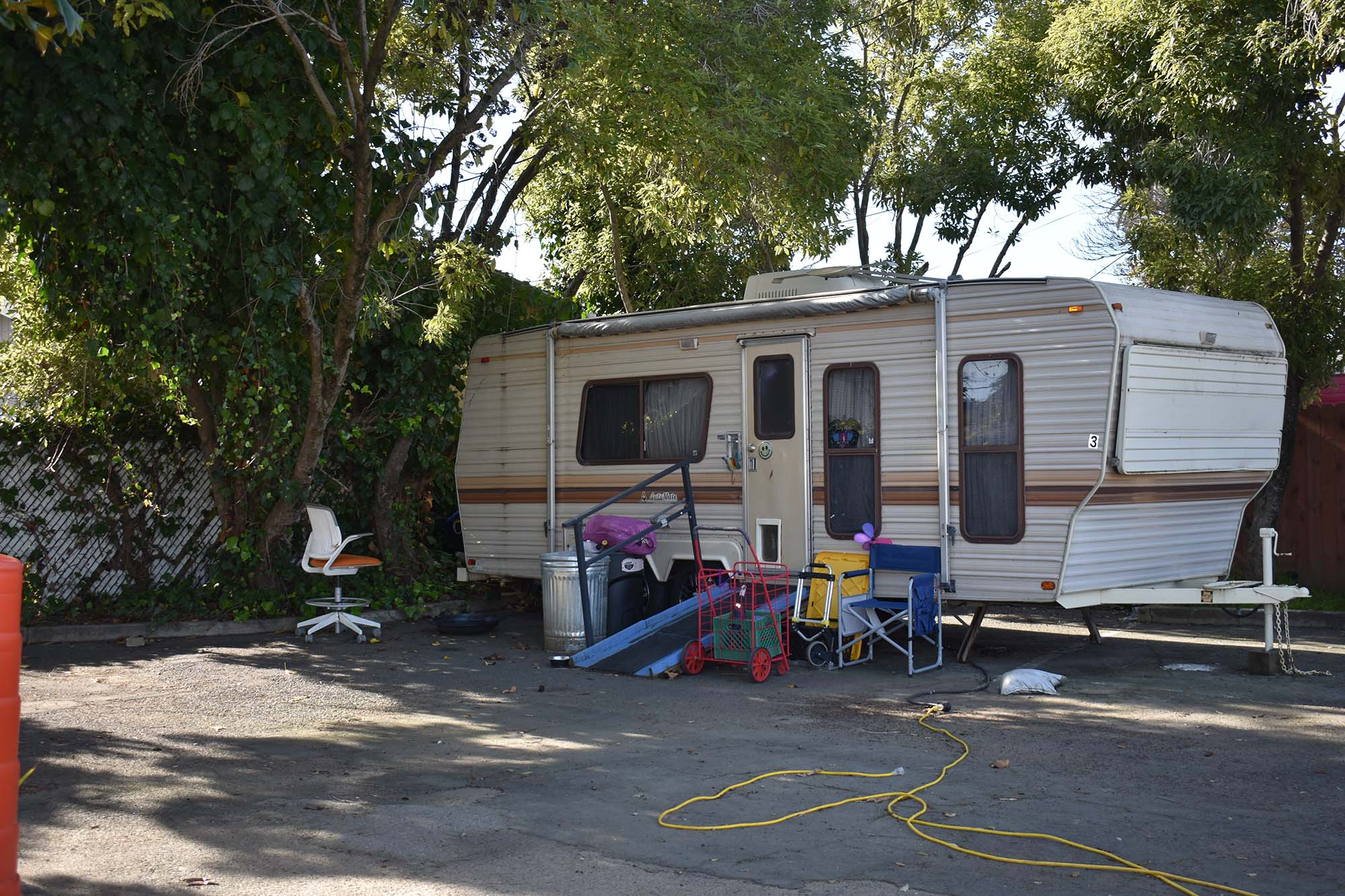
The church started hosting RVs and trailers in the parking lot during the COVID-19 pandemic. Started by the former pastor, the program began with just one RV, but it quickly grew to six. What was meant to be a short-term response to the eviction crisis had become, essentially, a safe parking zone for Harper and others.
The RVs and trailers were old, purchased cheaply by the church or donated by members. The church covered the utilities: long commercial cords snaked across the lot to plug into the church’s outdoor electrical box. Water was provided as needed via a hose draped across a public alley. The church paid for septic tank pumpings twice a month.
Bruce Barnard arrived in July 2025 from New York to assist the church as an interim pastor. “When I asked the city official if our RV parking was permitted, his response was along the lines of ‘Not really, but you’re not at the top of our priority list,’” said Barnard. “So he recommended that we come up with a plan.”
According to Vallejo’s land use map, the block that the church sits on is a residential zone. Per the city’s zoning codes, recreational vehicles in residential areas can’t be parked in one spot for more than a week, and no more than two campers can be parked on a single property.
In October, Barnard asked a Vallejo Facebook group if anyone had any advice on where the people could go if they transferred ownership of the trailers to the individuals.
Suggestions included RV parks like Tradewinds or Vallejo Mobile Home Community and RV Park. But the monthly rent for both locations is around $900, which Barnard said most of the guests could not afford. Many trailer parks also have rules designed to keep out rigs that are more than 10 years old, and they can require a credit check or a security deposit, making it difficult for low-income individuals to move in.
Barnard said they found an RV park that was affordable and willing to take older RVs, but it was in Chico — too far for the guests whose jobs and lives were rooted in Vallejo.
Safe parking programs in other cities often aren’t available for people from out of town. One of Oakland’s programs, for example, requires that applicants are referred by the city of Oakland. Both Mountain View’s and Palo Alto’s programs prioritize those who live and work there. San Jose’s program, meanwhile, is at full capacity.
“If there was a RV park solution right here, I think they all wouldn't have had any problem going,” Barnard said. “I just think they don't have those solutions.”
By early December, only three of the six guests had managed to find alternative living situations.
On Christmas Eve, the situation came to a head.
A code enforcement officer left a warning notice. It stated that an inspection had been made on Dec. 18. The church was found to be in violation of having more than two recreational vehicles parked there, and of taking away parking spaces meant for the property’s occupants. It stated that the church had until Jan. 24 to correct the violations, or be fined a total of $649.94 a day. Any repeat violations after Jan. 24 would incur escalating fines.
The church, worried about the fines, asked everyone to leave by Jan. 20.
Harper is one of the three still remaining — and the only one living in a functional RV, while the other two are in trailers.
Harper said the whole situation has been upsetting because the remaining residents have nowhere to go. He said one of the trailer’s residents is in her sixties. She works at an amusement park, but she doesn’t make nearly enough to afford her own place.
“I told her regardless of what happens, even if we have to strap her [trailer] to this car and tow it to the nearest whatever, we’ll take care of her,” said Harper. “When you take a person’s peace of mind, what more do you have? It’s been really difficult.”
Harper said the former pastor offered him his RV in exchange for landscaping and security work on the grounds; he said he often also did outreach for unhoused people who wandered by the church looking for its food pantry.
But since the violation notice, Harper has learned that the RV’s tags expired in 2011, and the bank still owns the RV, meaning that the title transfer and registration could take weeks — and cost hundreds to thousands of dollars. The church told Harper they wouldn’t be able to assist in paying off the tags, and Harper has to be out of the lot within days — with or without his home.
“The city didn’t do anything besides their job, I guess,” said Harper. “But there weren’t any bad problems here … we never had police, or those types of issues.”
The ‘Yes In God’s Backyard’ solution
In October, Barnard said the city reached out to him about attending a workshop for Senate Bill 4, a new state law which sought to provide a streamlined process for religious organizations to develop affordable housing on their property.
The proposal to build housing on church grounds intrigued him. It was a much more long-term project than hosting the RVs. But with the church’s limited budget, he didn’t think they could afford to build up the parking lot to become a genuine safe parking program site.
Partnering with a developer to repurpose some of their buildings and the lot, meanwhile, felt like a “better long-term plan for both the city and for people who need some place affordably to live,” said Barnard.
State Sen. Scott Wiener, who authored SB 4, has dubbed the bill “Yes In God’s Back Yard,” a play off the pro-development movement’s slogan, “Yes In My Back Yard.”
The Rev. Penny Nixon, who works as a faith communities housing liaison for the County of San Mateo, said SB 4 is not a “magic bullet,” but it does simplify the rezoning and discretionary approval process for churches looking to build housing on their land.
Nixon is a project manager for a five-unit project at St. James AME Zion Church in San Mateo. Once it’s finished, the program will consist of five 264-square-foot units open to young adults aging out of the foster care system.
Nixon acknowledges it’s a very small village. “But if 20 churches did a small project like that, well, that would be 100 units, right?” she said. “Every unit matters, and every faith community that has land should explore that possibility.”
Nixon helped organize the SB 4 workshop that a handful of Vallejo churches attended.
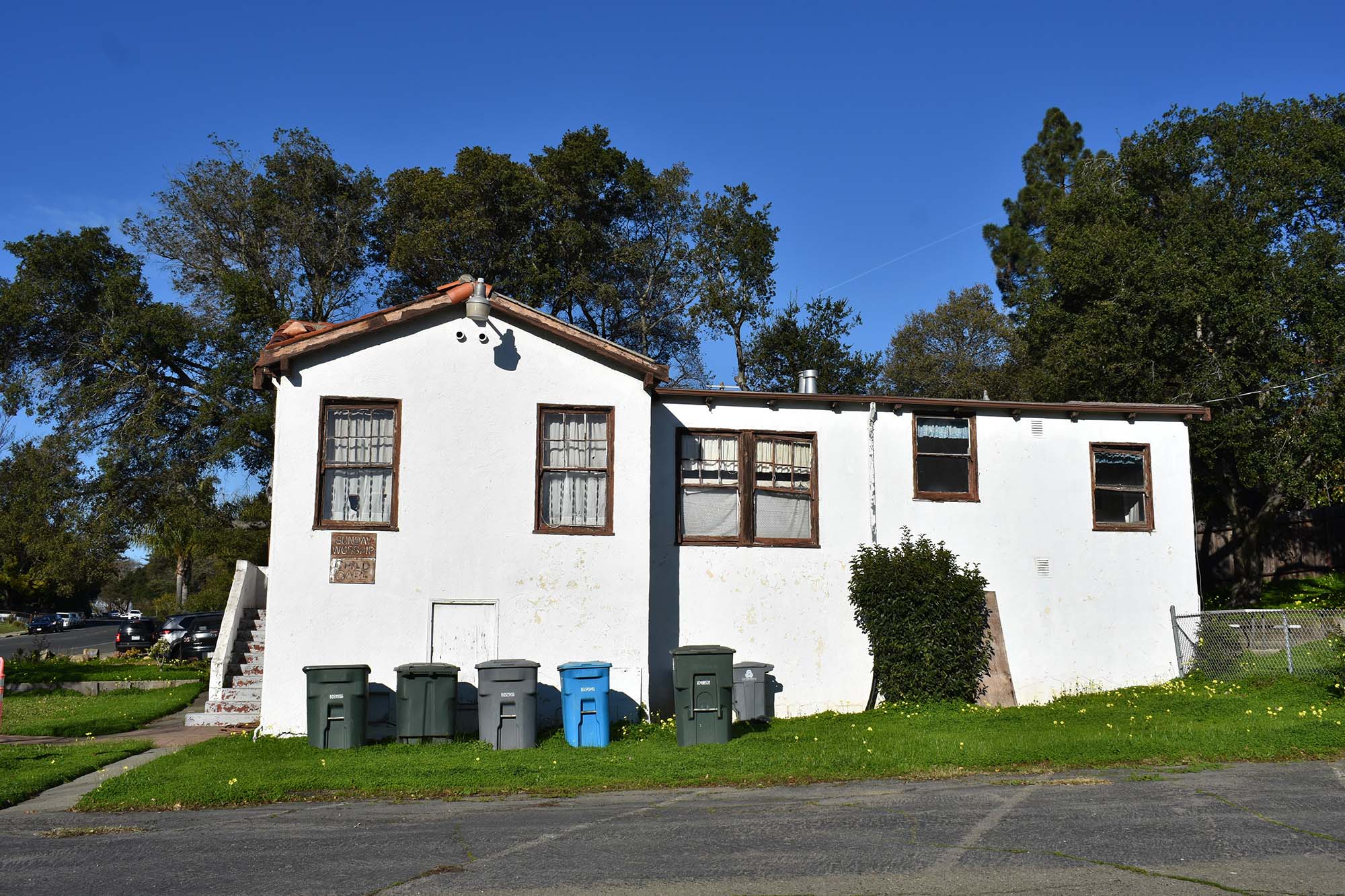
One of them was the United in Grace Lutheran Church on Tuolumne Street. Church council member Lynne Witte said their church has been looking at building affordable housing on their land since the early 2000s.
They don’t have a huge property, so Witte said they would never be able to host a safe RV parking site. But they were interested in demolishing an old annex building that once served as a Sunday school location.
“It's basically a house, and right now, we're primarily using it kind of as a storage site,” Witte said.
So they got in touch with Firm Foundation, the same service provider that St. James AME Zion Church used. Firm Foundation offers small prefabricated units and works with churches throughout the whole construction process.
They were in talks with the nonprofit to clear the plot and put in five small units, two of them ADA accessible. But around 2020 the project stalled out because the city planning division told them that because the building was old, it would need to undergo a historical evaluation — a costly endeavor.
That ended the talks with Firm Foundation, as they were worried that working around the historical requirements could be “very costly without a clear end,” said Witte. “We had to let it go.”
It was only after the church attended an SB 4 conference in October that city planners told them that their church was actually in a residential district, not a historical district. That meant they never had to do a historical evaluation at all.
“I don't know why they said what they said, but they did,” said Witte. She said they’re now back in touch with Firm Foundation, and they’re waiting to see if the organization agrees to work with them again.
“Churches want to support their community,” said Witte. “There’s clearly a housing shortage and unhoused people, and it’s part of our responsibility to take care of the community.”
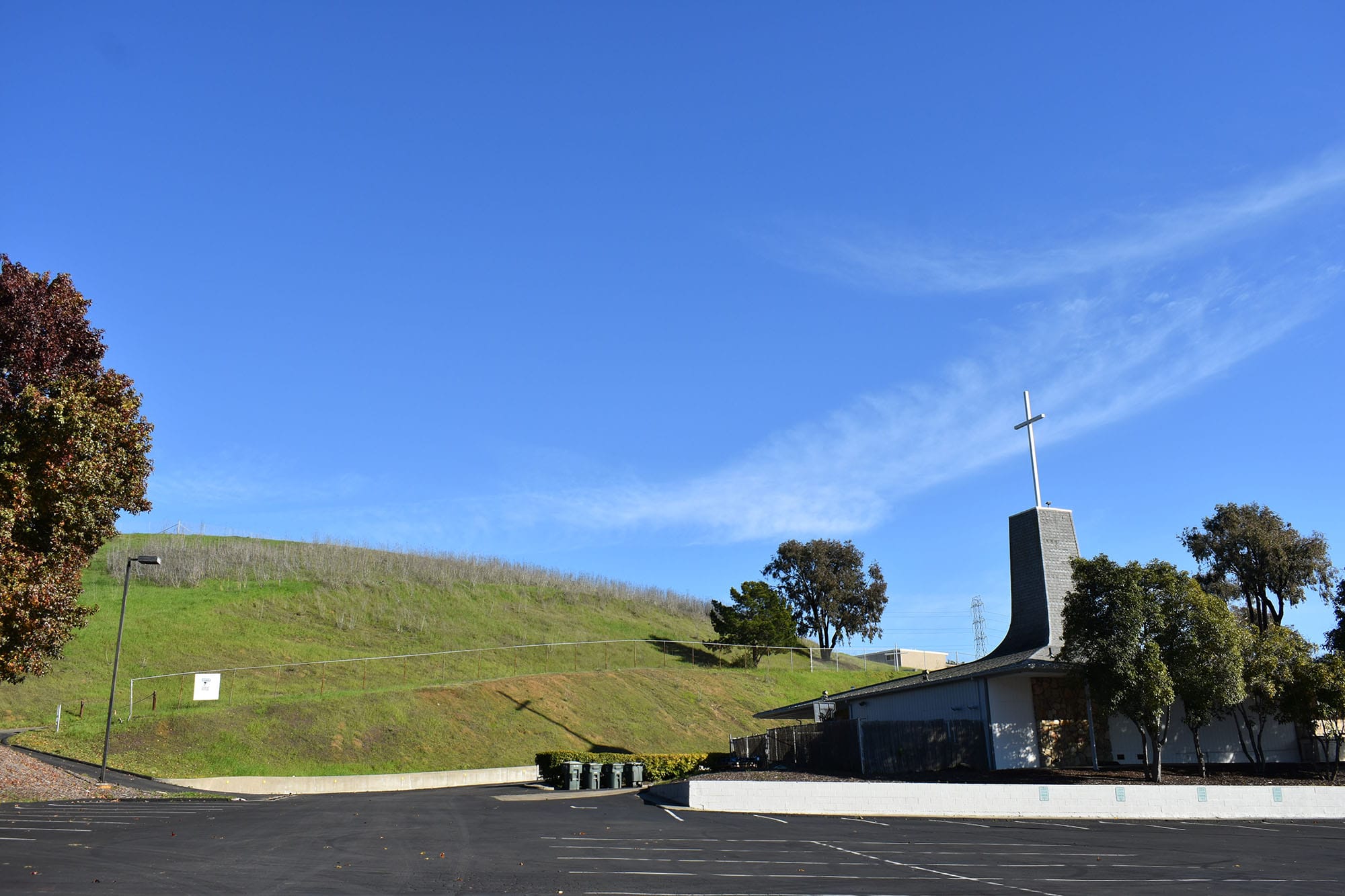
Another church that attended the workshop was The Hill Vallejo on Locust Drive. Pastor Fi Portillo said they have a large parcel of land on the church property that hasn’t been used since the 1970s, and they’ve been exploring how to repurpose it.
“The neighborhood sprung around us. There used to be a school here, and that land was used as a soccer field,” explained Portillo. “With the land now sitting vacant, it’s become a kind of a passageway from one side of the street to the other.”
Portillo said they’re still in the very early stages of considering a housing project, and they haven’t had any official conversations with the city. But the workshops gave him an understanding of how the city hopes to work with faith partners.
“It was more about giving us places to look, as opposed to the city saying, ‘Hey, we have all the resources you need,’” said Portillo.
He said they’d want to take it slow and be thoughtful about the process, if they did decide to start building. “As a church, we're not real estate people. We're not developers. That’s outside our lane,” Portillo said. “So to do it right, we'd want to bring in the right people.”
That’s where nonprofits like FACE LA come in, which Barnard and the Church of the Nazarene members have been working with. President and CEO Hyepin Im said they do all the “hand holding” for churches interested in building affordable housing on their land.
FACE board member Jos Ferguson explained that when a church reaches out to them about a possible building project, their first step is to send out one of their architects to assess the land.
“We need to see if the zoning would even allow us to move forward before talking to the city,” said Ferguson. “The goal is to minimize wasting church time and resources.”
The architect also comes up with a yield study, which would tell the church how many units the architect thinks they could reasonably fit into a given area. If the church likes the number, and FACE sees the project as fundable, then they move forward with pulling in developers and the city.
Im added that they also encourage church leaders to attend their leadership classes, which teach them how to strengthen their community development and outreach skills. “So many churches are doing good work, but they don’t know how to package it in a way that could attract partners and funders,” explained Im.
Ferguson said that if a project were to move ahead, it would likely be built through the Low Income Housing Tax Credit program, which gives developers a tax credit if they agree to build units with affordable rent.
But Ferguson noted that these projects can take years, and the talks with the Church of the Nazarene are still years out from completion.
SB 4 is also only about two years old, so its long-term impact, if any, is still unclear. But Nixon said she’s hopeful it will encourage churches to act.
“Housing is a justice issue,” said Nixon. “It’s on all of us to create a Bay Area where everyone belongs, and where every person has access to safe and affordable housing.”
Editor's note: This story has been updated to correct the spelling of Hyepin Im.
Before you go...
It’s expensive to produce the kind of high-quality journalism we do at the Vallejo Sun. And we rely on reader support so we can keep publishing.
If you enjoy our regular beat reporting, in-depth investigations, and deep-dive podcast episodes, chip in so we can keep doing this work and bringing you the journalism you rely on.
Click here to become a sustaining member of our newsroom.
THE VALLEJO SUN NEWSLETTER
Investigative reporting, regular updates, events and more
- Housing
- homelessness
- government
- Vallejo
- Vallejo City Council
- Vallejo City Hall
- Bruce Barnard
- Mike Harper
- Church of the Nazarene
- SB 4
- Scott Wiener
- Penny Nixon
- San Mateo
- United in Grace Lutheran Church
- Lynne Witte
- Firm Foundation Community Housing
- The Hill Vallejo
- Fi Portillo
- FACE LA
- Hypein Im
- Jos Ferguson