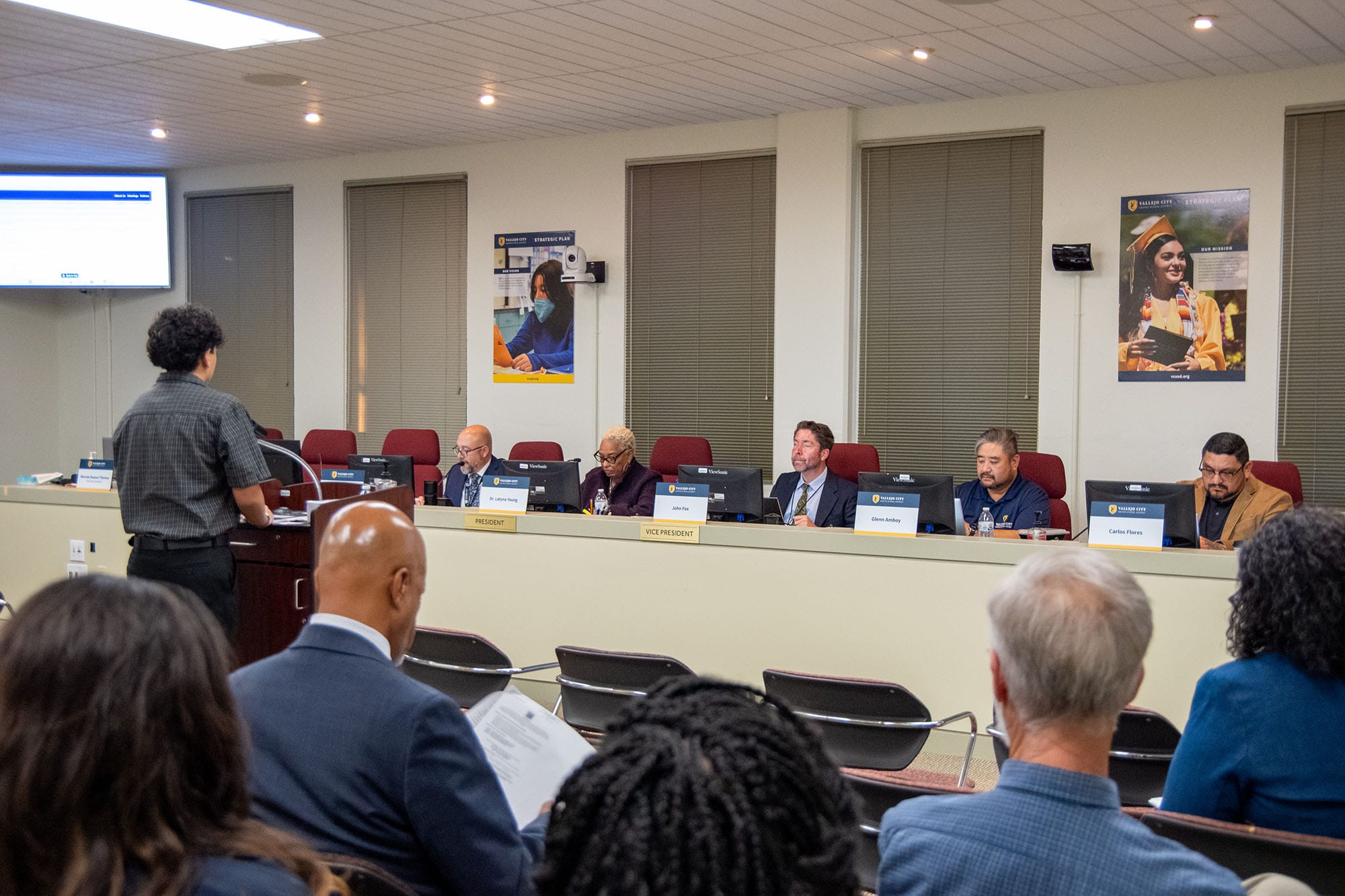
VALLEJO – The Vallejo City Council moved forward on two controversial development projects Tuesday, faced with pressure to improve economic development opportunities through new housing and businesses.
The City Council voted 6-1 – with Councilmember Alexander Matias opposed – to accept an environmental report and development, design and landscape reviews to allow a proposed subdivision with 51 detached single-family homes on 20 acres of undeveloped land in the Glen Cove neighborhood.
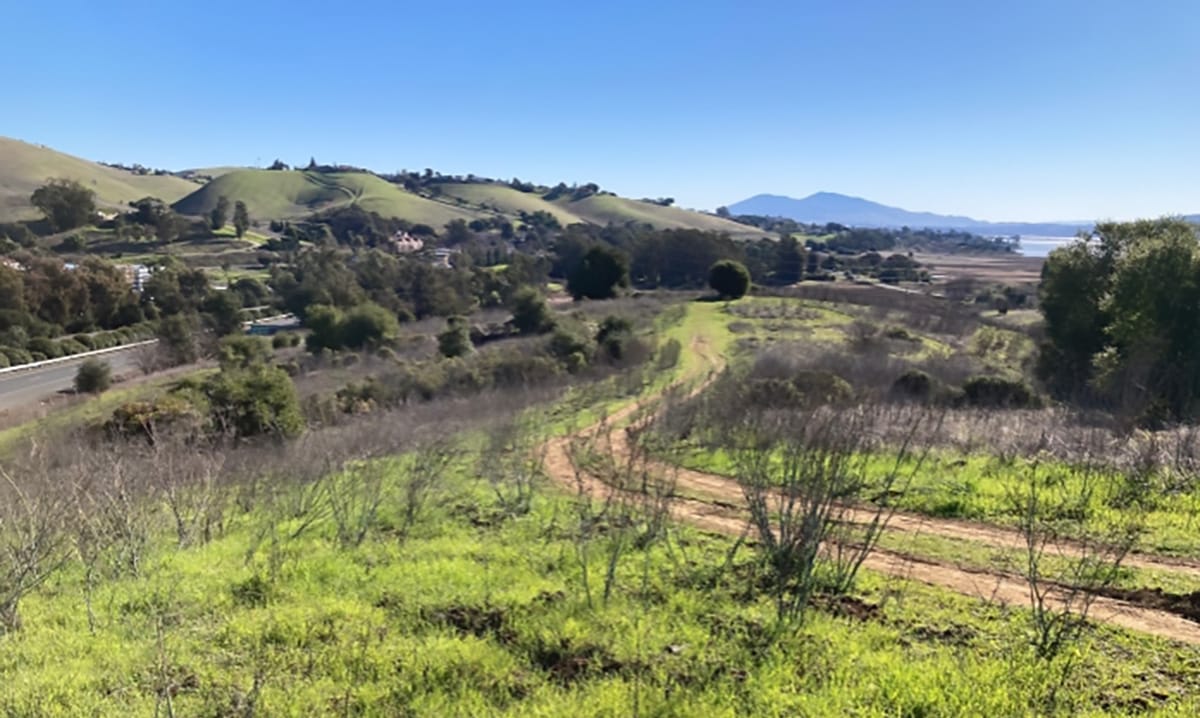
The land is surrounded by Interstate 780, the California Highway Patrol Office on Benicia Road and the Benicia State Park. The project is located near Shady Lane and Wildflower Avenue, and would leave half of the property designated as open space.
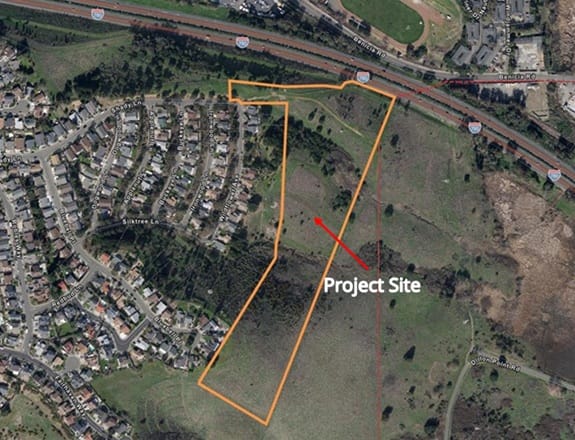
Mayor Andrea Sorce said she was glad to see developer Sancerra Vista Cove, LLC, attend meetings and answer people’s questions, as many concerns have arisen.
The site has been zoned for residential use since 1970 or earlier, as previous proposals for housing were rejected, according to planning and development services manager Kristen Pollot. The Sancerra proposal has been discussed in multiple open house workshops over the last year, where residents have worried about how new housing on the site would create more traffic, disturb wildlife or create new maintenance costs for the city and public to cover.
City staff on Tuesday night said the development addresses many longstanding concerns. It would lock in one of the parcels to prevent any future development under state law for open space deed restrictions. The city traffic engineering staff said no additional street support will be necessary for the burden on Shady Lane, saying the traffic will have “minimal impact” on the area, and Vallejo Fire Department approved an emergency evacuation plan. The area has also been cleared by an environmental study, as staff said they were required to look for nesting birds and bats, knowing that burrowing owls could inhabit the open space adjacent to the property.
Sorce, who lives in Glen Cove, said she wanted more from the provided traffic survey, particularly for Shady Lane. However, she said, “It actually doesn’t really lead to that many cars, it's just scary to imagine at first.”
Councilmember Tonia Lediju, who also lives in Glen Cove, said the site has been ready for housing for decades. “We’ve been very thoughtful about the open land remaining in Glen Cove,” she said. “I think the concept is beautiful and befitting to the community and how you have worked with them.”
However, she criticized the lack of affordable housing in the plan, saying people who already live in Vallejo largely won’t be able to afford the proposed homes.
“I think it’s a travesty when we have developers come in and build in our city, and we don’t have policy or requirements that say you must do something about affordability,” Lediju said. “Many people who will buy these developments will be someone who’s going to migrate into Vallejo.”
Sancerra partner Adam Smith said the process of investing in the proposal has been expensive, took nearly four years and the project was planned for above-median income earners. He suggested that the city consider implementing an inclusionary zoning ordinance to help guide future development. The city is exploring such an ordinance, which could require developers to add affordable housing to market rate developments.
Lediju criticized his response, asking, “What is your social responsibility?”
“I know what it takes to pencil out a project, you don’t have to tell me, but it becomes part of, what is the benefit you are bringing to a community?” she asked. “Basically what you're telling me is, ‘you didn’t have a policy so I didn’t have a reason to do anything to the community to consider how I could add to the community from a social responsibility perspective.’”
Smith said the project has been “tricky” to get approval for, and in the process home prices have come down while construction costs have gone up.
“I'm trying to recuperate my investors’ money,” Smith said. “We’re not looking to make a modest profit on this. In terms of social responsibility, I don't know. We come to cities like Vallejo and are trying to understand the landscape and what the needs are.”
Councilmember Alexander Matias said he doesn’t see a solution for the project’s lack of affordability considerations, as the city must meet its requirements for housing under the Regional Housing Needs Allocation, which requires Bay Area cities to plan for and meet allotments for affordable housing needs.
“Folks who are coming to do business should have an understanding of the conditions of the city and what we’re trying to accomplish from a housing perspective,” Matias told Smith. “You’re leading us right into a problem.”
In public comment, several residents continued to oppose the project. Resident Christine Gipson mentioned serious traffic issues and potholes already in the area, as well as access issues.
“I object to any housing on this land which is in direct contact with the resource conservation land of the surrounding Glen Cove hills … and the endangered salt water marsh of Southampton Bay,” Gibson said. She said there have been numerous reasons why the land has not been developed into housing over the last five decades, and every time a plan is presented, the same issues with environment, traffic, and access remain.
Resident Carol McKenzie said she has asked councilmembers to walk the land to consider how the project map affects the area.
“Out of the project, there’s only one way out,” McKenzie said. “There are going to be about 400 residential trips up and down that road daily. You’re not talking 35 cars a day.”
Jamiah Adams, a member of the Design Review Board, opposed the project, saying she heard concerns about preserving open space and preventing high traffic in the area.
Adams said there will be more people living in the area than expected. “Vallejo is a unique community, and I notice living in Glen Cove that many of the homes there have … extended families who live in the home, so there’s more cars per home,” she said. “Even if there are only 51 homes, it would really be more than 51 cars … because of the way people live in Vallejo.”
However, realtor Rosanna Souza said that Glen Cove area lacks enough housing and new development would benefit the city’s economic and tax revenue outlook.
“I also appreciate that the developer has chosen to leave one parcel in its natural state,” Souza said. “The location of the development near the entrance to Glen Cove should help minimize traffic impacts in the neighborhood itself.”
Blue Rock Springs moves forward
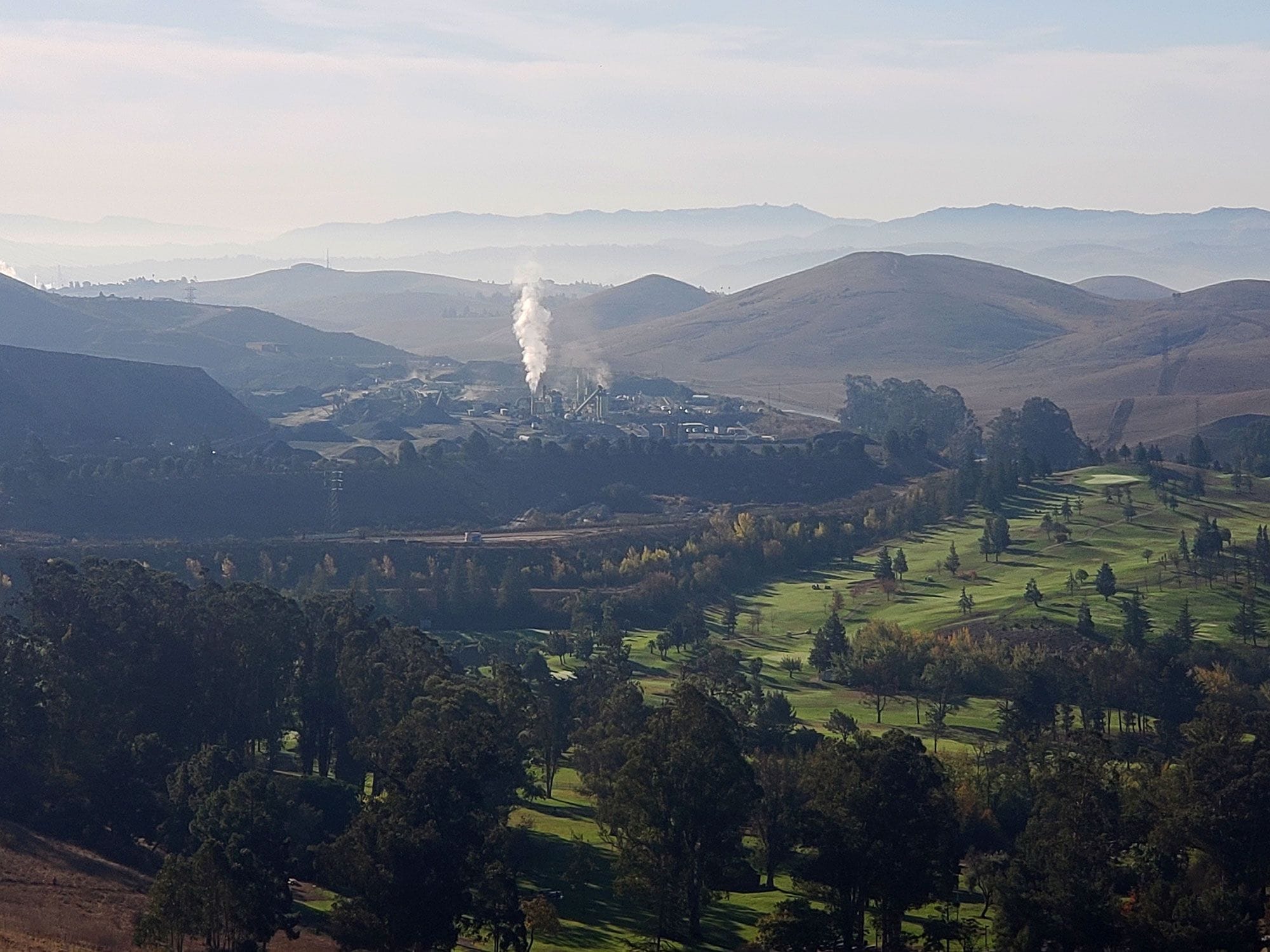
The council also voted unanimously to approve a preliminary concept plan for a redeveloped golf course at Blue Rock Springs under a profit sharing agreement, with the option to explore opening a youth center at the site.
The city’s planning and development services department will next review the concept plan, while the city prices out the project for construction in coming years.
City staff have presented plans for the property several times before. The existing city-owned golf course reported losses of approximately $4.6 million from 2011-2017, and the city in 2017 opted to sell a 75-acre portion to fund development of a new clubhouse and improved golf course to increase revenue.
In 2020, the city faced a legal claim from Syar Industries, the company that operated the nearby quarry, which raised concerns that residences could be impacted by dust and noise generated by their operation. As a result of a settlement with Syar, all residential development is confined to the west side of Columbus Parkway.
The site has been redesigned since, and part of the course was transferred under an agreement in 2024. The development has been controversial in part because residents became alarmed when developer Blue Rock Springs LLC advertised the property for $18 million only eight months after purchasing it for $400,000.
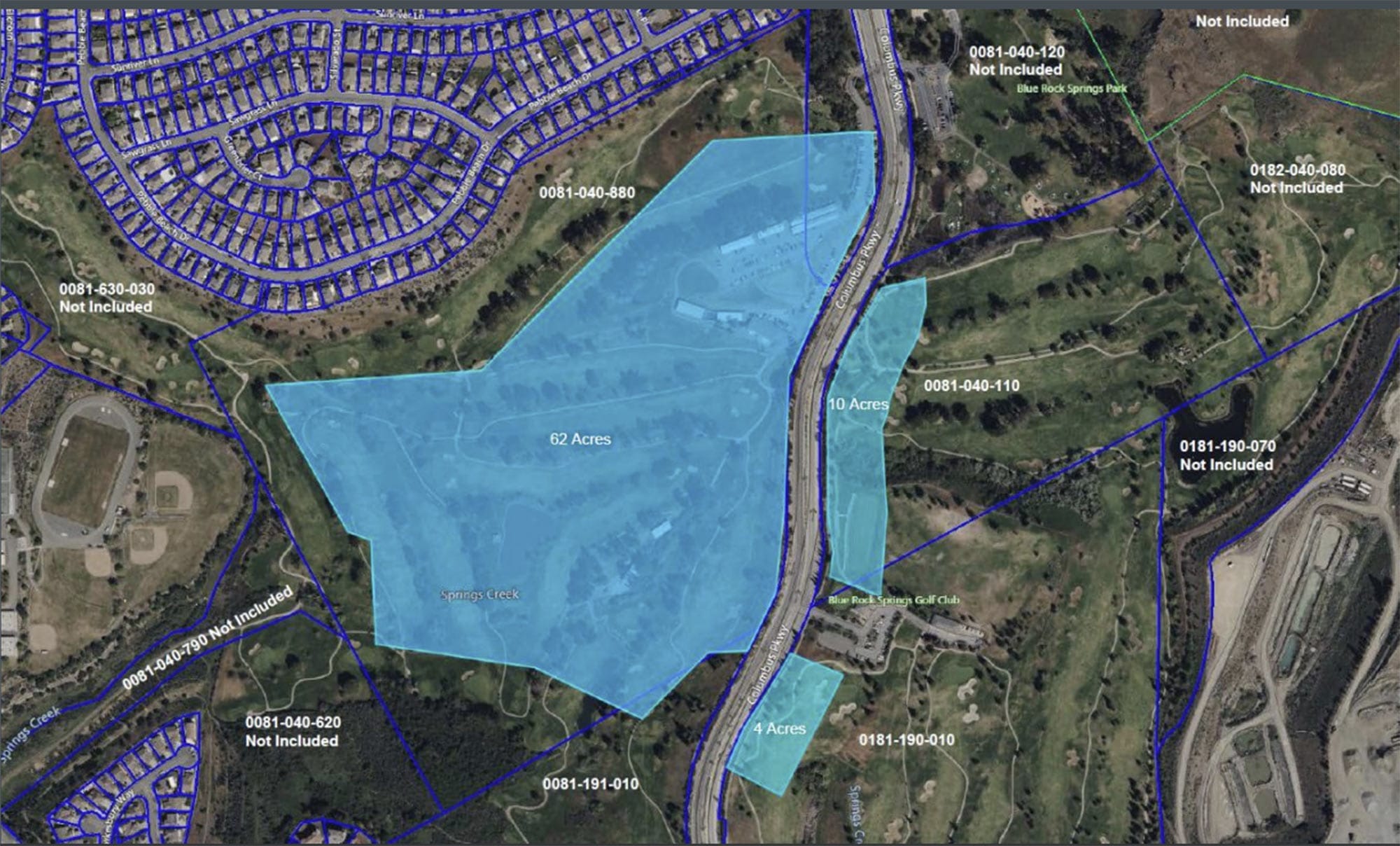
The proposal presented Tuesday night includes a clubhouse and banquet hall with capacity for 350, and parking for 339 along with a cart barn for 120 golf carts. The project cost estimate now totals about $23 million, and the city will share in any profits from the sale of finished homes that Blue Rock Springs LLC is able to negotiate with homebuilders.
Sorce said she wanted to be sure that the development would not require any further public dollars, given that Blue Rock Springs LLC plans to sell the residential lots to a housing developer and the city will receive 8.15% of the gross lot sales that exceed the minimum compensation of $10.5 million. Blue Rock Springs LLC may negotiate a share of the housing developer’s profits for the sale of the completed homes and it must split that with the city.
“The math is starting to tilt, to where we're not getting as much revenue from the sale of the homes as we hoped,” Sorce said. “We are not committing to any one model - this is still just the design phase and we’re going to have to keep our eyes on this.”
While the full source of the project’s financing remains unclear, city staff said that the developer can build in stages in order to build revenue over time as customers start to use the course facilities.
Lediju said that she needed to see a thorough financial plan for managing the project, including how it will be financed. Staff said a finance plan is forthcoming.
Resident Dennis Yen told the council that the project has been 25 years in the making.
“You need to keep in mind that this is a business that makes money,” Yen said. “It’s not just that we've made money on the course to support the course, we’ve made enough to give the operator incentive to move on. We’re talking about taking that business and making more money. If you can’t … then the citizens of Vallejo are going to ask, why are you sitting up there?
Before you go...
It’s expensive to produce the kind of high-quality journalism we do at the Vallejo Sun. And we rely on reader support so we can keep publishing.
If you enjoy our regular beat reporting, in-depth investigations, and deep-dive podcast episodes, chip in so we can keep doing this work and bringing you the journalism you rely on.
Click here to become a sustaining member of our newsroom.
THE VALLEJO SUN NEWSLETTER
Investigative reporting, regular updates, events and more