
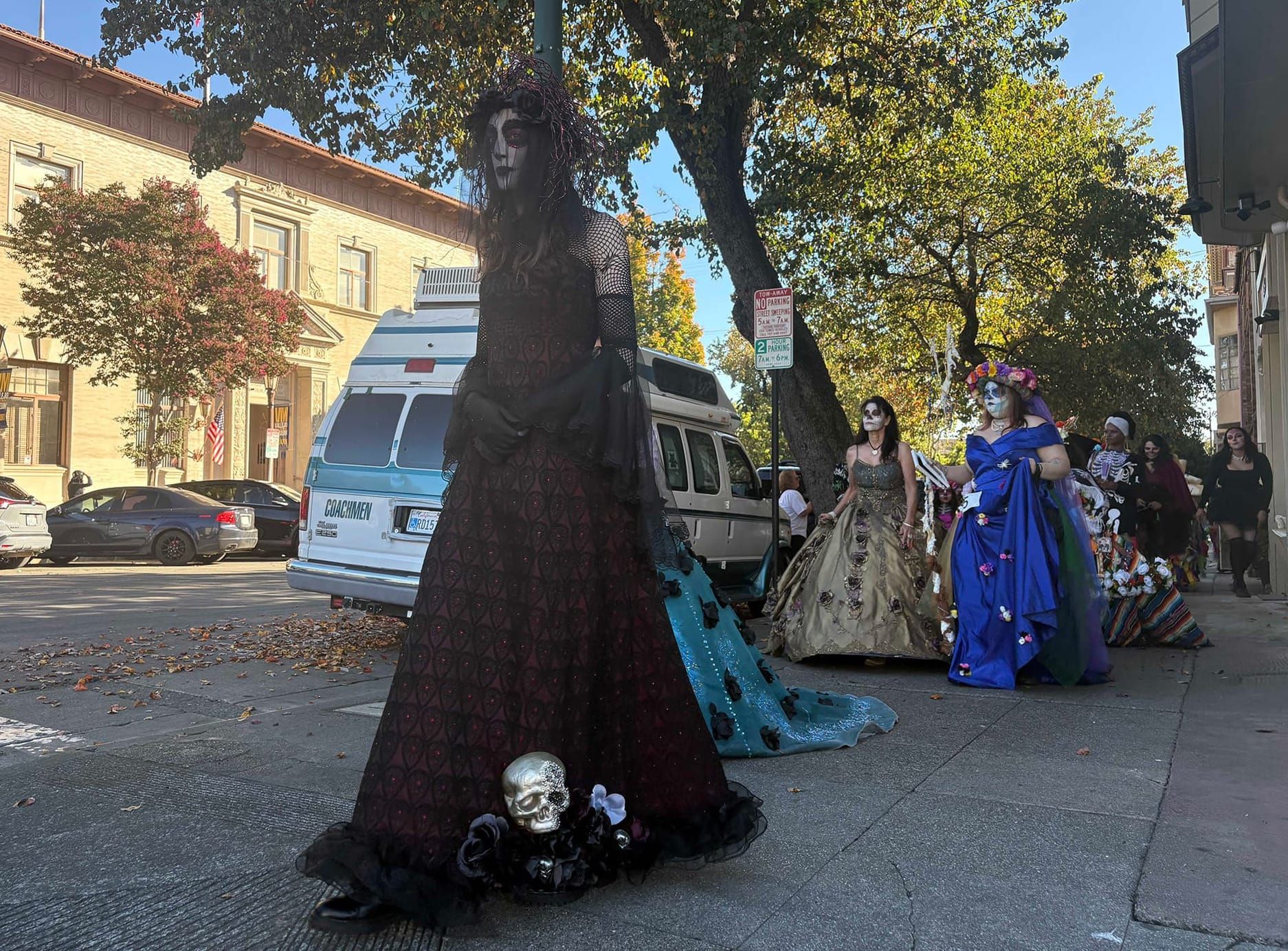
VALLEJO – The annual tradition of honoring the dead with Día de Muertos festivities filled the streets of Vallejo with Latin American music, food and art over the weekend, despite ongoing community fears of federal immigration raids.
The free celebration takes place every year in downtown Vallejo, with live music and performances as well as local vendors selling traditional food, artwork and handmade products. The festivities include dance performances, face painting, a Catrina costume contest and a classic car exhibition, which hundreds turned out to enjoy Saturday afternoon.
The Day of the Dead is celebrated throughout Latin America, honoring dead loved ones by combining indigenous Aztec rituals with Catholic traditions.
In Vallejo, part of the celebration includes exhibiting memorials dedicated to locals, such as advocate Jaime Esparza, who died in April. Esparza was a longtime volunteer known for his passion for community work in Vallejo. He was honored by California State Assemblywoman Lori Wilson, U.S. Rep. John Garamendi and Solano County Supervisor Cassandra James on Saturday, as members of his family looked on.
Organizer and Solano AIDS Coalition executive director Mario Saucedo also paid his respects to Esparza. He said that the celebration is more somber this year, and expected a lower turnout in Vallejo this year amid the community’s heightened fear of U.S. Immigration and Customs Enforcement raids.
Federal immigration agents arrived in the Bay Area in late October as President Donald Trump threatened crackdowns, which has increased locals’ fear of surges regardless of their legal status, he said.
Vallejo has an especially vulnerable population to immigration enforcement – more than 29% of the population was born outside the U.S., according to the U.S. Census bureau – and since January there have been 14 immigration related detentions in Solano County, according to North Bay Rapid Response’s data.
“We’re doing the best we can to create a safe space for everyone who comes to the event,” Saucedo said. “Unfortunately, because of what the [Trump] administration is doing with the ICE raids and our Latino community, a lot of them, even with citizenship cards, are afraid to come out because they see what’s going on.”
Saucedo serves as a creative director for events in other parts of California as well, and said he has heard concern and trepidation in other municipalities about holding the annual celebration, including in the South Bay. However, he said the celebration goes on in Vallejo out of “resilience,” bringing together more than 17 artists to create the ofrendas and other memorials celebrating loved ones while educating people about Latino traditions and culture.
“There’s a lot of power in this,” Saucedo said. “We bring cultural awareness, but also we contribute so much to the quality of this country. We are the nurses, the housekeepers, the gardeners. We’re right here and we are not going anywhere. We build communities and we are strong.”
Vendors at the celebration also worried about the attendance this year. Edith Mejia and her family have been running El Churro Chueco in Vallejo for almost two years serving churros and other desserts, and said business was good at last year’s festivities.
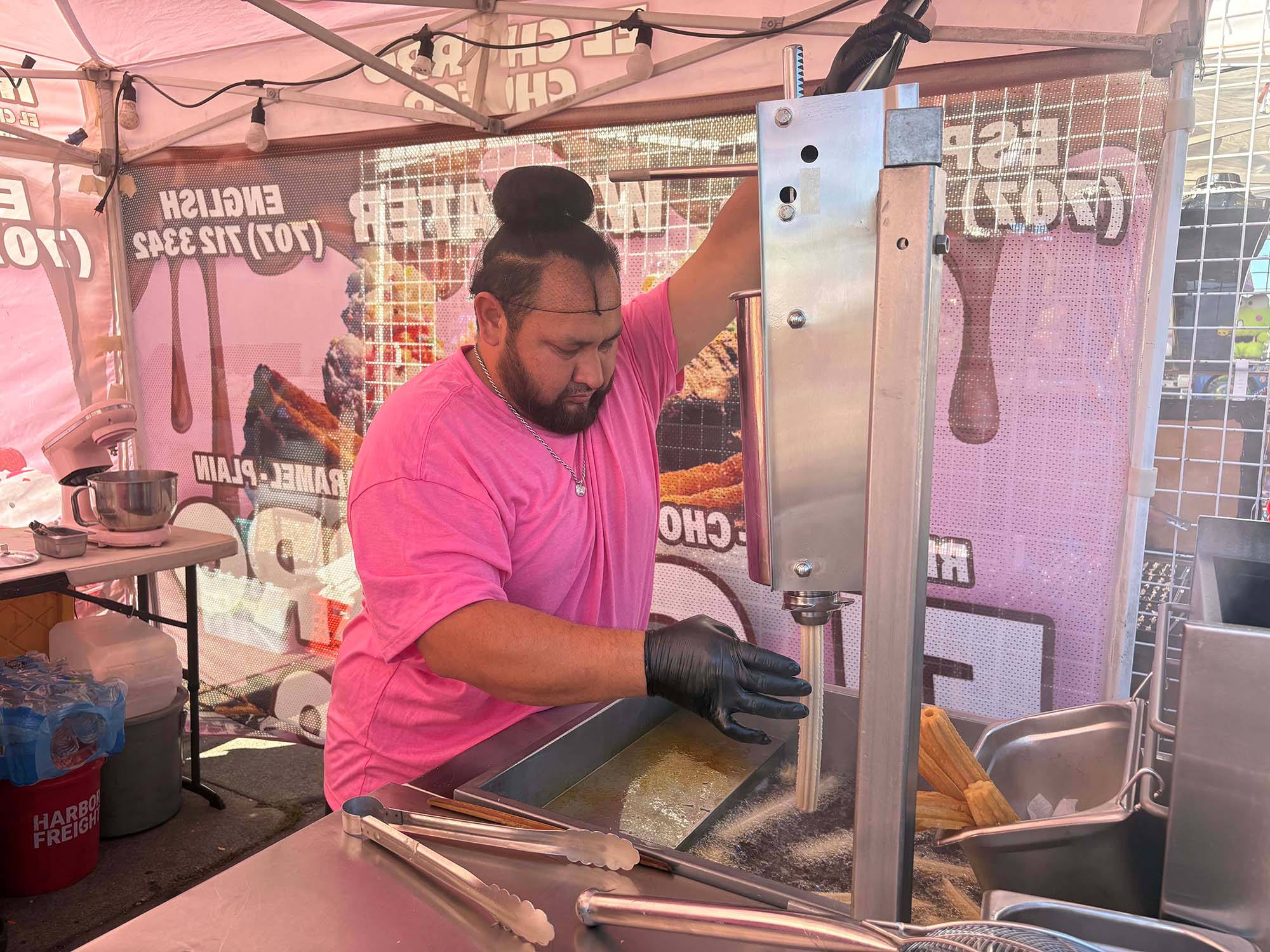
However, Mejia said she worries about the impacts on family-owned businesses like hers as fears of ICE grow. She was born and raised in Vallejo and has struggled to get her business established at the Vallejo Farmer’s Market, and worries how local business owners can make it while being afraid for their workers and families.
“With all the controversy this year with ICE, I just don’t know,” Mejia said. “But I love my community and my city, and I’m happy to be part of this event.”
She, her husband Juan and their children spent the day joyfully making churros, encouraging customers to try creations like the marzipan-filled dough with Biscoff and ice cream. “We do it with lots of love,” Mejia said.
For artist and Vallejo resident Ali Gomez, the celebration happens no matter what. She has contributed pieces of artwork for the local ofrendas presented every year, and this year for the first time designed metalwork pieces in honor of different family members.
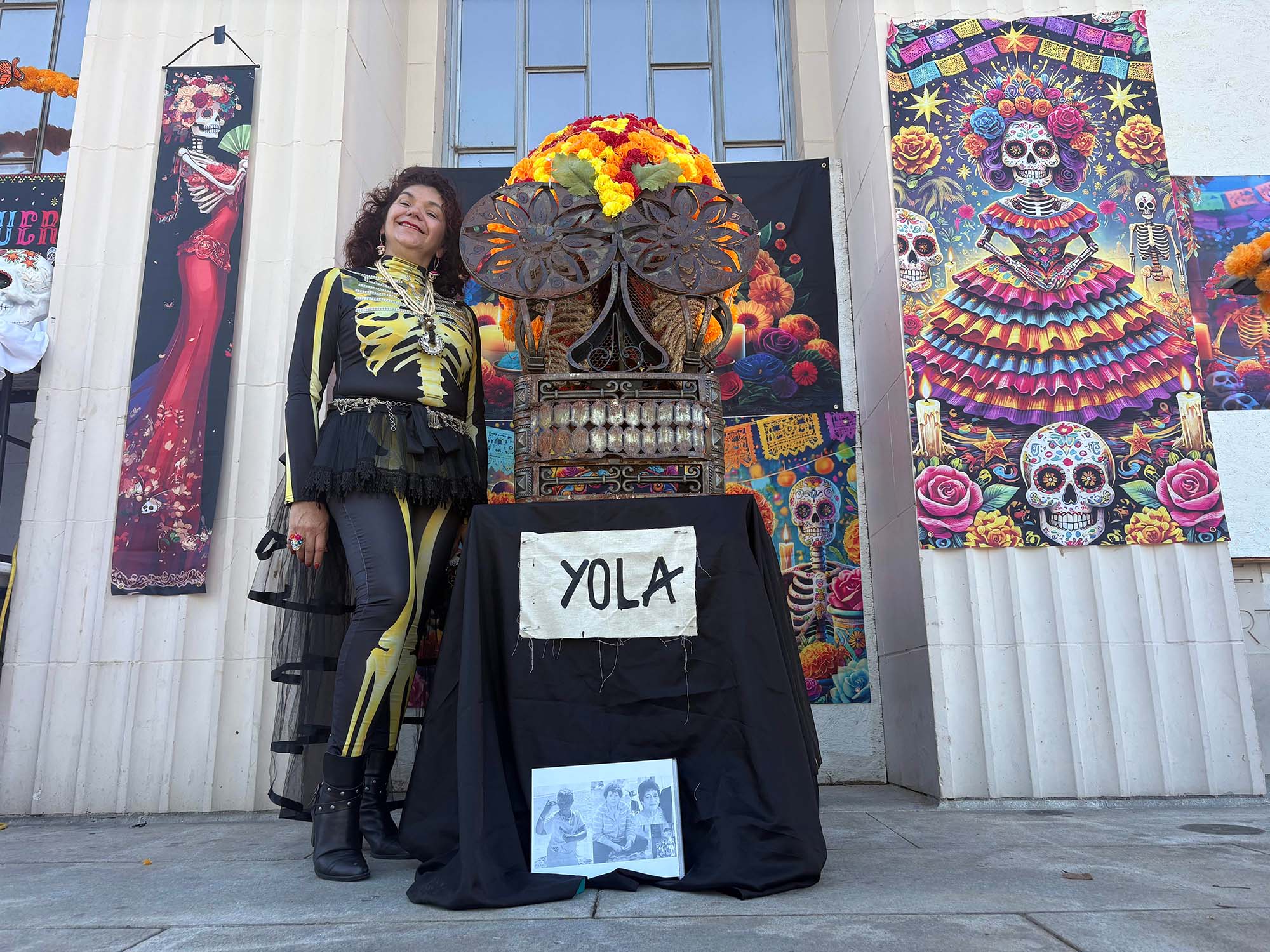
Gomez demonstrated her pieces made with metal, flowers and other family pieces such as a large hat in honor of her father-in-law. She said it’s important to her that Día de Muertos is a joyous party as much as a space for mourning and thinking of loved ones.
“It’s something you feel that you want to be here with them, to remember,” Gomez said. “We have a lot of memories. My grandmother taught me to make food, taught me what I am. She always told me if you want to do something, do it well. My mother was a teacher. My father-in-law was from Puebla, Mexico.”
“Even when people pass, we still have it here “ she added, touching her heart. “Everybody is coming here because everybody lost someone. It’s a good time to remember them.”
Gomez’s other work can currently be found in the City Arts Gallery at 420 Virginia Street.
Independent local news depends on you
The Vallejo Sun is supported by readers who value reliable, in-depth local news. Your support helps us continue investigating important issues and keeping Vallejo informed.
Become a member today