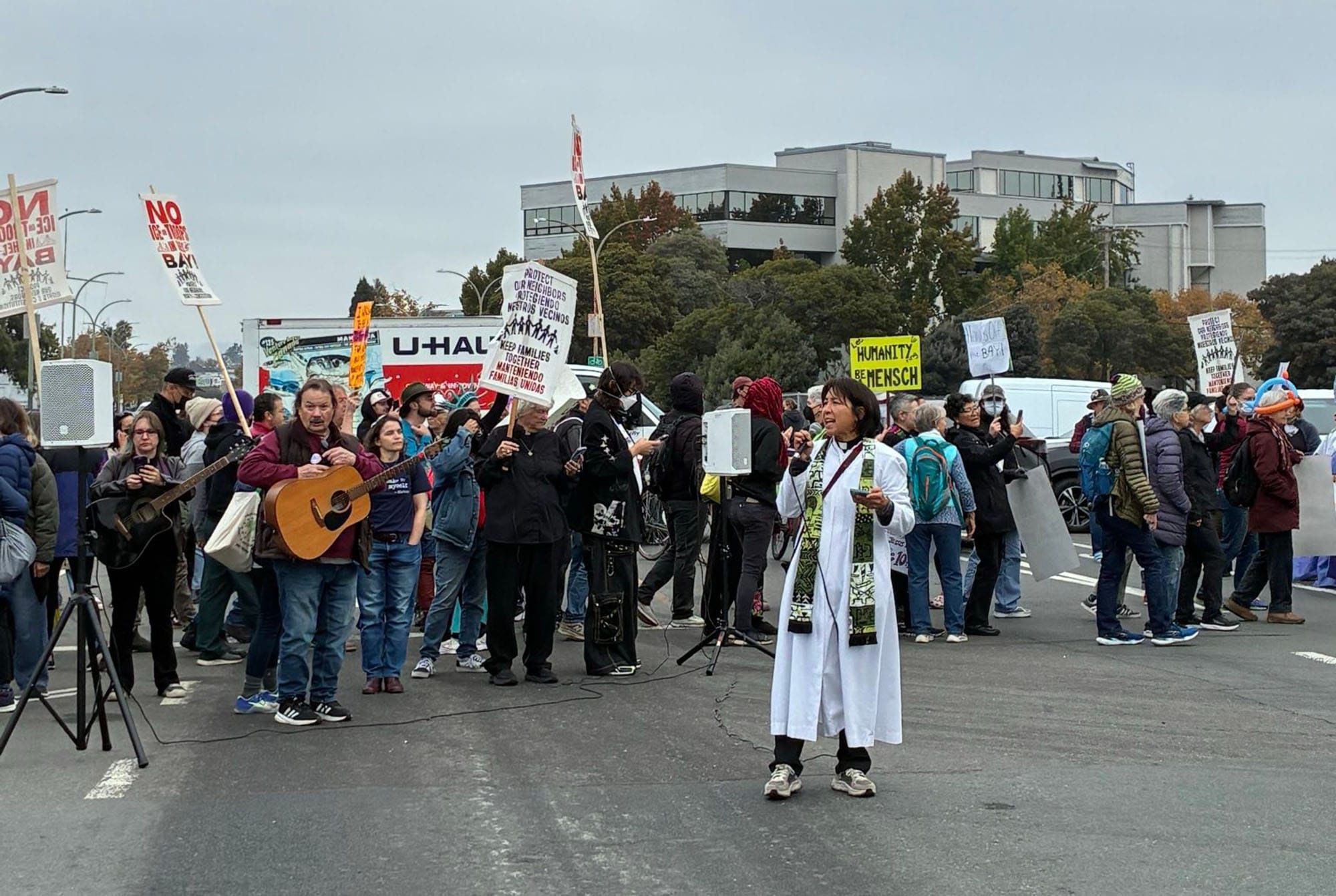
VALLEJO – Federal immigration agents arrived in the Bay Area on Thursday amid protests as President Donald Trump threatened a crackdown on immigration. The North Bay Rapid Response network, a local organization with a mission of helping affected immigrants, prepared for the potential increase in enforcement.
“Rapid Response is gearing up,” Luis, a Vallejo resident and volunteer with Rapid Response who asked to be identified by his first name, said at a protest in Oakland on Thursday morning.
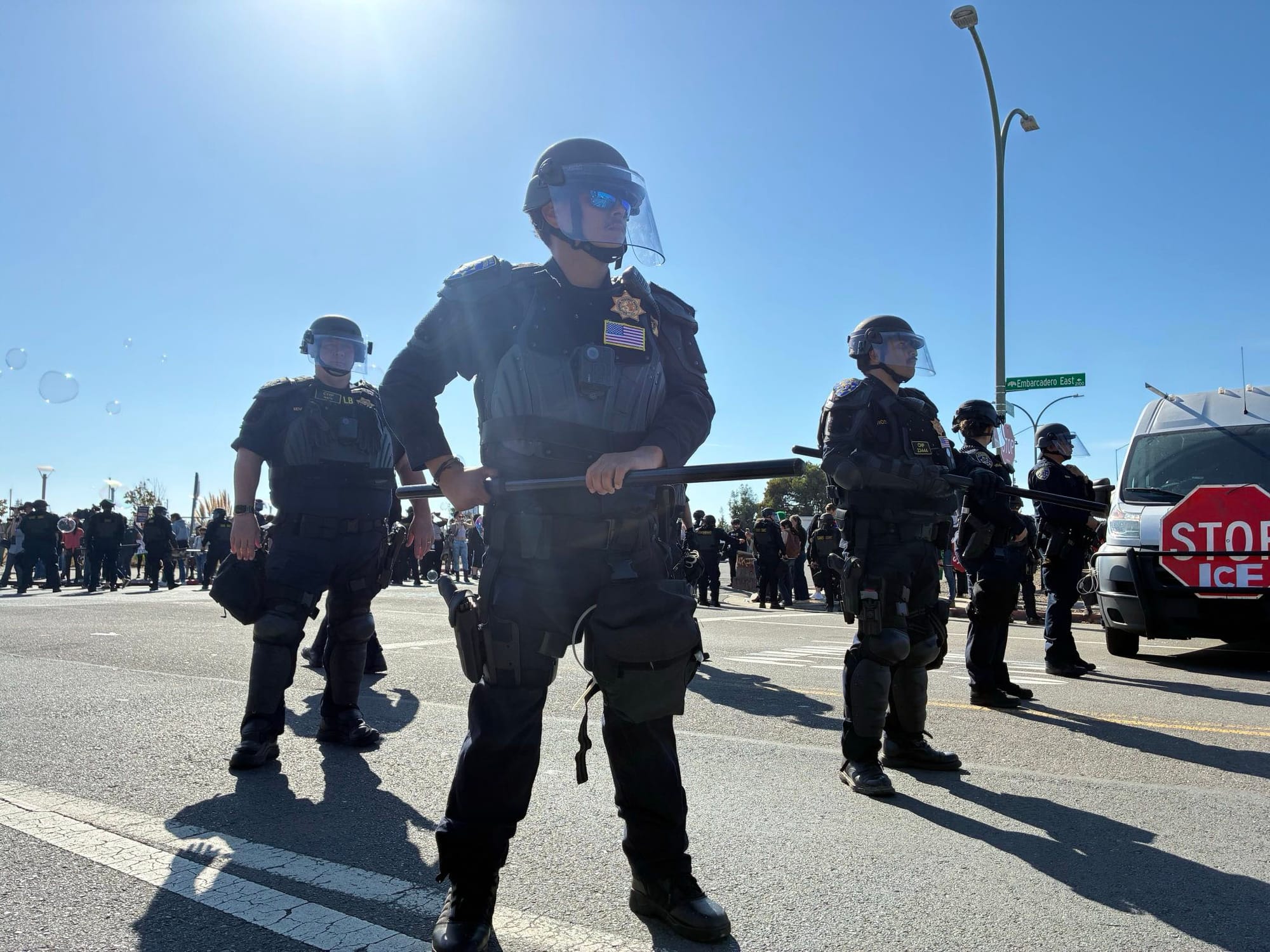
At around 7 a.m. Thursday, protesters attempted to prevent U.S. Customs and Border Patrol agents from leaving the U.S. Coast Guard base in Alameda. Police used flashbangs and pepper spray on protesters, injuring at least two.
By 3 p.m., after more than 60 California Highway Patrol officers in riot gear cleared the area of protestors, several heavily tinted vehicles exited the Coast Guard base. At least two protestors were arrested.
“Hopefully by showing up to protests and things like that, we’re able to minimize the amount of detention,” Luis said.
Regardless, North Bay Rapid Response has about 200 volunteers currently ready to respond at a moment's notice to any suspected federal immigration agent activity.
The volunteer-based organization responds to suspected immigration agents’ presence and helps connect affected immigrants with resources. Part of a larger network, North Bay Rapid Response operates throughout Solano, Napa and Sonoma counties.
One of the main functions of the organization is just being there for immigrants in times of crisis so they don’t feel alone and powerless.
Five days a week, Luis wakes up before 6 a.m. to work the dispatcher shift, clocking in over 20 hours of unpaid labor every week. As dispatcher, Luis answers the organization’s hotline that people call when they suspect immigration agents in their neighborhood.
The Rapid Response volunteers are trained in identifying and responding to federal immigration agents. Once on scene, they can confirm or deny whether immigration agents are present.
Doing so, Rapid Response can let the larger community know whether to avoid the area or not, using social media accounts on Instagram and Facebook.
If an immigration related arrest is made, the observers will collect information from the detained person’s family in order to try and locate them. This step is essential in order to connect the detained person with legal services, post bail and allow the family to remain in contact with them.
A business card with Rapid Response’s hotline says that if immigration agents are at your door, “don’t open the door, keep silent, do not sign anything.”
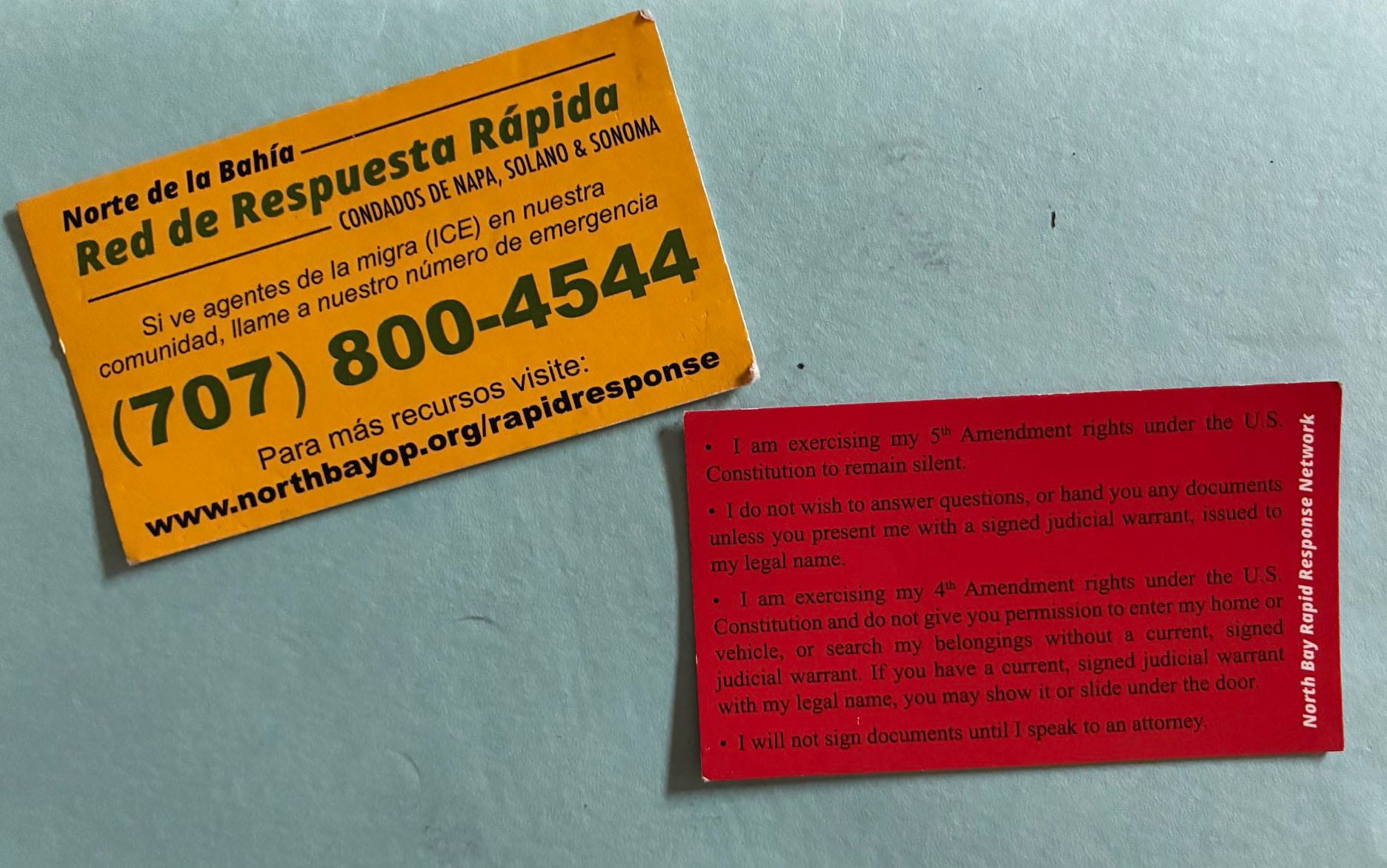
Rapid Response also recommends legal organizations to help people navigate the immigration system. “We also have an accompaniment team which goes with the person to the court and takes them there,” Luis said. “If there is a detention and the family calls and says that they need assistance with bills or rent or anything like that, we also recommend other resources within the community and with the county.”
Once someone gets arrested by immigration agents it can be difficult to locate them. “We're seeing that they're taking people further and further away from the area that they were picked up,” Luis said. “People are arrested in the area and then within hours they're already in LA. We had a case of somebody that was in Arizona within a couple of hours.”
Responding to suspected immigration agent’s presence however is the organization’s main function.
North Bay Rapid Response has trained 47 dispatchers between the three counties they service. They’ve responded to 3,181 calls since the beginning of the year and connected 46 detainees with legal services.
While Vallejo has an especially vulnerable population to immigration enforcement – more than 29% of the population was born outside the U.S., according to the U.S. Census bureau – it has seen relatively little immigration enforcement since Trump took office.
Since January of this year, there have been 14 immigration related detentions in Solano County, eight of them were in Vallejo, four of them in Fairfield, one in Suisun and one in Vacaville, according to Rapid Response’s data. On Thursday someone was detained in Fairfield, Luis said.
“We haven't seen any activity at the level of Los Angeles, for example, where there's raids or anything like that in all three counties,” Luis said. Rapid Response has been stressing, however, “not to keep our guard down, because it could happen at any point.”
Most of the federal immigration activity in the North Bay so far has been concentrated in Sonoma County, Luis said.
Luis said that there is no apparent trend in who is getting detained, other than “98% of the people that have been arrested have all been Latino.” Immigration agents are known for targeting individuals who speak Spanish, for example.
According to data on U.S. Immigration and Customs Enforcement arrests, obtained by the Deportation Data Project, 54% of the 3,000 people arrested by ICE in September had no previous criminal charges or convictions, as analyzed by NBC Bay Area.
“We're seeing a lot of people get picked up as they're on their way to work,” Luis said.
For this reason Luis says it's extra important to know your rights, get counsel when needed and use the available resources. In addition to “being extra cautious, making sure that you stay away from trouble of any sort,” Luis said.
In February, Vallejo police said in a statement that they will not be aiding federal immigration agents by collecting information on immigration status or “facilitate detentions based solely on immigration holds.”
California’s Values Act prohibits local law enforcement agencies from arresting, detaining, or investigating people for immigration purposes and limits their participation in immigration-related task forces. However, it does allow agencies to transfer individuals who have been arrested for certain serious crimes to federal agencies.
To prepare for the potential crackdown, Rapid Response is holding additional training this week and is going to proactively go to areas that may be high risk, like Hispanic neighborhoods.
The group will also participate in a safety planning meeting at Autonomous Gallery at 419 Georgia St. in Vallejo at 7 p.m. Friday and will offer further training opportunities and information on how to get involved as a volunteer.
You can sign up to become a legal observer here. The Rapid Response hotline is (707) 800-4544.
Independent local news depends on you
The Vallejo Sun is supported by readers who value reliable, in-depth local news. Your support helps us continue investigating important issues and keeping Vallejo informed.
Become a member today