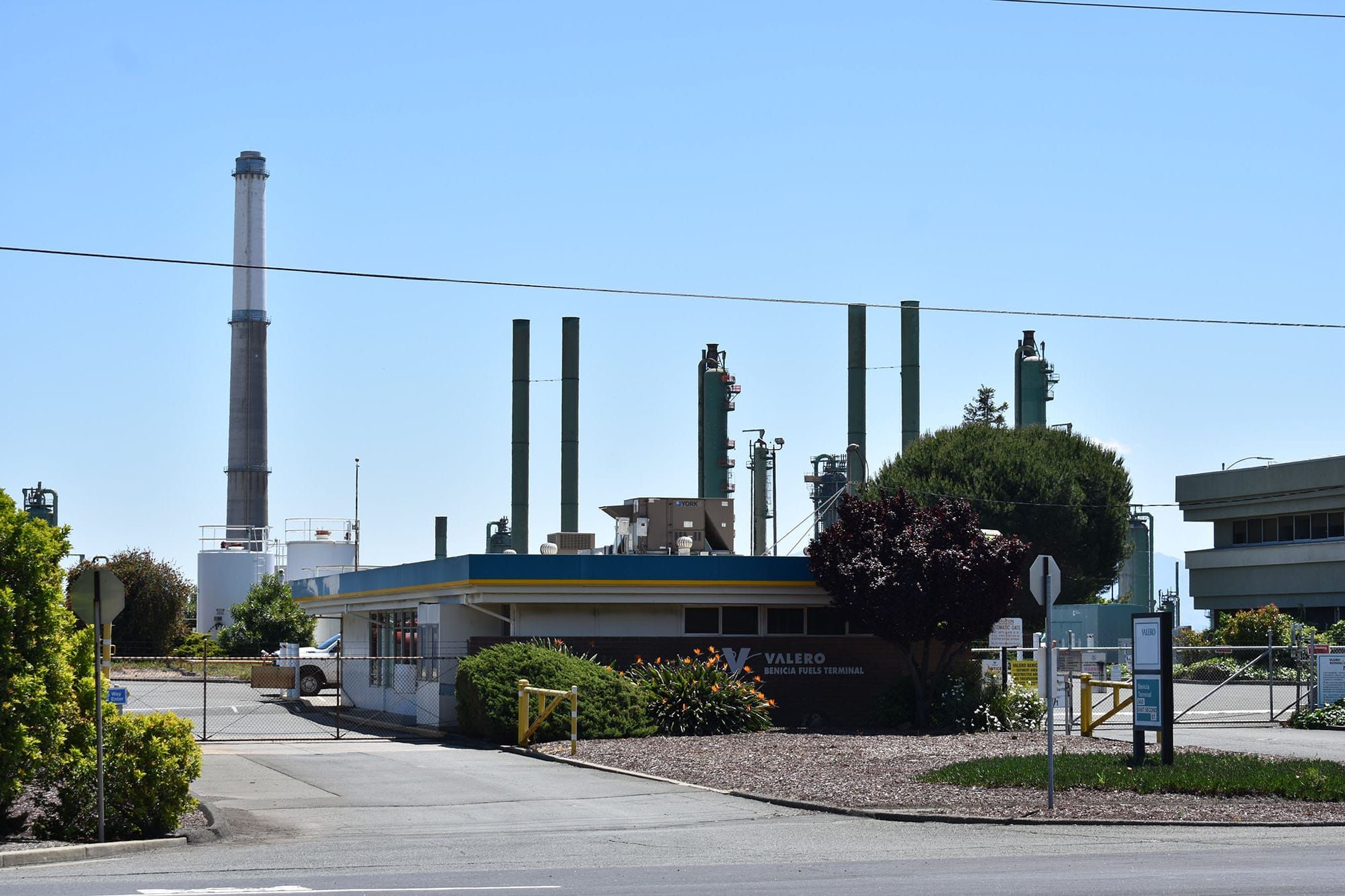
BENICIA – The Bay Area Air District fined the Valero refinery in Benicia $3.25 million for multiple incidents and ongoing compliance issues on Tuesday.
In a statement, the air district stated that the fine was a result of 118 different violations stemming from a series of operational and equipment-related incidents at the refinery over several years. They include releases associated with boiler operations, sulfur recovery unit disruptions, valve leaks, and other equipment issues that led to excess emissions. The settlement agreement shows that some of these violations happened as far back as 2021.
“This penalty holds Valero accountable for air quality violations and makes clear that noncompliance has consequences,” said air district executive officer Philip Fine. “In addition to the financial penalty, this action strengthens air monitoring and public access to essential data so the Benicia community can see what is happening at the refinery through the idling of operations.”
As part of the penalty, the air district is requiring that Valero update its equipment and improve operational practices. They’re also requiring that the company release quarterly reports about pollutant concentrations, provide real-time data to the public, and improve its fenceline monitoring plan.
Valero did not respond to a request for comment.
Last year, Valero announced it would “idle, restructure, or cease” operations at the Benicia site by the end of this month. The company later announced that rather than cease all operations, it would phase down active production but continue to import gas and serve as a hub for the region.
David Lindsay, the director of the Benicia Community Air Monitoring Program, said that’s why it’s still important to monitor for pollutants around the refinery’s borders, even if it’s no longer producing anything.
“If they import gasoline, it would come to the port, get pumped into tanks, and then trucks would pick it up and deliver it to the Bay Area. Or it would go out by pipeline,” Lindsay said. He said that during any one of those steps, there’s the possibility of releasing hydrocarbons — chemicals that can cause dizziness, respiratory distress, lung damage, and even an increased risk of cancer.
He added that if the refinery eventually becomes decommissioned, there will likely be excess emissions happening throughout that whole process too. “If they decommission it, they have to go in and pull everything out,” Lindsay said. “Anything they touch or disturb is probably going to have some impact on the air.”
The refinery has already faced multiple community complaints during the idling process. In late March, black soot rained down from the refinery as a result of them cleaning equipment, alarming residents and prompting Benicia Unified School District to declare a shelter in place for over two hours. Several refinery workers later told NBC Bay Area that the flaring event sent two dozen workers to the hospital with chemical burns.
City Councilmember Kari Birdseye said the last update the City Council heard from Valero regarding the idling was at February’s Benicia Refinery Community Advisory Panel meeting. Birdseye said that as far as she’s aware, the refinery will be fully idle by the end of April or early May.
She added that her friends who live near the fenceline say the refinery is pretty quiet now.
“The constant sound of loud manufacturing is gone, so we know that the refining process is not taking place anymore,” said Birdseye. “But Valero has said that they definitely want to fulfill all of their existing contracts, and I think that that's going to happen by the end of June. So we'll see.”
She said that it’s still unclear what will happen to the refinery because, as far as the council is aware, the state is still looking for another buyer.
In January, the California Energy Commission vice chair said that they were “working with a variety of market players and stakeholders” to evaluate options for the refinery in order to “maintain fuel supply to Northern California.”
“We live in uncertain times, so I understand the intention of leaving it idle for a while,” she added. “But there’s really nothing in it for the community of Benicia.”
Birdseye said the state has identified the Port of Benicia as a possible site for an offshore wind manufacturing supply chain — a rising market projected to reach $65 billion by 2030 — but that business can’t happen if the refinery spins up again.
She added that the community has been stuck in limbo for months over this issue of what’s going to happen to the refinery, and they’re ready to move forward. “If I and many of the residents in Benicia had their way, we would be able to dismantle, decommission, and clean that 900 acres up as soon as possible,” she said.
THE VALLEJO SUN NEWSLETTER
Investigative reporting, regular updates, events and more
- environment
- business
- government
- Benicia
- Valero
- Bay Area Air District
- Philip Fine
- David Lindsay
- Benicia Community Air Monitoring Board
- Benicia Unified School District
- Kari Birdseye
Gretchen Smail
Gretchen Smail is a fellow with the California Local News Fellowship program. She grew up in Vallejo and focuses on health and science reporting.
follow me :