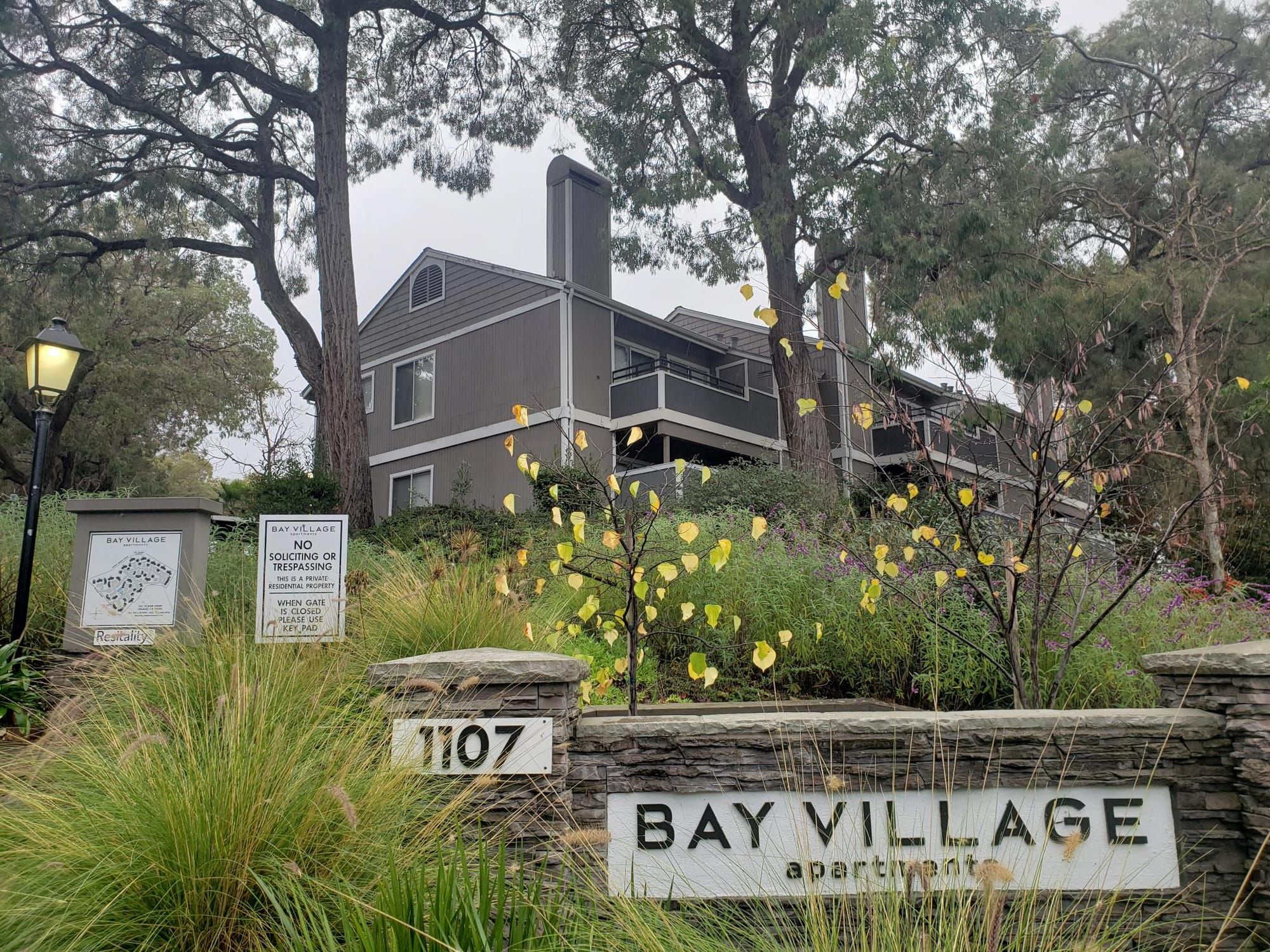
VALLEJO – The Vallejo City Council on Tuesday unanimously approved a plan for a developer to convert a South Vallejo apartment complex into mostly affordable housing in the coming years.
The city approved the California Municipal Finance Authority to issue tax-exempt bonds for the nonprofit Step Up Housing to convert the Bay Village Apartments at 1107 Porter St. into a partially affordable housing property. The finance authority is a joint powers authority of municipal agencies throughout the state that can issue bonds for economic development, job creation and social programs.
Vallejo housing director Alicia Jones said that the property’s approximately 260 homes are currently listed as market rate, but the bond for up to $80 million would convert the property into a mix of affordable and market rate homes.
Step Up Housing chair Michael Potter said the nonprofit manages more than 750 affordable homes, including in Richmond and Pinole. He said the goal is to make 26% of Bay Village Apartments homes affordable for people making 50% or less of the area’s median income and 55% for people making 80% or less of the median income.
“We’re just using a federal program for which it was intended, to help create and preserve affordable housing for the community,” Potter said.
The plan drew support as it does not require the city’s financial or legal involvement. Travis Cooper, a financial advisor with the California Municipal Finance Authority, said that the only job of the City Council in this case was to hold the required hearing and approve the borrower to use the bonds within city limits. While this is a private bond, a hearing must be held for tax-exempt exchanges.
Jones added that the property has been owned by a large real estate company out of Chicago, which is now selling it.
Councilmember Helen-Marie Gordon, whose district includes the property, said that she’s seen situations in other cities where residents received notices to vacate until the city and the U.S. Housing and Urban Development stepped in to create a program.
“What I want to make sure is that we’re not doing something nice right now, and then worry about our people later,” Gordon said.
Potter assured the council that “no residents will be displaced.” He said that current residents will need to show their income to see if they qualify to live at the property, and any remaining residents who don’t meet the requirement should be able to remain in one of the property’s market-rate units.
The bond has a 40-year affordability clause to ensure the rates are preserved. Gordon said she appreciates the move to add mixed-rate housing for her district. “We’ve always been concerned that we’d be gentrified out,” she said.
Councilmember Tonia Lediju asked Potter how Step Up Housing will deal with any financial issues, as it has been audited in the past. Potter said the nonprofit has solidified its relationship with financial backers who make such projects possible, and has never defaulted or had trouble with backing properties.
Cooper said he supports the company’s ability to handle the project, adding that the state reviews a company’s financial history along with its past developments to determine its ability to handle a project responsibly.
Councilmember Alexander Matias noted that the conversion would not count toward the city’s requirement for adding housing under the Regional Housing Needs Allocation because it isn’t new construction. The California Department of Housing & Community Development requires the Bay Area to plan for and revise local zoning to accommodate nearly half a million new homes during the 2023-31 period.
However, Mayor Andrea Sorce said that she hopes to see city staff analyze the mix of housing in South Vallejo with Vallejo’s Housing Element in mind to determine if the new property may lead to “other adjustments” in what properties are approved in the future. She reminded the council that a similar hearing was recently held about a property on the same street in South Vallejo.
“We’re definitely in a position of concentrating some affordable housing in South Vallejo,” Sorce said. “I would hope that we would think very deliberately and intentionally about ensuring there remains a mix in south Vallejo.”
During public comment, Vallejo resident Jose Carrizales said that the project is a perfect opportunity for the city, as it is not obligated to manage the project in any way or risk any financial damage, and that housing with wraparound benefits will end homelessness. In fact, the city will receive 25% of the bond fees paid by the borrower through fee sharing.
“Although this project doesn’t specifically identify my homeless unsheltered friends, it fills the gap,” he said. “The city will have no liability or responsibility with respect for the bonds. This is a win-win situation for Vallejo.”
Before you go...
It’s expensive to produce the kind of high-quality journalism we do at the Vallejo Sun. And we rely on reader support so we can keep publishing.
If you enjoy our regular beat reporting, in-depth investigations, and deep-dive podcast episodes, chip in so we can keep doing this work and bringing you the journalism you rely on.
Click here to become a sustaining member of our newsroom.
THE VALLEJO SUN NEWSLETTER
Investigative reporting, regular updates, events and more
- Housing
- government
- Vallejo
- Vallejo City Council
- Vallejo City Hall
- Bay Village Apartments
- California Municipal Finance Authority
- Alicia Jones
- Step Up Housing
- Michael Potter
- Travis Cooper
- Helen-Marie Gordon
- Andrea Sorce
- Tonia Lediju
- Alex Matias
- Joey Carrizales
Natalie Hanson
Natalie is an award-winning Bay Area-based journalist who reports on homelessness, education and criminal justice issues. She has written for Courthouse News, Richmondside, ChicoSol News, and more.
follow me :