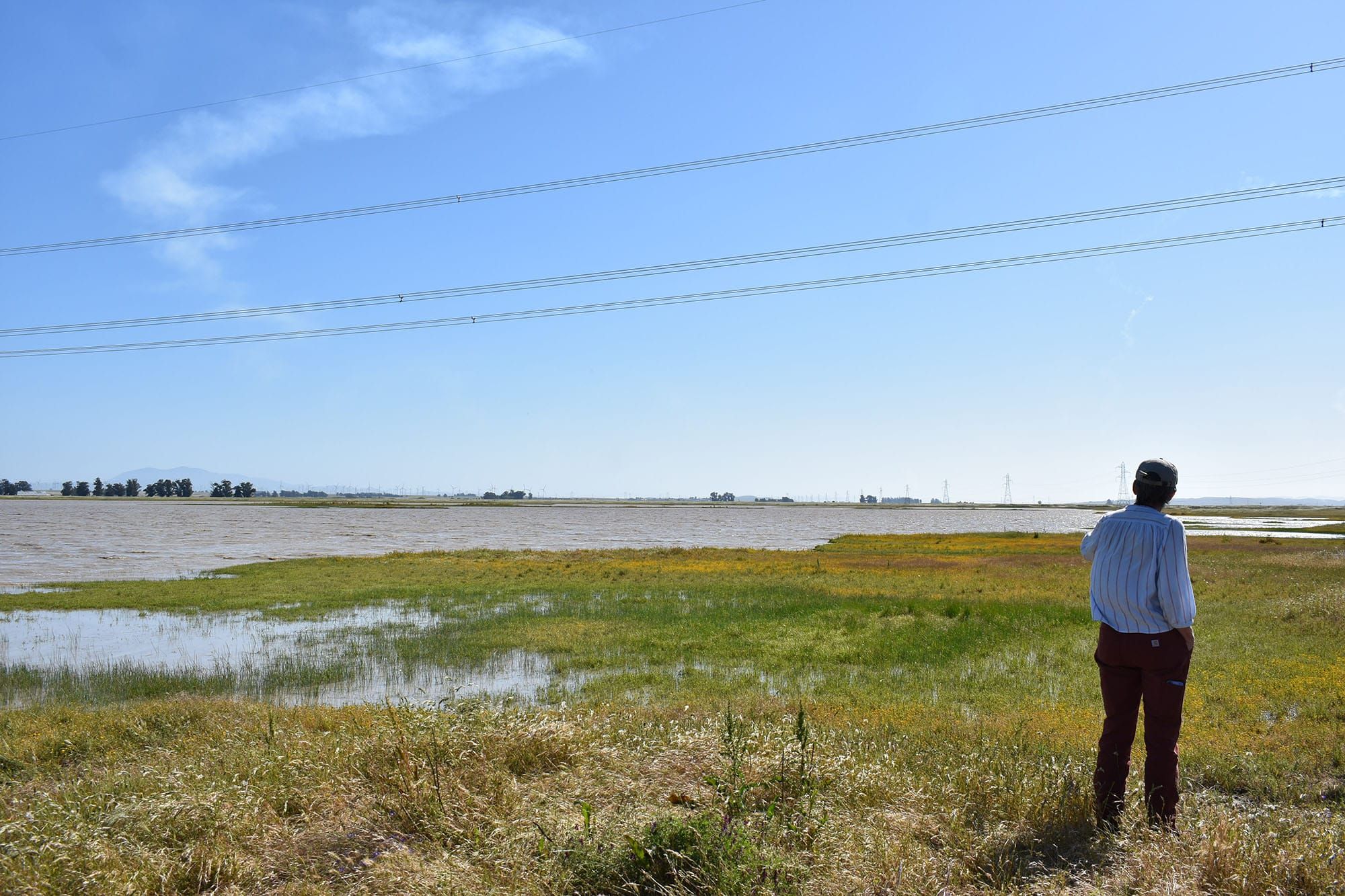
SOLANO COUNTY – The billionaire-backed California Forever project, which is in talks with Suisun City to expand the city’s borders and build a city for thousands of residents, could threaten the sensitive Jepson Prairie habitat right outside of its borders and the endangered species who live there, environmentalists said during a tour of the site on Friday.
Jepson Prairie is a 1,566-acre preserve south of Dixon and east of Travis Air Force Base that is home to several vernal pools, which are seasonal wetlands that fill with water in the winter and dry up in the summer.
When the pools exist, flowers bloom around the perimeter and shrimp and salamanders lay their eggs. When the pools dry up, they look like muddy plains, which is beneficial for certain crustaceans that need to “bake their eggs in the summer sun” to hatch them, said California Native Plant Society ecologist Carol Witham.
These habitats are usually found in the Mediterranean, but California’s weather and landscape means that they can occur here too, and are home to unique flora and fauna.
Some vernal pools look like puddles, while others can grow to the size of a lake. The largest vernal pool in Jepson Prairie Preserve, Olcott Lake, is 93 acres — over 2,000 feet across.
During the tour, the docents showed three endangered species — the fairy shrimp, the tadpole shrimp, and the California tiger salamander. They also showed water scavenger beetles and dragonfly nymphs. Charlie Russell, a coordinator of the docent program, noted that different creatures will grow in different sized pools.
“This is a great place for amphibians and crustaceans, things that don’t do well when there’s fish around” to eat their eggs, Russell explained. He said once in a while, fish will come in and spawn if the pools overflow into nearby Lindsey Slough, which connects to the Sacramento River. But he said the fish don’t last past the drying season, making this an ideal habitat for these endangered and threatened species to lay their eggs.
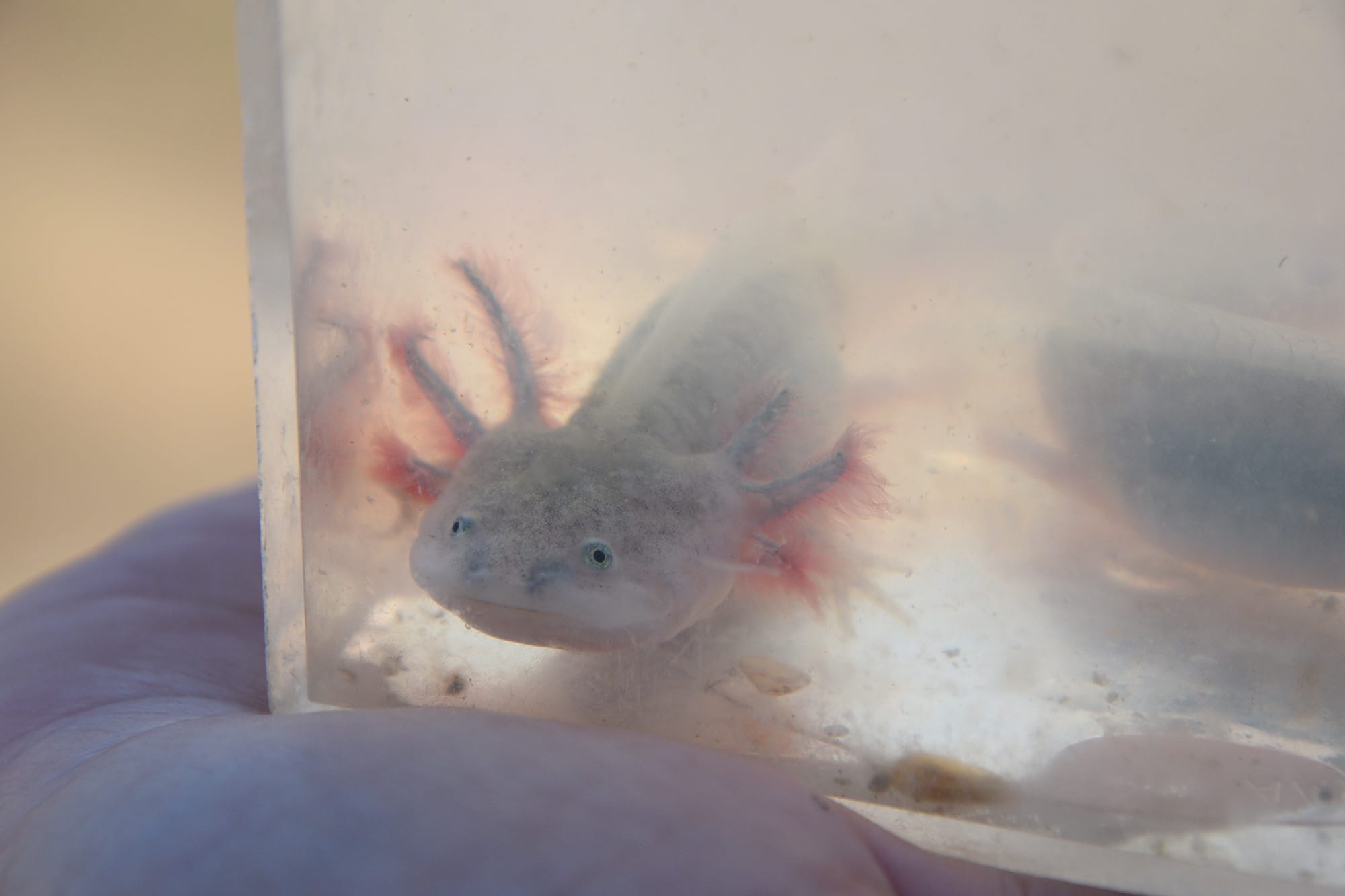
Russell said that the tiger salamander needs 100 days of water to go from egg to adulthood, and they grow best in a large vernal pool like Olcott Lake, which isn’t commonly seen in other areas of California.
According to the state Department of Fish and Wildlife, over 90% of vernal pool habitats in California have been destroyed since Spanish colonization and subsequent urban development.
Now the tiger salamander is only found in six regions in California, and they’re considered endangered in Sonoma and Santa Barbara County and threatened in Central California, according to the U.S. Fish and Wildlife Service. Colusa and Glenn County used to have similar vernal pools to Solano County, Witham said, but they’ve since been turned into rice farms.
That’s why Witham said conservation efforts are crucial. She noted that tiger salamanders can live for over a decade, and they tend to return to the same pools to breed and then spread out and live in the surrounding dry lands.
“That’s why it’s so important to have large landscapes preserved,” said Witham. She said it’s possible to create an artificial vernal pool to move these creatures into, but there’s still a “loss of function and value” when natural habitats are destroyed.
“It depends how you define your success criteria. Can you build a hole in the ground that grows some shrimp? Yes,” Witham said. “But can you reproduce an ecosystem that has been evolving in place for tens of thousands, maybe hundreds of thousands, of years? No.”
“I hate that we destroy natural habitats and build artificial ones,” she said. “I would much rather we reduce the number of natural ones we destroy.”
The Suisun Expansion Specific Plan states that the area they plan to build on is “strategically located away from prime farmland and in an area that was rated as having the lowest habitat value.” It also notes that the area is outside the boundaries of Jepson Prairie and Suisun Marsh.
But Witham said construction would impact the creatures who live in and around the vernal pools regardless.
“If you keep chipping away at it, you don’t know when you’ve taken too much,” Witham said. “The more we chip away at even the edges of these remaining vernal pool habitats, the less likely they are to survive in perpetuity.”
Nate Huntington of Solano Together, a coalition of residents opposed to California Forever, said they’re particularly concerned that the project is proposing widening Highway 113 to four lanes, which runs alongside Jepson Prairie and would also impact everything else in the area. Highway construction would fall under Caltrans.
Witham said they expect the environmental impact review to be released by the fall.
“I refuse to look deep into their specific plan until they actually come out with the environmental impact review,” said Witham. “And then I’ll tear it apart.”
They’ll be especially looking at the issue of conservation easement, which is a legal agreement that states that certain areas must be preserved as natural habitats. Suisun City’s notice for the environmental impact report notes that about 8.4% of the planned area is under conservation easement.
“Conservation easements are used throughout the United States to preserve land, and they’ve never really been tested in the court of law,” Witham said. But she noted that the backers of California Forever have “really, really deep pockets,” and they’re worried that they’re going to attempt to challenge the land use.
“All of the different land trusts in California are tracking this pretty carefully because of the potential future impacts to their own conservation easement land,” Witham said.
Independent local news depends on you
The Vallejo Sun is supported by readers who value reliable, in-depth local news. Your support helps us continue investigating important issues and keeping Vallejo informed.
Become a member today