
BENICIA – Benicia City Council members called into a Bay Area Air District meeting on Wednesday night to ask that a portion of the grant money from an $82 million settlement with Valero be given to the city to offset the loss of city funding when Valero potentially closes its Benicia refinery in April.
The air district said that these grants have been set aside for air pollution and public health initiatives. But Benicia Councilmember Terry Scott asked if the city could be granted a five-year, $25 million grant that has “creative, not restrictive, guidelines” for how the money would be used.
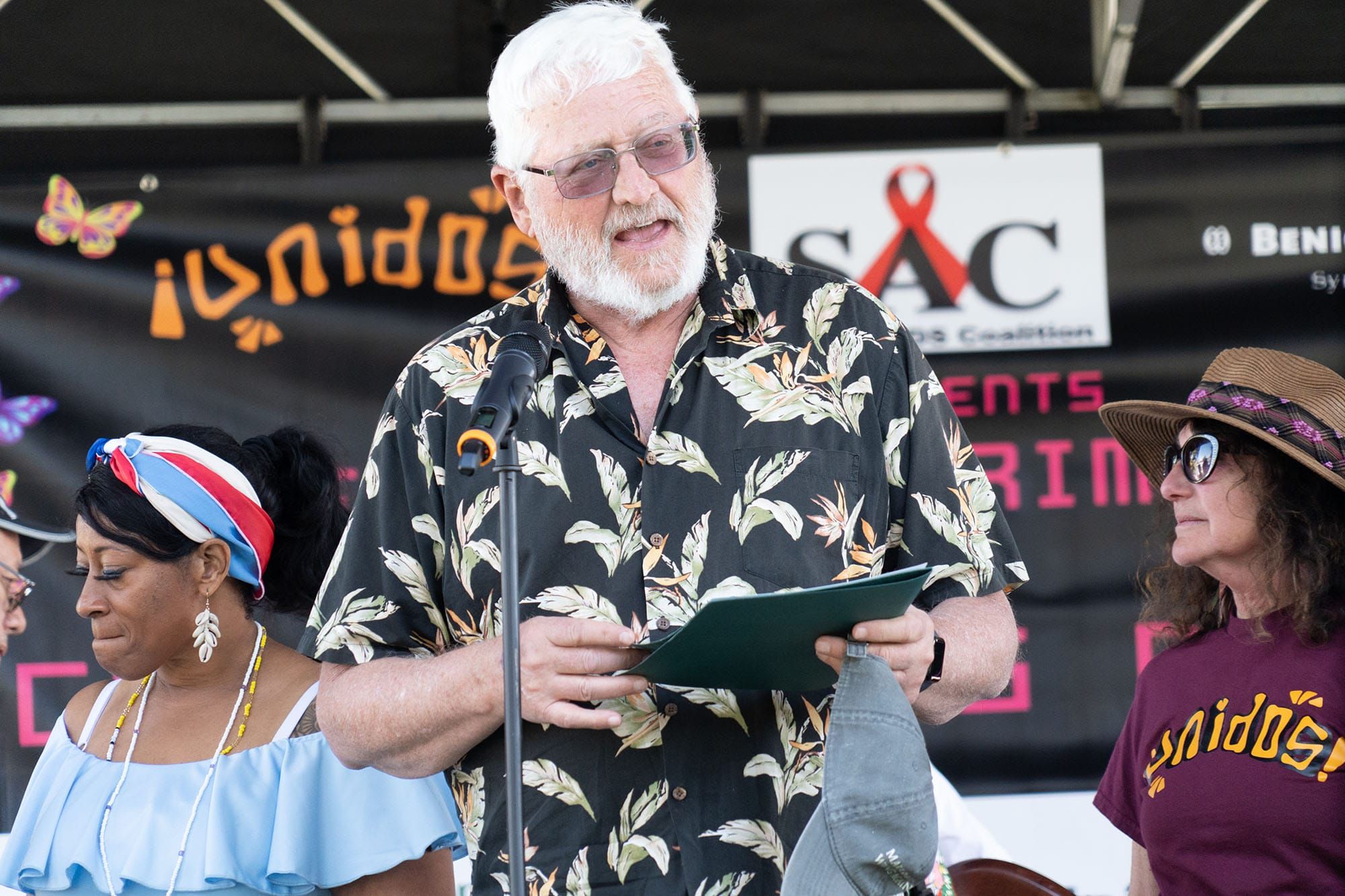
“This requires the air district to be brave and trust that the city that has disproportionately suffered the most will use these funds wisely to create sustainable growth, strengthen nonprofit capability, and support community-led development,” Scott said.
Valero was responsible for about 20% of the city budget, and the city is expecting a $10 million shortfall in revenue next year if the company leaves.
“The $5 million annually will help us maintain community stability,” Scott added.
Benicia Mayor Steve Young was also on the call, and he said the $10 million shortfall is going to potentially mean cuts to parks, the library, recreation programs, and city administrative services.
“My bottom line is to try to replace the revenue that we're going to lose when Valero closes,” Young said. “My top priority is trying to find a way to replace those lost dollars as quickly and as effectively as I can.”
The meeting they called into was a webinar held by the air district’s community investments office, which was created in December 2024 to oversee the grant program. The purpose of the call was to go over the guidelines that explain who is eligible for these grants and how to apply.
Emi Wang, the air district’s community investments officer, said the air district is “deeply tracking what’s happening in Benicia” with the potential Valero closure, but noted that the air district has its own statutory obligations around how the funds are used.
“The funding is meant to reduce air pollution, mitigate the impact of air pollution, or improve health outcomes in the particular community in which the air quality violations occur,” Wang said. “Our primary mandate as the air district is to make sure that the use and the disbursement of those funds follows those purposes.”
But Wang noted that they’re aware of the “unique circumstances” of the city, and said that they are “trying to find places for that kind of allowability.”
Jessica DePrimo, the acting manager of the community investments office, explained that the policy to reinvest funds back into the community was established in May of last year. The projects they’re looking to greenlight are meant to be informed by environmental justice principles and support the people who have been disproportionately impacted by air pollution.
In total, $95 million has been set aside for the grants.
Because of their proximity to refineries, the air district is prioritizing projects from Benicia and Richmond for the first phase of funding. Pitches from the surrounding areas, like Vallejo and Crockett, are also eligible, but only for the smaller grants.
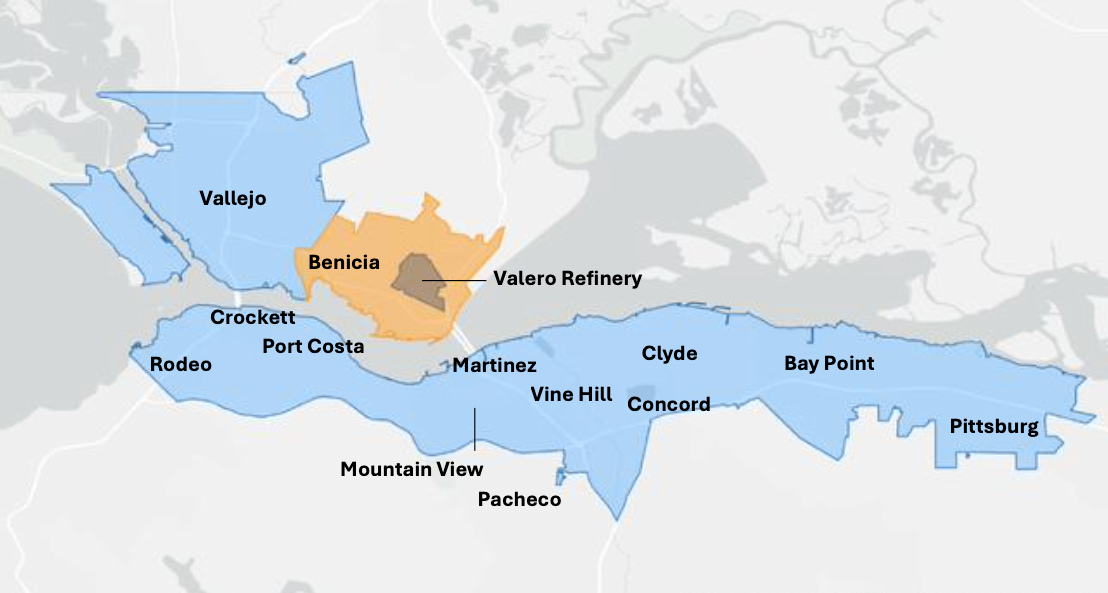
The biggest grants, available only to Benicia and Richmond, will last five years and are for complex projects needing between $10 to $40 million. Applicants for these grants can be local governments, school districts, non-profits, or Native American tribes, but they have to partner with several other organizations or agencies to carry out the project.
Examples of large-scale projects include installing air filtration systems in schools, building more solar panels around the city, establishing an electric vehicle program, or creating new parks and community gardens.
Also eligible are projects aimed at addressing chronic health issues that result from living around refineries, like sending mobile asthma clinics into low-income communities.
The second biggest grants, which are open to Vallejo and the surrounding areas, would last three years and are meant for projects between $500,000 to $5 million. And the smallest grants are between $100,000 to $200,000; they would last two years and are only open to non-profits.
Wang noted that they’re focused on awarding the largest grants because they currently don’t have the bandwidth to manage a lot of smaller projects. The community investments office is in the process of scaling up, and Wang is currently the only full time employee.
Young said the proposed examples of projects are all worthy investments, but due to the potential budget cuts and layoffs, Benicia might not even have enough people available to oversee these applications and city projects.
“Without staff, you don’t have a program,” Young said.
He said that these grant guidelines might work for a big city like San Francisco or Oakland, where there’s a lot more administrative staff and non-profits geared towards environmental causes. But he said they don’t make sense for Benicia’s particular situation.
“Putting money into asthma centers or other things that are not directly related to our fiscal situation does not move the needle and does not help us with our immediate crisis,” Young said.
He pointed out that one of the eligible projects is creating new parks. “We're going to be in a position where we're going to be closing parks,” Young said. “So why couldn't we use those same dollars to maintain parks rather than create new ones?”
He added that he doesn’t think Benicia has many non-profits involved with air pollution and public health, beyond the Benicia Community Air Monitoring Program. “So I think that using some of these funds to offset the financial harm is certainly appropriate,” Young said.
Several other participants on the call reiterated what Young said about funding the city. Others complained that their long comments were not leaving space for other participants to ask questions about the grant guidelines.
Wang reminded everyone that this was an informal call about the grant guidelines, and that the appropriate space for formal public comment on air district funding is actually the Nov. 12 board of directors meeting.
The application for these grants opens February 2026 and will run until May 2026. The grants will be awarded in September 2026, with the projects expected to begin in 2027.
Independent local news depends on you
The Vallejo Sun is supported by readers who value reliable, in-depth local news. Your support helps us continue investigating important issues and keeping Vallejo informed.
Become a member today