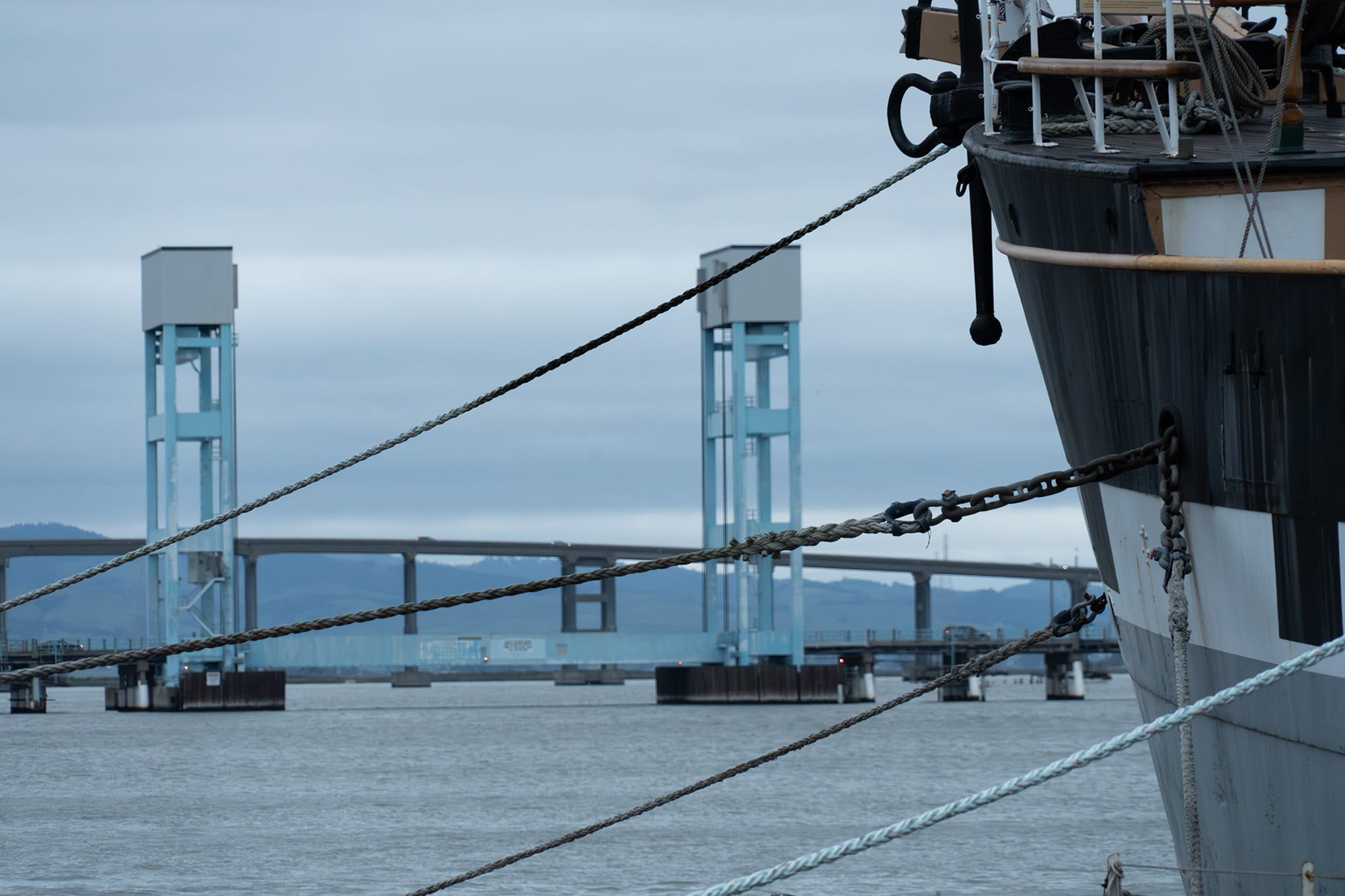
VALLEJO — A new report raises serious concerns about the viability of development projects on Mare Island if major sewage infrastructure issues aren’t addressed. But the city, the wastewater management district and the company in charge of developing the island don't agree on who is responsible to fix it.
The Island Sewer Capacity Summary Report was prepared by the Vallejo Flood and Wastewater District at the request of Vallejo Councilmember Charles Palmares. A draft report describing the deteriorated condition of the infrastructure and the problems accompanying it was issued in May 2025 and obtained by The Vallejo Sun.
Broken and corroded pipes, bad joints, leaking maintenance holes, cracks, missing covers and cross-connections have resulted in external water saturating the system. “The Mare Island sanitary sewer collection system has exceeded its capacity to convey the existing wastewater flows,” the report states.
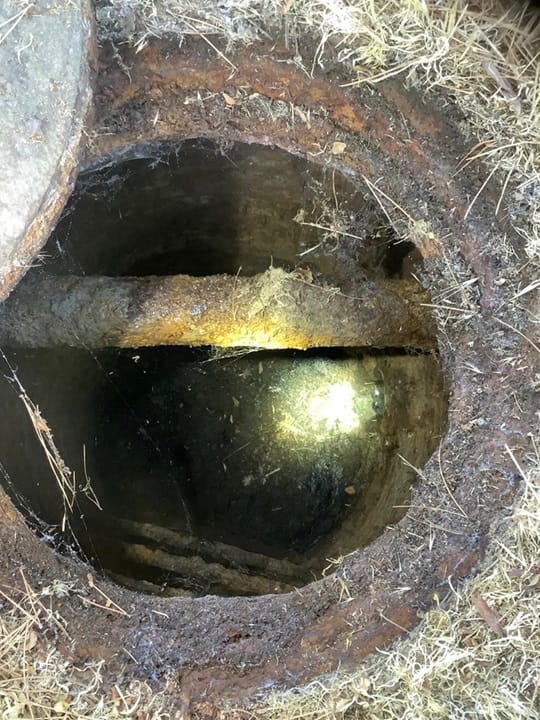
This non-wastewater infiltrating the system ends up unnecessarily being treated as well, raising the cost for all of Vallejo’s rate payers. And there is a risk that the excess water could overload the system and cause raw sewage to back up into the street, according to the report.
The sewer infrastructure was originally built by the U.S. Navy and has remained relatively unchanged since its base closed in 1996, with the majority of the pipes and maintenance holes over 60 years old. The report critiques the lack of improvement done by previous and current developers, even though their contracts state that they are responsible for improving the infrastructure.
The wastewater district told the Sun that this issue needs to be fixed to allow for new development. “You can’t revitalize Mare Island on old Navy infrastructure,” said wastewater district director of technical services Tracy Rideout. “If you leave the infrastructure there, there's no way you can continue to build all these new buildings. You’ve got to fix the underlying infrastructure.”
According to the wastewater district, that responsibility belongs to the developer in charge of the island, the Mare Island Company. But in a statement to the Sun, the Mare Island Company disagreed and said that that responsibility fell on the city and the district. It later clarified that an upcoming working group between the company, the district and the city will clarify responsibilities.
The Mare Island sewage infrastructure is more than 60 years old
The U.S. Navy built all of the island’s original infrastructure while operating its former base there, which closed in 1996. Sewage and stormwater systems were originally combined into one and dumped directly into the San Pablo Bay. The 1948 Federal Pollution Control Act forced the Navy to separate the two collection systems and treat its wastewater. However, much of the infiltration issues present today result from wastewater and stormwater mixing in the maintenance holes. The local wastewater district has been treating the Island’s wastewater since 1974.
After the Navy base closed, it started transferring its land to the city of Vallejo. The city sold 677 acres of it to housing developer Lennar in 1999 for $1 but received a promise from Lennar to spend $260 million in infrastructure improvement. Lennar subsequently built all the housing developments on the west side of the island but did not address the preexisting infrastructure.
As part of that purchase, Lennar agreed to an acquisition agreement with the City, which states, "Lennar shall be solely responsible for all costs incurred in connection with the development of the Acquisition Property, including all costs of infrastructure."
Another developer, the Nimitz Group, bought all of Lennar’s properties in 2019. That company, in partnership with the Southern Land Company, bought another large parcel of land on North Mare Island in 2022 for $3 million. They formed the Mare Island Company to manage the development.
A disposition and development agreement signed by the city and the Mare Island Company as part of the North Mare Island sale provides for “construction and installation of new backbone infrastructure improvements, including sanitary sewer and storm water” and a “commitment to reimburse VFWD and City for certain costs incurred by VFWD and City in connection with the ongoing maintenance and repair of such existing Sewer Lines and Water Lines.”
Seventy percent of the sewage infrastructure on Mare Island is more than 60 years old, according to the report, and most of it has remained unchanged ever since the Navy left the Island.
Many of the pipes are made of corrugated metal, which is easily corroded by the sewage and salt water. Only 30% of the pipes have a condition rating of “good” or better.
Many of the maintenance holes are made of brick and show cracks and leaks. A visual inspection of 120 maintenance holes found that only 15% received a rating of “good” or better, with 22.5% found to be defective.
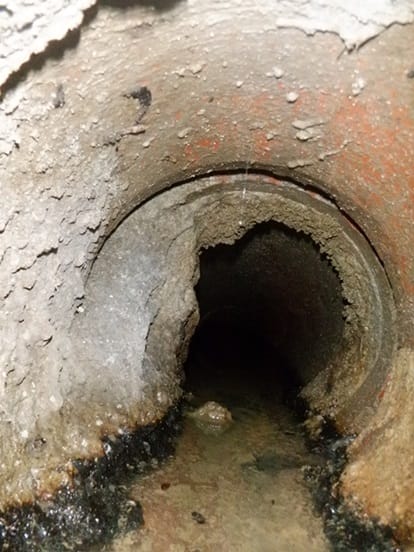
A video inspection of almost 13,000 linear feet of sewer pipe found “roughly 40% had some sort of structural or operational defect,” according to the report. It estimated that more than 9 miles may require “rehabilitation or replacement.”
“It's fair to say it's been known that there are infrastructure problems all along,” Rideout said. “Ever since the Navy transferred it, it's always been known that's the case.”
Rideout estimated that the cost for rehabilitating sewer lines could reach “a million and a half [dollars] for a mile, when you count all the manhole work,” Rideout said. “That's assuming that you can do rehabilitation methods. It may be a cut and dig, which is, you know, up to 10 times more expensive.”
Wastewater district says Mare Island Company is responsible for improvements
According to the wastewater district’s report, the Mare Island Company has done little to improve the sewage infrastructure.“The Mare Island Company has moved aggressively to fill the available spaces on Mare Island with tenants without making any meaningful improvements to the island’s infrastructure,” the report states. “Per the Development Agreements, the developer is responsible for the improvements to backbone infrastructure necessary to support the development of the island.”
The district says that it has been maintaining the infrastructure ever since the Navy left. “We maintain it, we operate it,” Rideout said. “We pay for the electricity at the pump stations, we certainly treat all the sewage that comes off the island. We're out there regularly doing maintenance on the pump stations. Cleaning the pipes if they get clogged, we do all that kind of work.”
“The real question is who is responsible for either increasing the system or replacing the system as is related to allowing for new development? That is the responsibility of the developer,” Rideout said.
But when The Vallejo Sun asked the Mare Island Company what it had previously done or is currently planning to resolve the infrastructure problems, a spokesperson said in a statement, "The responsibility to maintain Mare Island's sewage infrastructure doesn't belong to the Mare Island Company.”
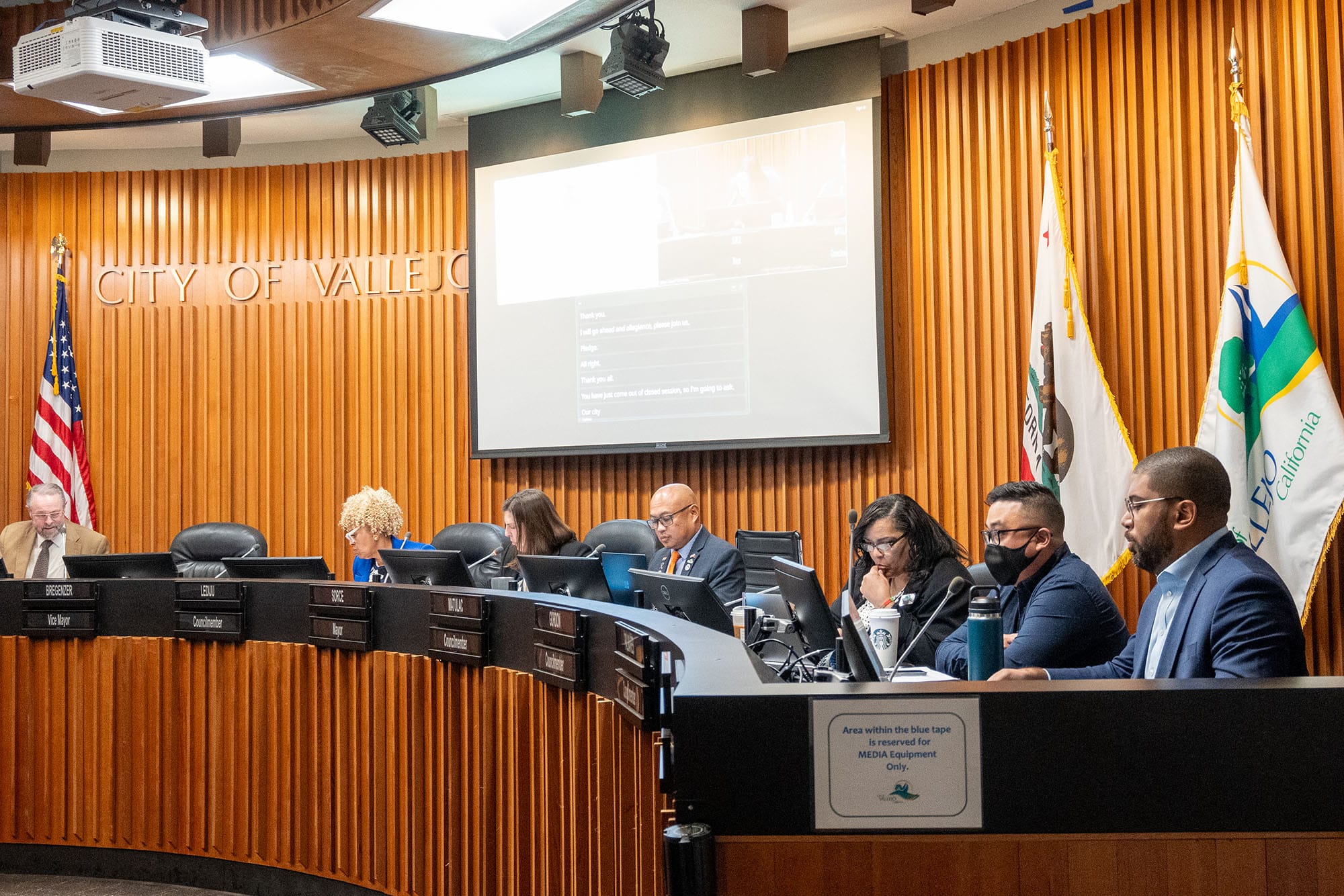
The spokesperson added that, “A working group that includes the City of Vallejo, the Vallejo Flood and Water District (VFWD), Mayor [Andrea] Sorce and Councilmember Palmares is meeting to determine how to assign necessary maintenance and improvement tasks to the City and/or the VFWD.”
The company spokesperson later amended the statement to say that the working group “will provide important clarity around who will be accountable.”
In response, Vallejo Mayor Andrea Sorce said, “I don't think the statement from Mare Island Company accurately captures the goal of the working group. There are going to be infrastructure obligations that all parties will be assuming, including Mare Island Company.”
“The responsibility is going to have to be shared - that is the only way development is going to happen on the island,” Sorce said.
Councilmember Palmares did not return the Sun’s request for comment.
Sorce said that past development agreements failed to establish clear enforcement mechanisms to hold developers accountable. “We are operating in a less than ideal situation worsened and constrained by these agreements,” she said, referring to the North Mare Island deal.
Sorce’s husband, Slater Matzke, is a former special advisor to the city and helped negotiate the deal. After he was fired in 2020, he accused former City Manager Greg Nyhoff of scrapping the terms he'd negotiated and working against the city’s interests. Matzke sued the city and won a nearly $1 million settlement.
Frustrated business owners and residents wonder who will pay
Several Mare Island business owners and residents have shared with the Sun their frustrations over the lack of tangible investments. Kent Fortner, island resident and co-founder of Mare Island Brewery, said that the development of the Island has been “chronically disappointing.”
“When it comes to accomplishing such a large project, it really requires all parties collaborating and working together,” he said.

After more than two decades of promised large-scale development on the Island, the negotiations around its specific details, such as fixing the sewage issues, are really just starting.
“Those are all conversations that we're just beginning to have,” said wastewater district finance director Jeffery Tucker. “I imagine they're going to be ongoing for a period of time until we come to some resolution on a new agreement, which involves all parties.”
“That's where, you know, the developer will decide based on the amount of money it takes to put in, the amount of money they'll get out of the development, what they can build, and when, what cost they can bear,” he said.
Residents such as Fortner worry that it will fall on Vallejo rate payers and public funds to bail out the developer from its commitments and to bandage the broken infrastructure.
Despite the contracts assigning responsibility to the developer, the city and wastewater district are now looking at public possible funding options. Sorce said, “my hope is that we will be able to work collaboratively to address the significant funding needs - with both public and private contributions.”
The city and the wastewater district also recently asked U.S. Rep. John Garamendi to earmark $3 million dollars in the upcoming federal budget proposal for infrastructure improvements on the island.
“When we look at who's going to pay for this there really only are two choices, either the developer pays for their impact to the system or the rest of all the residents in Vallejo,” Rideout said. “There are no other choices because those are our only funding sources. We, as a practicing policy, have always answered that the developer pays its way.”
Regardless, the report concludes, “without significant investment into the Island infrastructure the collection system will continue to be a challenge for current and future development.”
Editor's note: This story has been updated to clarify that Slater Matzke said that the terms he'd negotiated for the contract were scrapped.
Before you go...
It’s expensive to produce the kind of high-quality journalism we do at the Vallejo Sun. And we rely on reader support so we can keep publishing.
If you enjoy our regular beat reporting, in-depth investigations, and deep-dive podcast episodes, chip in so we can keep doing this work and bringing you the journalism you rely on.
Click here to become a sustaining member of our newsroom.
THE VALLEJO SUN NEWSLETTER
Investigative reporting, regular updates, events and more