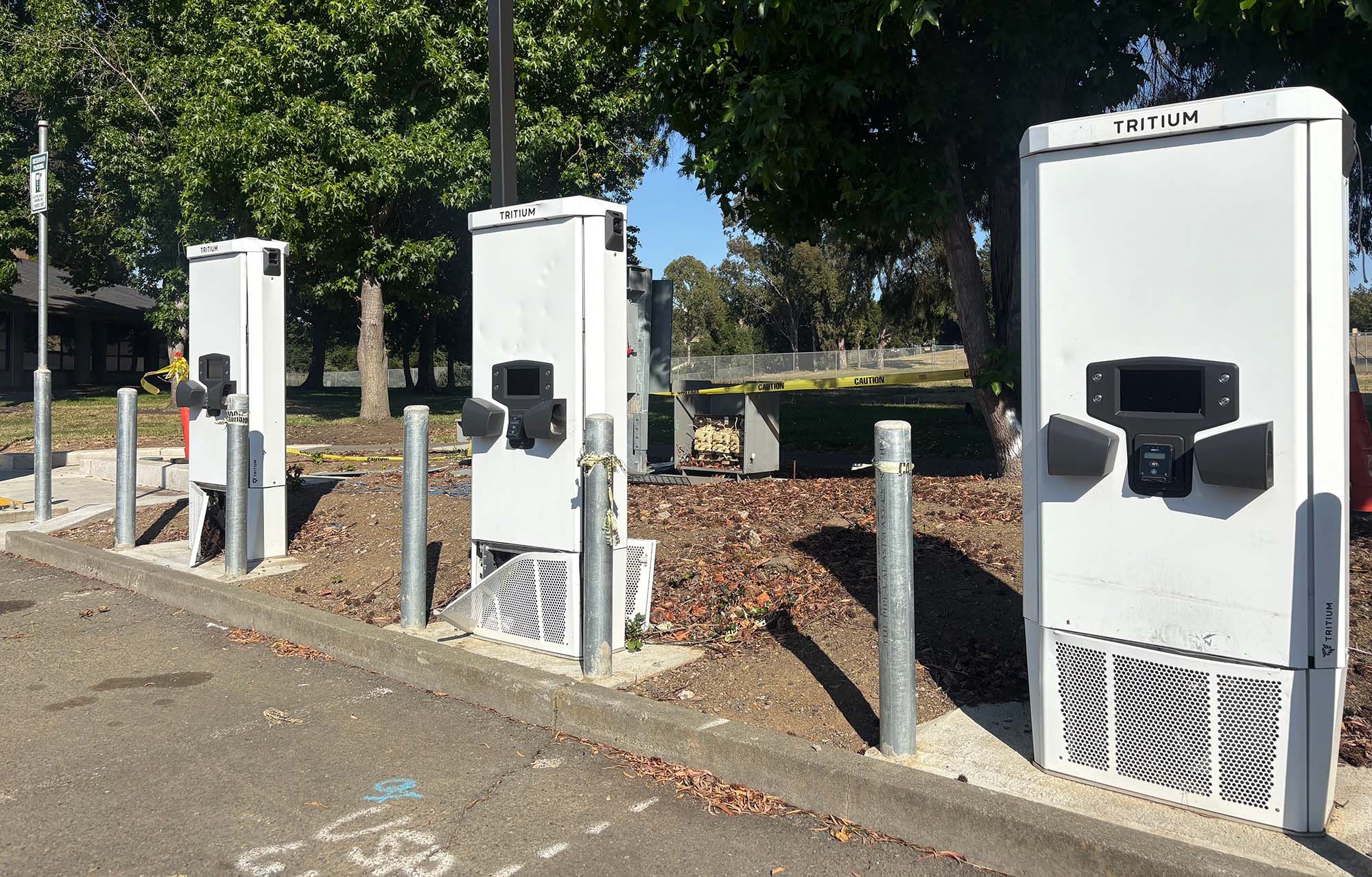
VALLEJO - The city of Vallejo has been working to increase the number of electric vehicle chargers available across the city, and passed a new ordinance to incentivize their installation this week. But city leaders are concerned that many of the city’s existing chargers are inactive or vandalized.
The Vallejo City Council unanimously approved a new ordinance to establish an expedited permitting process on Tuesday night, which is intended to make it quicker to approve building electric vehicle chargers.
The ordinance is intended to bring the city into compliance with California law under Assembly Bill 1236, a 2015 state law which requires cities to expedite permitting for charging stations.
Encouraging ownership and charging of electric vehicles has been a priority for the state for years. California is seeking to increase the number of electric vehicles on the road from 1.5 million in 2025 to 5 million in 2030, and to eventually have all vehicles sold in the state be electric. That means attempting to have 1 million chargers operating by 2030, a daunting task requiring building chargers at about seven times the current pace.
To do that, the state is looking to streamline city and county permitting processes and make major power grid upgrades to connect chargers, including in rural and less-affluent areas where private companies may not invest in new chargers or keep older ones running.
But Vallejo officials are worried that, amid other deferred public maintenance issues, the mandate to increase the number of chargers available came without a way to fix or maintain the existing infrastructure.
Councilmember Helen-Marie Gordon on Tuesday asked how the city can help prevent targeting of stations for copper. City staff said operators are in charge of investment in and maintenance of existing stations.
She noted that some cities get grants for building electric chargers and then “completely abandon” them while chargers stand inactive for years.
Vice Mayor Diosdado Matulac noted that inactive stations are not providing any benefits and asked whether the city can threaten to penalize operators who don’t maintain their products.
City Attorney Veronica Nebb said the council cannot place new conditions on an ordinance designed to bring the city into compliance with state law.
“I think the issue here is if a state law comes in and says you must approve these permits ministerially,” she said. “We can’t deny them and we can’t condition them.”
Councilmember Charles Palmares asked if the council could next pursue a separate ordinance regulating maintenance of approved electric chargers. Nebb said, “I don’t actually know the answer to that question.”
The city Planning Commission raised similar concerns when it recommended approving the ordinance as mandated on June 15.
Senior planner Robert Brusick presented the amendment to the municipal code, saying that as the city has fewer than 200,000 residents, it is required to adopt the ordinance under state law without further environmental review.
Noting the city has struggled for years to keep charging stations active for use around public areas without vandalism, Commissioner Wanda Madeiros asked what happens when stations in city parking lots keep having their cables cut.
Assistant City Attorney Laura Zagaroli said those chargers were approved as a pilot program under PG&E, and when vandalism happened, the program didn’t come to address those machines. “So they’re just going to sit there,” she said.
Zagaroli said that while the inoperable machine could be removed, it’s unclear if they could be replaced with working machines.
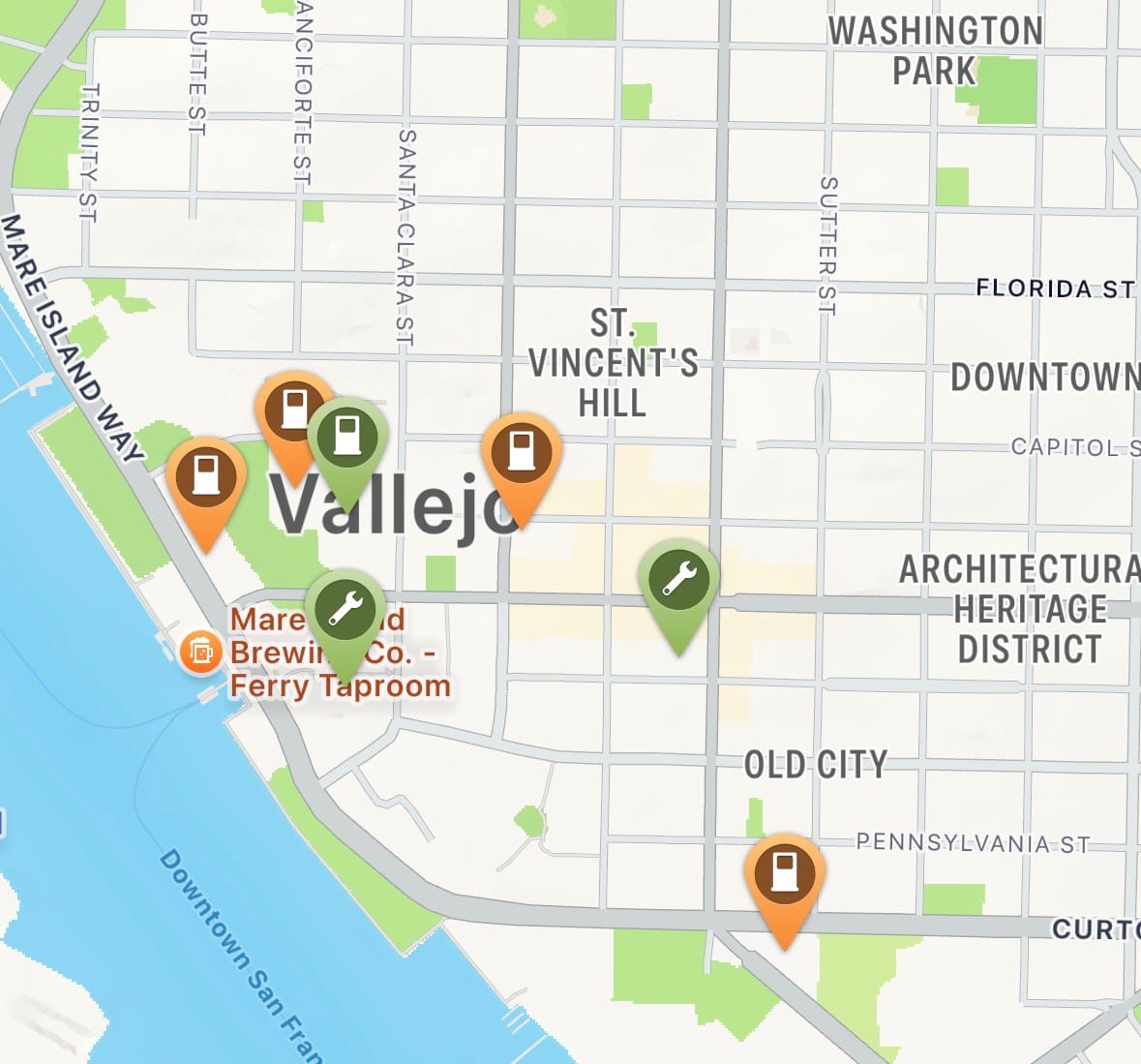
People who own electric vehicles or seek to find chargers can use apps such as PlugShare to explore what machines are still operating for use in Vallejo, although some machines are on private property owned by companies like Hyundai. Several downtown city properties, including Vallejo City Hall, have machines which are inactive.
Those seeking non-Tesla fast chargers may have even more difficulties, as multiple machines with alternative chargers have also been vandalized, such as Chargepoint machines at gas stations. However, there are some machines designed for slow charging that can be found in the city’s northern and southeastern neighborhoods.
Councilmember Peter Bregenzer said Tuesday he found it "embarrassing" that the city cannot maintain machines on its property, “and yet here we are trying to hold other people accountable.”
“I don’t understand why we have chargers that have no connectivity,” he said. “I don't understand why we put chargers in parking lots that are not accessible by the public.”
Independent local news depends on you
The Vallejo Sun is supported by readers who value reliable, in-depth local news. Your support helps us continue investigating important issues and keeping Vallejo informed.
Become a member today