
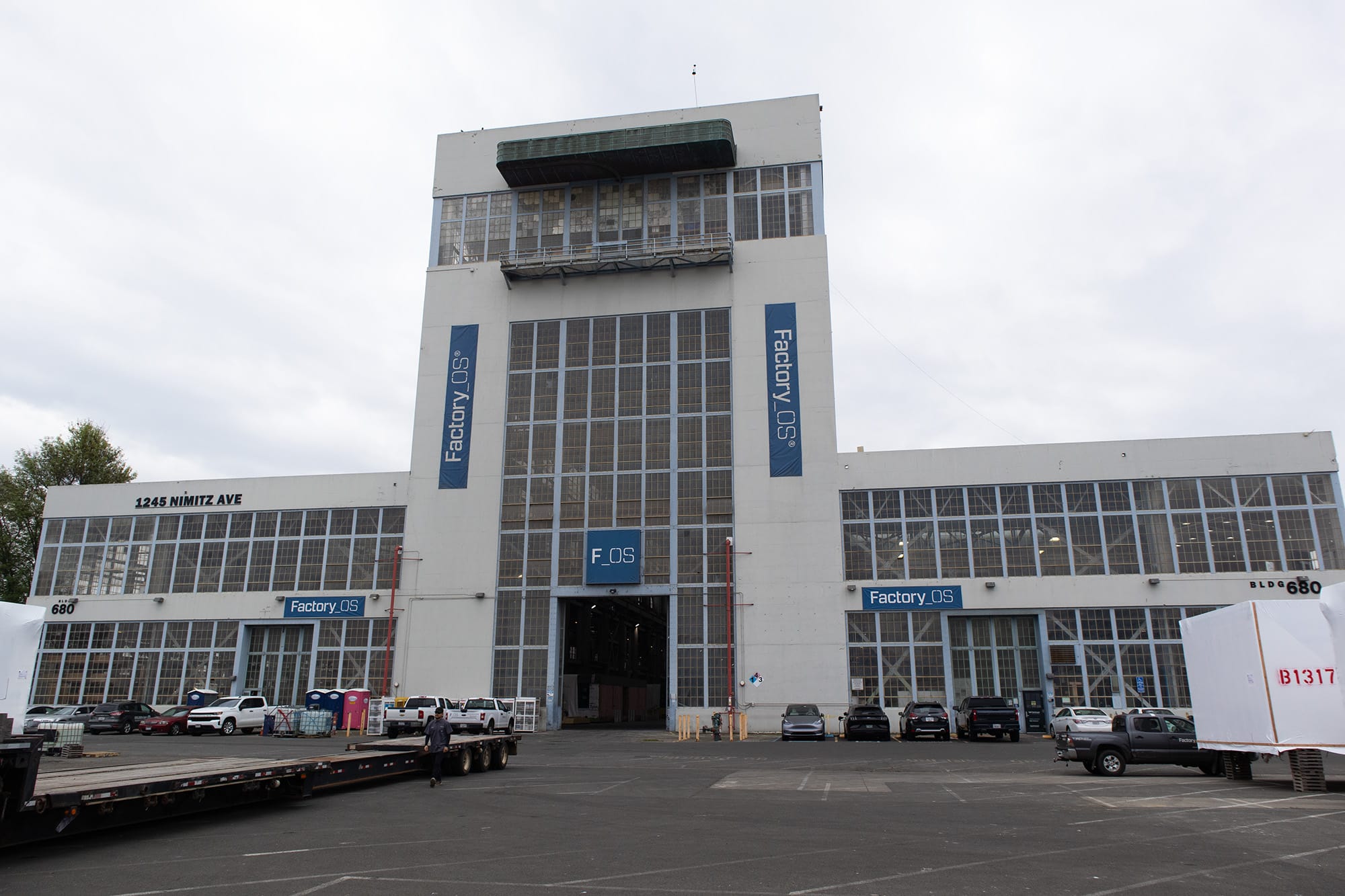
VALLEJO – Modular housing manufacturer Harbinger Production, formerly called Factory_OS, announced Friday that the company may close its Vallejo factory and lay off all of its 280 employees later this year, the latest major Solano County employer to announce layoffs.
The company announced the layoffs in a legal notice sent to city, county and state officials Friday morning and obtained by the Vallejo Sun. The notice cites a lack of new business and loss of capital funding. Such notices are required to be sent 60 days prior to a layoff event, though the company could find new business to stay open before the layoffs are planned to begin in April.
In a statement, the company said that the announcement was necessary because of a gap in its production pipeline. “To be clear, Harbinger Homes is not planning to shut its doors. Our team has a deep pipeline of new business opportunities that we're actively pursuing, and we’re focused on securing a contract before the 60 day period elapses.”
“This is a competitive business and we’ve navigated similar challenges in the past, and have emerged stronger for our efforts,” the statement said.
Ron Rowlett, a spokesperson for the North Coast States Carpenters Union, which represents Harbinger employees, stressed in a statement that the company still could prevent closure.
“The North Coast States Carpenters Union is actively working with Harbinger and our members to ensure we do everything possible to keep our members employed and projects moving forward. Our priority is protecting jobs, supporting local businesses, and maintaining stability for working families,” Rowlett said.
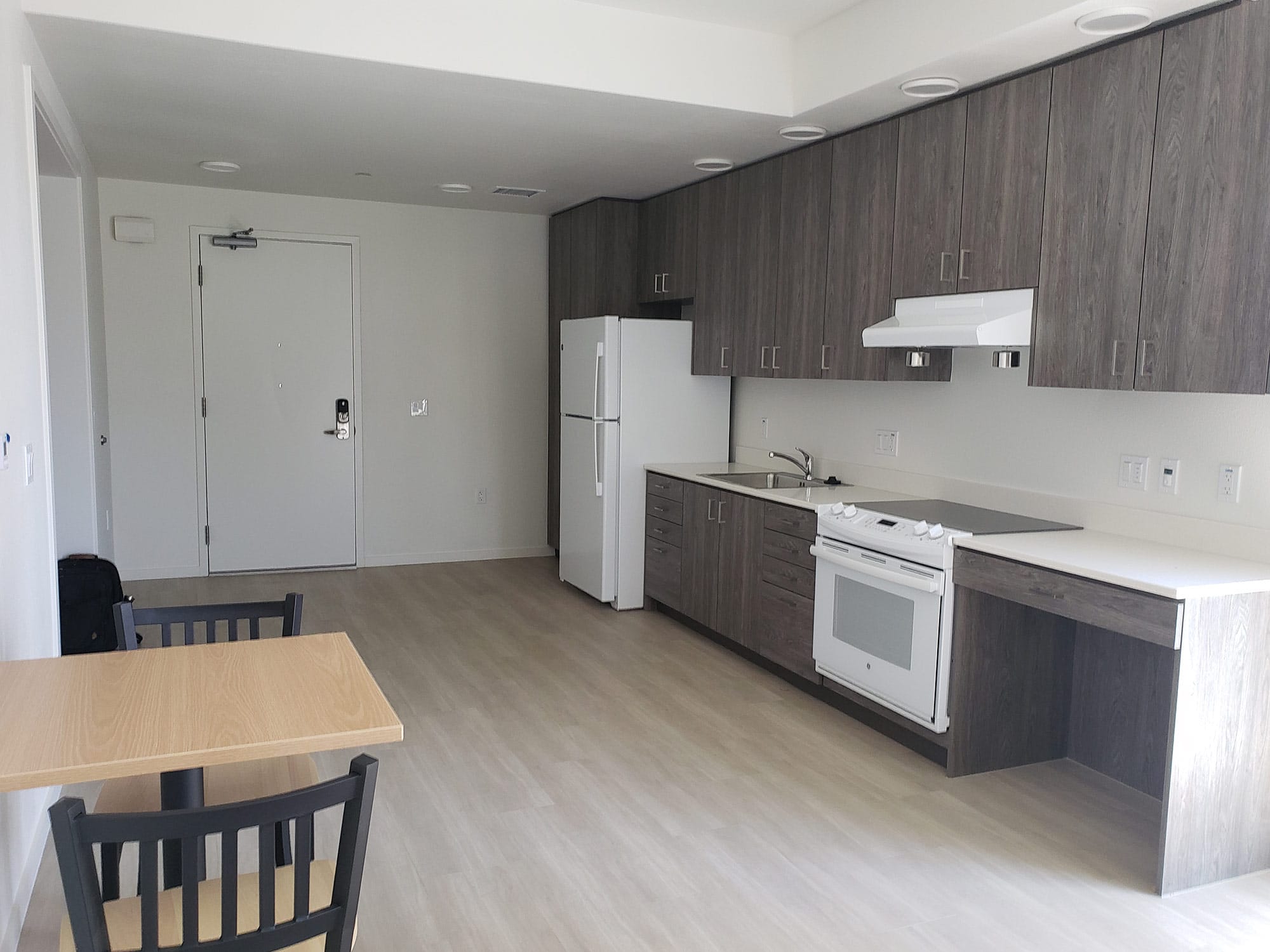
Harbinger constructs ready-made apartments that can be stacked for a new development. The technique is credited with reducing the time and expense necessary for new construction, making the company a fixture of affordable housing development in the Bay Area. The company said that it has built 4,000 units since 2017, 90% of which went to affordable housing. Factory_OS contributed units to the Blue Oak Landing and Broadway affordable housing projects in Vallejo.
But the company has also faced challenges in recent years, including increased competition from out of state and international manufacturers and lawsuits alleging labor violations and failure to pay a supplier. It changed its name to Harbinger Homes after being acquired by a private-equity backed consortium in 2024.
Harbinger is the fourth major employer in Solano County that has announced closure or significant layoffs in recent months. Last year, Valero announced that it will idle its Benicia refinery in April. In December, Anheuser-Busch announced that it would shutter its production facility in Fairfield by the end of this month and the Mare Island Dry Dock announced that the company would most likely close and lay off its remaining workforce.
On Tuesday, before Harbinger officials announced the layoffs, workers outside of the company’s production facility said that they had been told that the company does not have enough contracts lined up to support its current workforce and that layoffs may begin sometime before June.
“We are just taking it day-by-day right now, luckily there have been no layoffs yet but it doesn't look good because they have already laid off 15 people in management,” said a worker who preferred not to give his name.
Another worker who has been employed at the facility for eight years and lives in Vacaville said that if Harbinger lays off a significant number of workers it is unlikely that their union will be able to find other positions for the workers to fill. Depending on what is available in a tightening labor market, that could mean they might have to take jobs with longer commutes or less pay and benefits, he said.
One of the workers also said that the company’s contribution to affordable housing and housing for homeless populations is also meaningful, “it feels like we are helping out,” he said.
Factory_OS was founded by developers Rick Holliday and Larry Pace and began operations on Mare Island in 2017. Google’s parent company, Alphabet, was the company’s first customer and purchased 300 apartment units, according to the Wall Street Journal.
Harbinger occupies Mare Island’s historic Naval Shipyard machine shop. The 250,000-square-foot production facility, built in 1940, was a central to the Navy’s shipbuilding and repair activities on the island. The building’s striking central atrium was previously used by the Navy for work on submarine periscopes.
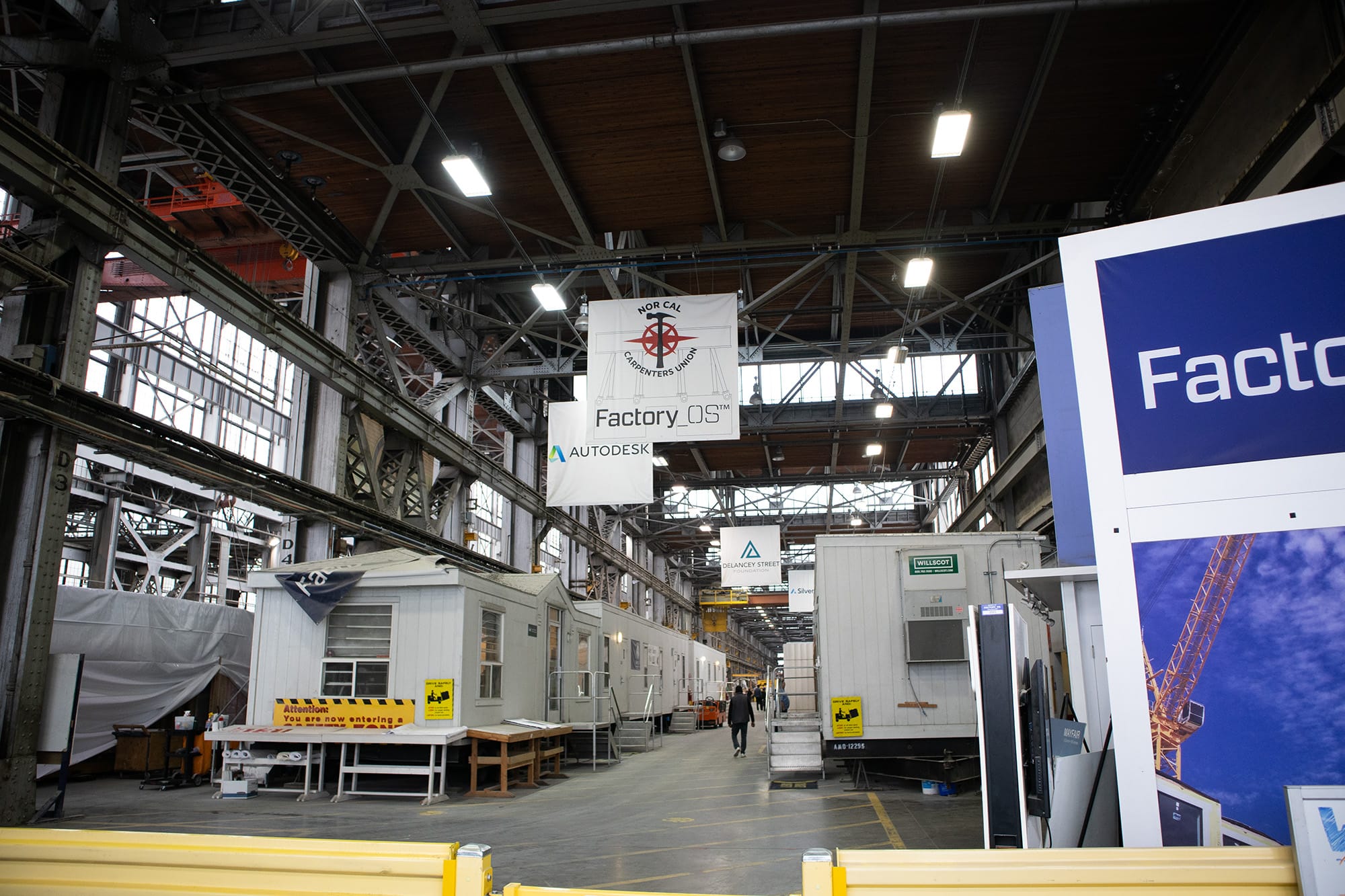
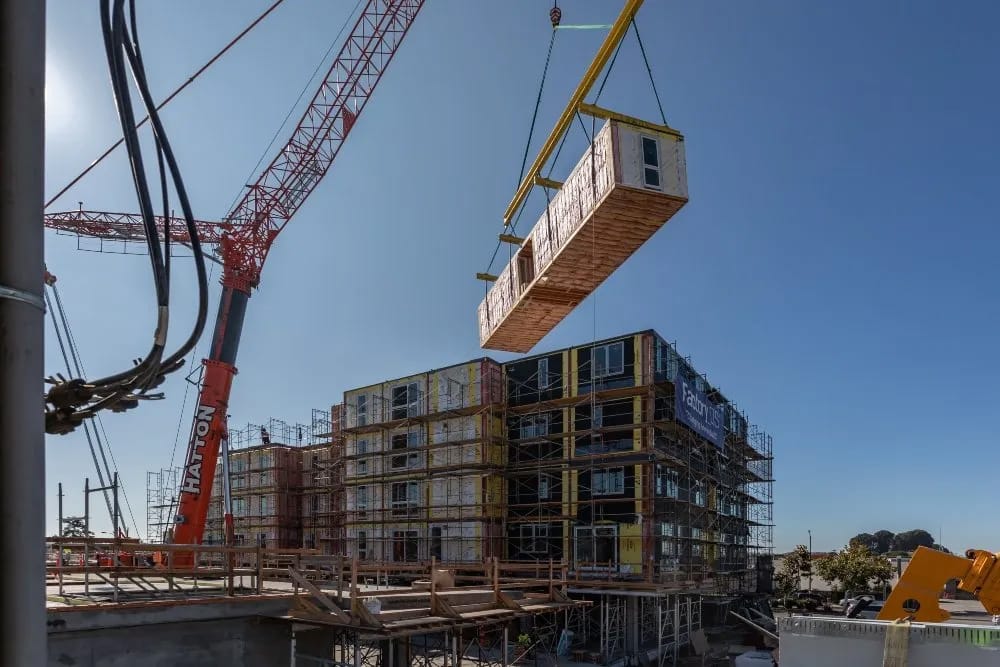
The modular units produced at the facility are stored temporarily on the island and then trucked to project sites where the modules are stacked together to form larger buildings. The technique can be used in a variety of projects including schools, apartment complexes, offices, hotels and data centers.
Building modules in a controlled factory setting with production line efficiency can reduce overall project costs when compared to traditional construction. The technique’s promise of lower costs is frequently hailed as a solution to the affordable housing crisis.
In 2019, the company raised $22.7 million in funding, including from design software maker Autodesk and Citi bank. By 2020, the company reported expanding its production facilities by 50% and workforce by 25%. Factory_OS said it received $17 million from Google and Autodesk in another funding round.
In April 2021, the company reported producing over 1,000 units and raised another $60 million from JPMorgan Chase and French manufacturing company Saint-Gobain.
In 2022, San Francisco organized labor leaders criticized modular home construction, claiming that the projects were substandard. An official from the Nor Cal Carpenters Union that represents workers at the Factory_OS facility dismissed the comments as political maneuvering.
The company’s numerous projects can be seen throughout the Bay Area, including The Union, a 110-unit project near the West Oakland BART Station, and the 156-unit Mayfair Project, part of a transit-oriented development next to the El Cerrito Del Norte BART Station.
In 2024, then-CEO Kevin Brown, said in a statement that a company backed by a private-equity consortium had acquired Factory_OS, including its intellectual property, production facility and catalog. The transition involved a formal restructuring of the company and Factory_OS became Harbinger Production. In the 2024 statement, Brown said Factory_OS was “backed by a strong balance sheet” and had delivered 3,000 homes across 28 buildings since 2017.
A year later, Tom Smith took on the role of CEO and Brown was named the company’s president and chief commercial officer.
As recently as December, Harbinger said business continued to be good, as the Santa Rosa Press Democrat reported it was ramping up production.
But recent court actions point to the company facing challenges. A former production supervisor sued Factory_OS in 2024 alleging that he and other African-American supervisors were paid less than other supervisors. The lawsuit also alleged that Pace used nicknames like ”Hoops” for African-American employees. According to the lawsuit, after the production supervisor complained about the salary disparity and harassment, he was fired.
Supply chain giant Jabil Procurement Services filed a lawsuit in Solano County Superior Court last month alleging that Harbinger Productions failed to pay invoices for building materials. The suit claims that Harbinger fell behind on regular invoice payments and then cut the locks to Jabil’s secure storage area at the Harbinger production facility and used Jabil-owned materials without authorization. Jabil alleges that the unpaid invoices and the materials that Harbinger removed from its secure storage area total $6.5 million in value
Another employee brought a class action lawsuit against Harbinger in December alleging that the company failed to pay wages and overtime and did not authorize meal and rest breaks.
The company is also facing increased competition. Although modular construction can improve a developer’s bottom line for an affordable housing project, it also allows for modules to be produced out of state or even internationally. For example, the 22-unit Panoramic Shattuck Studios development in Berkeley was built with steel modules manufactured in China.
In June, the Sacramento-based affordable housing developer Mutual Housing signed an agreement with the Idaho company Guerdon to produce modules for five project sites in Northern California totaling 560 units.
As a right-to-work state, Idaho prohibits employment arrangements that require employees to join a union or pay union dues, making employee contributions to collective bargaining units optional. Voters in California have repeatedly rejected right-to-work legislation.
According to a modular project statistics website funded in part by Guredon, the company has manufactured modules for 26 development projects in California with six more currently in progress.
Harbinger’s statement about the layoff announcement noted that state legislation could support affordable housing producers in California.
“Several political vehicles are underway to boost affordable housing production in the state, and the State Assembly has established a Select Committee on Housing Construction Innovation to advance and scale innovative approaches to housing delivery,” the company said. “These legislative initiatives, combined with modular construction's inherent cost and time-saving advantages, create meaningful opportunities for affordable housing across the state.”
Sebastien K. Bridonneau contributed reporting.
Editor's note: This story has been updated to include comments from Harbinger and the North Coast States Carpenters Union.
Before you go...
It’s expensive to produce the kind of high-quality journalism we do at the Vallejo Sun. And we rely on reader support so we can keep publishing.
If you enjoy our regular beat reporting, in-depth investigations, and deep-dive podcast episodes, chip in so we can keep doing this work and bringing you the journalism you rely on.
Click here to become a sustaining member of our newsroom.
THE VALLEJO SUN NEWSLETTER
Investigative reporting, regular updates, events and more