

VALLEJO – Thousands of Solano County residents could lose federally funded food assistance benefits as soon as November amid a government shutdown fight over cuts to health care subsidies and new eligibility requirements for social safety net programs.
On Friday, the U.S. Department of Agriculture’s Food and Nutrition Service formally suspended November food assistance benefits indefinitely. The agency had previously directed states not to transmit November food assistance benefits amounts to banks that fund Electronic Benefit Transfer (EBT) debit cards during the government shutdown.
In recent weeks CalFresh recipients have been seeing notices on the CalFresh app and in emails warning that their benefits may not be available in November if the government shutdown continues.
Approximately 42 million Americans receive Supplemental Nutrition Assistance Program benefits, according to the USDA.
The federal program is administered by individual states and California’s version of the program is known as CalFresh. Approximately 5.5 million Californians receive CalFresh benefits, according to the California Department of Social Services. Solano County estimates that as many as 55,000 county residents receive CalFresh benefits.
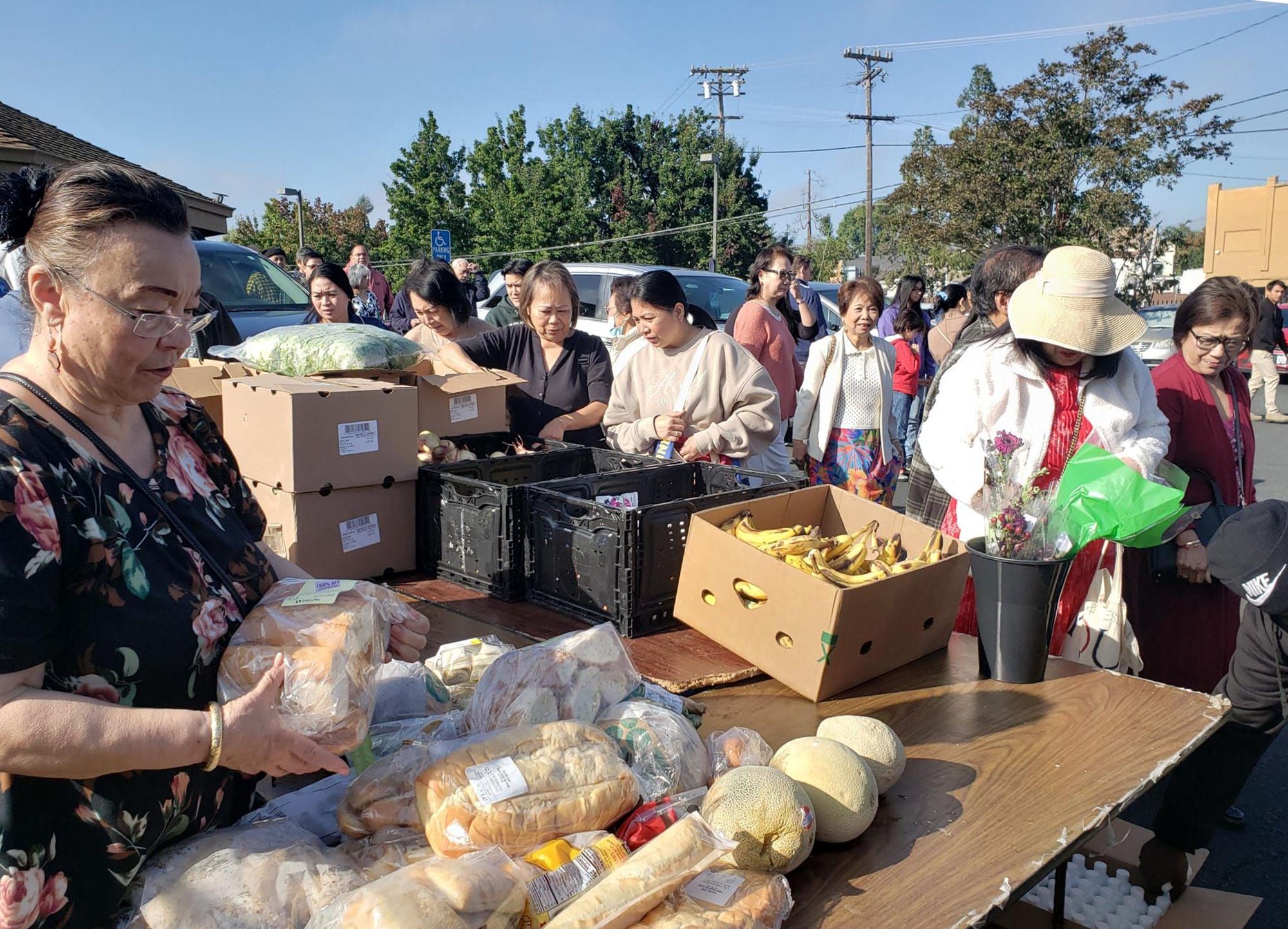
Vallejo resident Leisley Calderon, who was picking up two bags of fruits, vegetables and packaged food from a food pantry run by the Boys and Girls Empowerment Group last week, said that she was alarmed when she saw the CalFresh notice in her email.
“We have a family of eight, I don’t know what we would do without it,” she said. “Lately my husband has only been getting three or four days of work a week.”
Two of Calderon’s six children are only one and two years old, so while she is caring for them, the family only has her husband’s income from construction work.
Calderon said that her family receives about $600 a month from federal food assistance. The aid covers two thirds of the $900 in groceries she purchases each month. The rest of the food her family eats comes from Vallejo food pantries which she visits about two or three times a week.
Individual recipients of food assistance benefits will not be the only group affected by the November delay and the cuts to the program that are starting in January. Farmers, food producers, grocery stores and employees also benefit from the program through recipient purchases. According to the USDA, every $1 billion spent in food assistance benefits increases the U.S. gross domestic product by $1.54 billion and creates 13,560 jobs, many of which are in rural areas.
Food banks anticipate increased need
Local food banks have been preparing for increased need due to the federal shutdown. Many have already seen the cancellation of federal food deliveries and the loss of key programs that support nutrition programs for seniors and children and food bank purchases from local farmers.
“What we have right now is a perfect storm of chaos when it comes to public benefits in our community, especially as it relates to food assistance,” Caitlin Sly, president and CEO of the Food Bank of Contra Costa and Solano, said in an interview with the Vallejo Sun.
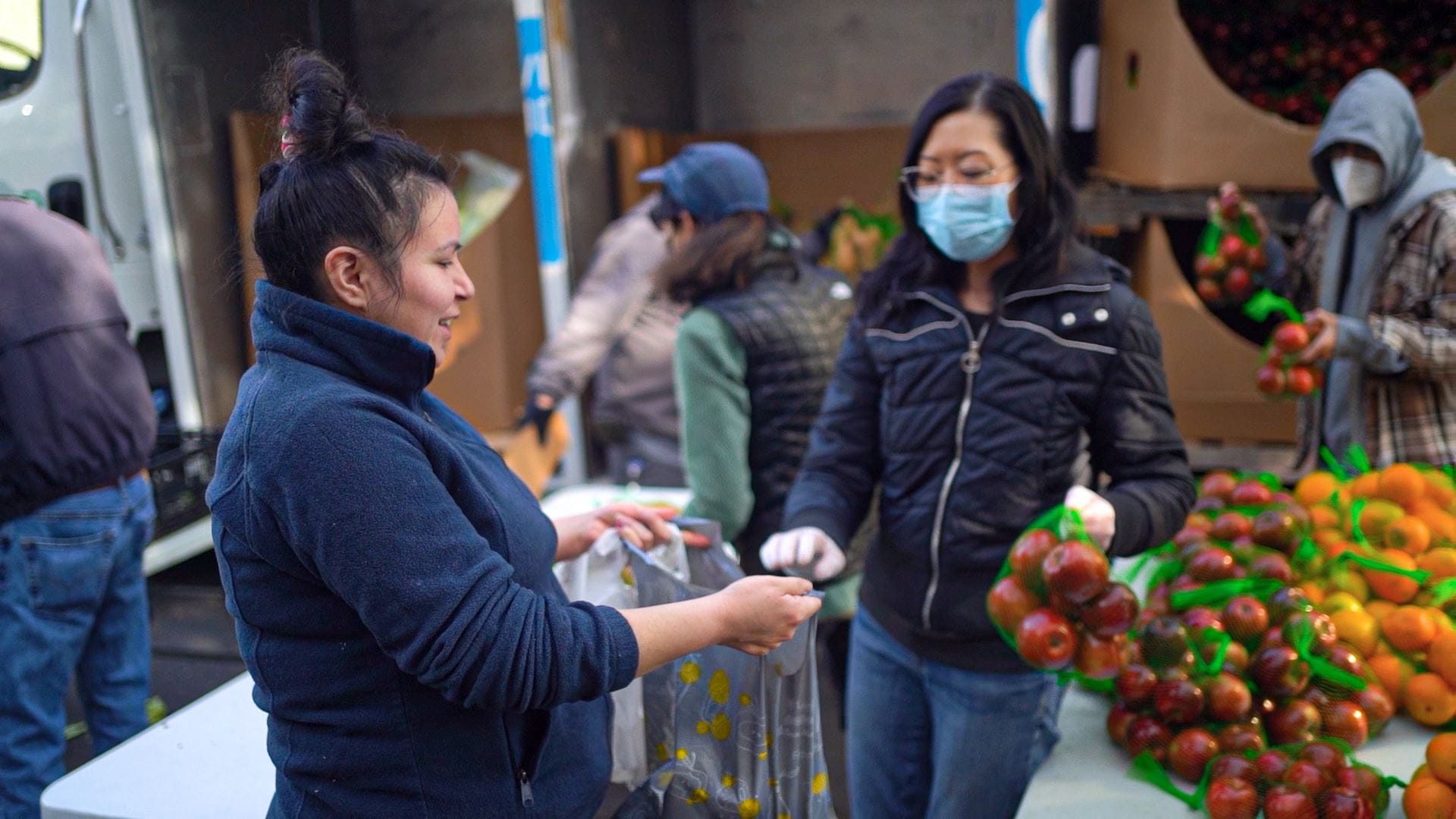
Sly said that the Food Bank has faced similar periods of increased need such as during the Great Recession that followed the 2008 financial crash, and during the pandemic in 2020. But during those years the federal government stepped in with stimulus programs that provided additional funding for the food bank.
“Now we have the opposite effect, where we have a crisis, that is because the government is cutting funding for nonprofits like ours, and also because they are cutting funding for public benefits,” Sly said.
However, Sly reiterated that the food bank’s services are available for those who need them due to support from the local community and strong partnerships with other food security and social service organizations.
“We want people to reach out to us. We want people to come and get help, “Sly said. “We may be struggling, but that's not going to deter us from being there for the community, as we have over the past fifty years.”
States look to keep federal funds flowing
Twenty-six states filed a lawsuit Tuesday to prevent the U.S. Department of Agriculture from suspending food assistance benefits.
The lawsuit claims that the federal government has funding available that will cover a substantial portion of the November food assistance benefits and that the federal agency has not provided adequate reasoning to support its decision to withhold the funds.
According to California Attorney General Rob Bonta, the federal agency is required to use a $6 billion contingency fund that has already been allocated by Congress to fund the November benefits disbursement.
“USDA not only has authority to use contingency funds, it has a legal duty to spend all available dollars to fund SNAP benefits,” Bonta said in a statement. “The Trump Administration, however, has chosen instead to play politics with this essential safety net that so many people depend on — including 5.5 million individuals in California alone.”
However, a memorandum sent by the agency claims that the appropriation is not valid in the current fiscal year and that the funding is reserved for natural disasters such as hurricanes, tornadoes or floods.
Shutdown continues in fight over health care
The government shutdown began on Oct. 1 when Democrats and Republicans failed to reach an agreement on a spending bill before the expiration of the prior budget. Negotiations are stalled over Democrats’ push to extend the expiring Affordable Care Act Tax Credits that make health care premiums more affordable for millions of Americans.
According to an estimate from the health policy research group KFF, formerly Kaiser Family Foundation, if the tax credits are allowed to expire, Americans who purchase insurance through a state or federal healthcare marketplace could see premiums increase by 114%, which equates to an average annual premium cost rising from $888 to $1,904.
While it is unclear how long food assistance benefits could be delayed if the government shutdown continues, policy changes in Trump’s One Big Beautiful Bill Act, or H.R. 1, are already slated to take effect in November with key changes affecting benefits recipients in January.

U.S. Rep. John Garamendi, who represents Vallejo, Fairfield, and other cities in the region, said in an interview with the Vallejo Sun that although the standoff is over the single issue of extending the health care tax credits, the H.R. 1 cuts to food assistance and Medicaid have garnered more attention as the implementation of those policy changes approaches.
“Republicans made a choice to provide massive tax cuts, 80-85% of which go to millionaires, billionaires and corporations,” he said. “To pay for that, they chose to eviscerate programs for American families. Among those programs are SNAP and Medicaid.”
Solano County seeks to minimize impact of changes to food assistance and Medicaid
Solano County officials presented a report to the Board of Supervisors in late August outlining how H.R. 1 policy changes will affect county residents.
For CalFresh benefits the federal changes will require a broader group of “able-bodied adults without dependents,” to prove that they have completed a minimum of 80 hours per month of a qualifying activity, such as employment, community service, education or training, in order to receive benefits.
The county estimates that as many as 6,900 Solano County residents who receive CalFresh may be subject to the work requirements in the coming year.
H.R. 1 significantly expands the able-bodied adults category by extending the age range from those who are 18 to 54, to those who are 18 to 64 years of age.
The legislation also expands the able-bodied adult work requirements to parents of children 14 and older by reducing the age at which children are considered dependents from children under 18 to children under 14.
A number of exceptions to the work requirements were also eliminated under H.R. 1. Homeless individuals, veterans and former foster youth are no longer exempt from documenting 80 hours of activity in order to qualify for CalFresh benefits.
However, legislators did add an exception to the work requirements for specifically defined groups of Native Americans and tribal members.
Applicants or recipients with mental health or physical disabilities are exempt from the work requirements with verification from a medical provider. Those who receive or have applied for disability benefits or who are caring for someone with a disability are also exempt with verification.
Individuals struggling with a drug or alcohol abuse problem or those participating in a drug or alcohol treatment program are exempt as well. This exception also requires recipients to provide verification from a medical provider or proof of participation in a treatment program.
As of Jan. 1, all CalFresh benefits recipients who are considered able-bodied adults will have a total of three months over the next three years that they can receive benefits without meeting the work requirements. This means that recipients will not be disqualified for failure to meet the work requirements until April.
However, Solano County Deputy Director of Social Services Alicia Jones in an interview urged benefits recipients to update their information with the county and begin preparing to meet the work requirements before the first of the year.
This way, she said, benefits recipients will be able preserve as much of the three-month grace period as possible for any changes in employment or activity status that may occur over the next three years.
In order to ensure that as many residents as possible can maintain eligibility for the programs, Jones said that the county Social Services department is working on a referral process that will match clients with community resources or employment resources to meet the work requirements.
“We need nonprofits, faith based organizations, private organizations, food banks, anyone who has volunteer opportunities or community service opportunities,” Jones said at a Solano County Continuum of Care meeting on Oct. 15.
“We need to know that you're willing to work with the populations that we serve who have endured various barriers and traumas,” she said. “Some don't have cars, they may not be able to get to your job site on time, or they may be homeless. Under those circumstances, it's going to be a very unique organization that is going to have to be available to accept that individual to meet that criteria.”
Changes to Medi-Cal also on the horizon
Starting Jan. 1, 2027, similar work requirements for adults ages 19 to 64 will go into effect for Medi-Cal. As many as 47,000 Medi-Cal enrollees in the county will also need to fulfill work requirements unless they qualify for an exemption, according to county officials.
Over the past decade, California has progressively expanded Medi-Cal coverage to various age groups of undocumented immigrants. In 2023, legislation went into effect that closed the last gap and allowed all undocumented immigrants who meet eligibility requirements, including income limits to qualify for full-scope Medi-Cal.
Starting on Jan. 1, 2026, California will freeze full-scope Medi-Cal enrollment for groups of immigrants that the federal government considers to have “unsatisfactory immigration status.” The freeze will affect undocumented immigrants 19 and older as well as lawfully present immigrants such as refugees, parolees, asylees and human trafficking survivors.
However, those with “unsatisfactory immigration status” who are receiving Medi-Cal will be able to maintain full-scope coverage if they renew their application on time every six months, according to Jones.
People who apply before the end of the year could potentially maintain full-scope coverage in the coming years. But if recipients fail to renew every six months and lose their coverage, they will only be eligible to re-apply for partial-scope Medi-Cal which only covers emergency care, pregnancy-related care, and nursing home care.
Full-scope dental coverage is slated to end for some Medi-Cal members on July 1, 2026, and a $30 monthly premium will be added for a broad range of members on July 1, 2027. More information is available on Solano County’s Medi-Cal Changes Fact Sheet.
Garamendi said that Democrats will be campaigning hard on reversing the policy changes that result in cuts to Medicaid in the run-up to the mid-term elections next year. He said that Republicans timed the implementation of the most detrimental changes to the program, like the work requirements for all able bodied adults, so the new policy does not take effect until right after the mid-term election on Jan. 1, 2027.
The Congressional Budget Office estimates that, once implemented, as many 18.5 million Americans will need to fulfill the work requirements for Medicaid programs each year, unless they qualify for an exemption. Over seven years, the work requirements are expected to remove 5.2 million people from Medicaid health coverage programs.
The majority of those disenrolled would not qualify for other health insurance subsidies nor would they be able to obtain coverage through an employer, leaving as many as 4.8 million people without health insurance in 2034, according to the Congressional Budget Office.
As far as whether there is a resolution in sight for the shutdown, Garamendi said the leadership in both the Senate and the House have made it clear that there will be no negotiations. However, he said programs like the Affordable Care Act are widely used in Republican-majority states so he believes that Republicans are feeling the pressure to end the shutdown.
In the meantime, the California Department of Social Services is recommending that counties and other state agencies provide information about local food banks to CalFresh benefits recipients facing delays.
A map with lists of local food resources can be found by clicking the Need Food button on the Contra Costa & Solano County Food Bank website.
Independent local news depends on you
The Vallejo Sun is supported by readers who value reliable, in-depth local news. Your support helps us continue investigating important issues and keeping Vallejo informed.
Become a member today