


VALLEJO – Tick season is here and it’s already off to a rough start. According to the Centers for Disease Control and Prevention’s tick bite data tracker, emergency room visits for tick bites across the U.S. are the highest they’ve been since 2017.
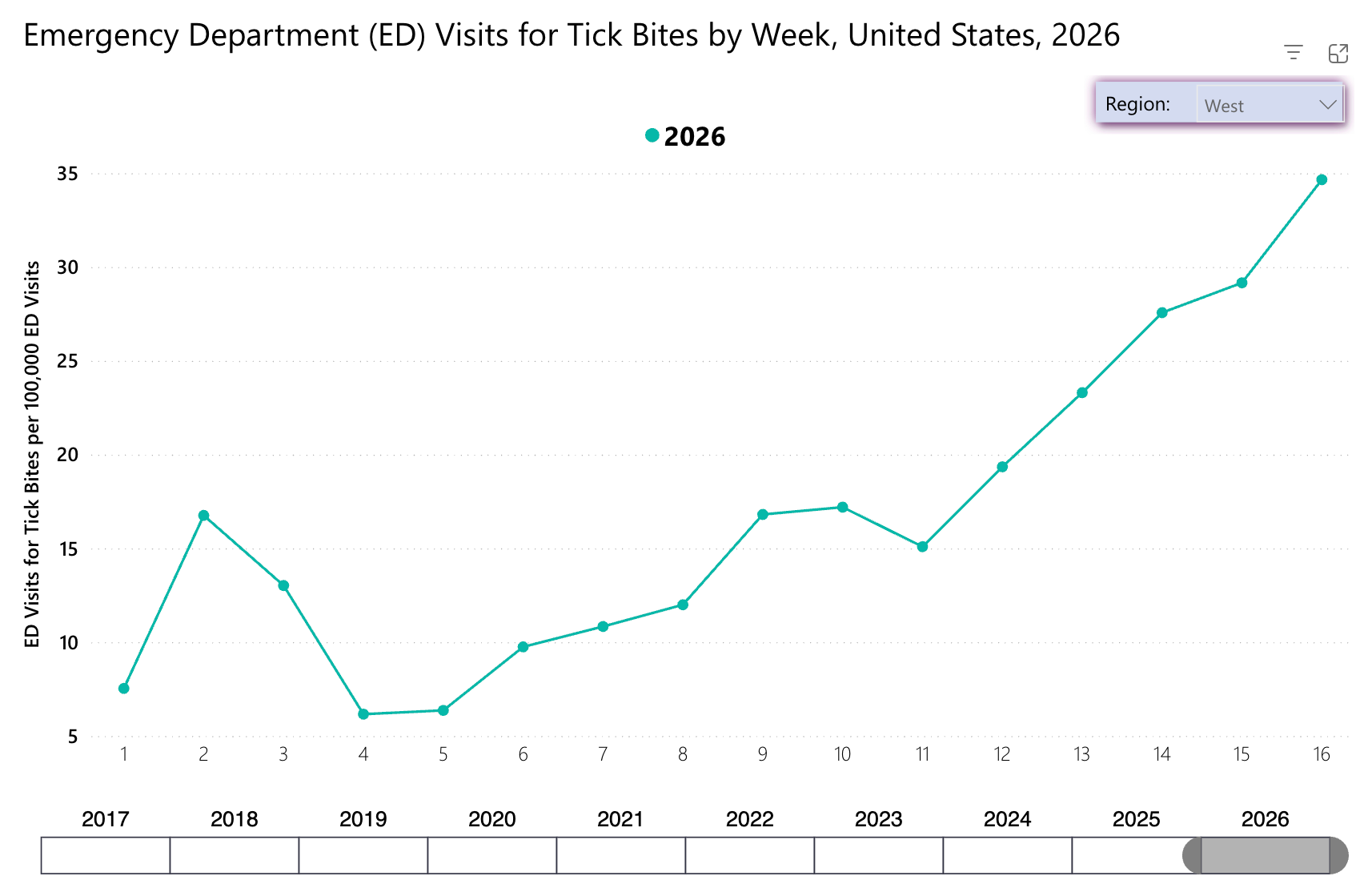
The data shows that visits to the emergency room for tick bites in the western U.S. peaked last year in May, with around 31 tick bites per 100,000 emergency room visits. This year it’s even higher, with visits for tick bites already at 35 per 100,000 visits. Though this is low compared to other regions in the U.S. — the northeast has around 198 emergency room visits so far — it represents an upward trend from the last three years, when visits for tick bites averaged around 25 per 100,000 in early May.
The largest demographic group admitted for tick bites are children under 10, according to the tracker. The second largest group tends to be seniors.
The CDC noted that this data is not comprehensive. The data comes from the National Syndromic Surveillance Program, which collaborates with federal, local, and state health departments to collect and analyze the data. Depending on how much or how little data a local government collects, these results could underestimate how many people are actually being admitted for serious tick bites.
Solano Public Health officials said that people often don’t report tick bites, so it’s difficult for the county to definitively identify regions where tick bites occur more frequently. But they said people who live by or frequent areas with tall grass are at a higher risk of encountering ticks and getting bitten.
Residents say that they’ve noticed more ticks at Vallejo and Benicia parks.
“I just had one on my shoulder yesterday. They're everywhere,” said Kelly Weaver, who takes her dog to the Wardlaw Park dog park and its surrounding trails by Jesse Bethel High School. She said she’s never encountered a tick in the actual dog park, but on the trails she said you’re “guaranteed to get them on you and your animal.”
“I hate them with a purple passion,” she added. She said that while she very rarely finds ticks on herself, it’s not uncommon for her to pick two or three of them off her dog whenever they hike.
Janie Alvord also takes her dog to Wardlaw Park; she said she’s never had an issue with ticks inside of the enclosed small dog park, where they keep the lawn neatly mowed. But her pets have encountered ticks from the tall grass around the Blue Rock Springs Golf Club. She said she also avoids certain trails around Benicia Community Park, like the one that runs alongside Lake Herman, due to the high number of ticks.
“Lake Herman is terrible,” Alvord said. “I took my grandkids down there and went fishing a few years ago and there were ticks everywhere. I don’t like ticks. They’re quite a pest.”
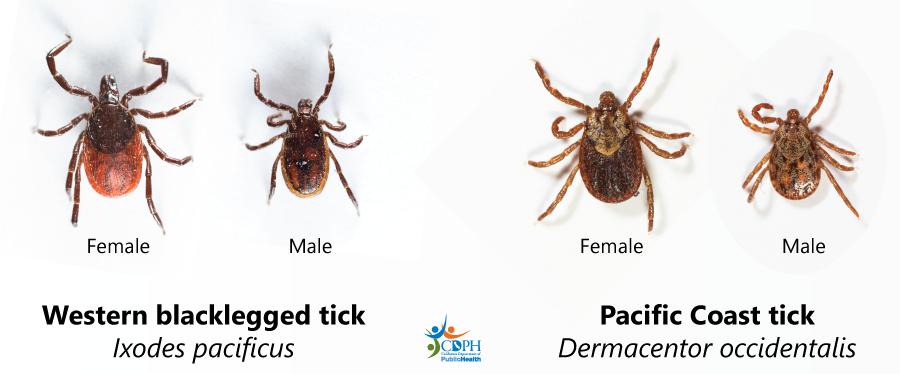
Ticks are dangerous because some species carry the bacteria that causes Lyme disease — a devastating illness if left untreated, said Katariina Tuovinen, a research grant director and science committee member for the Bay Area Lyme Foundation. In California, American dog ticks and western blacklegged ticks are the most common types, with the blacklegged tick carrying the risk of Lyme disease.
Solano Public Health noted that most ticks in Solano County test negative for any known disease, and they only see “a handful of Lyme disease cases annually” in the county.
The symptoms for Lyme disease can vary a lot. A person typically knows they’ve been bitten by a tick because they’ll develop a circular or bulls-eye looking rash. In early stages, the symptoms might feel like the flu, with fever, chills, fatigue, and muscle aches.
But Tuovinen said if it’s left untreated, the infection can progress to more complex symptoms, like pain or numbness in the arms and legs, extreme joint pain, poor memory, and heart palpitations. Eventually, a patient could develop long-term arthritis, nervous system problems, severe headaches, chronic fatigue, and inflammation of the brain or heart.
A person can have all or only a few of these symptoms, said Tuovinen, and people often confuse the symptoms for another illness. She said that’s why Lyme disease is sometimes called a "great imitator."
If it’s caught early enough, most cases of Lyme disease can be treated with a full course of antibiotics. Only about 10-20% of patients have recurrent symptoms after treatment.
Other species of ticks can carry other disease-causing pathogens. One such example is the lone star tick. Normally found in the Southeast and the Midwest, the lone star tick has since expanded into California due to climate change, said Tuovinen.
A bite from an infected lone star tick can cause alpha-gal syndrome, which is a severe reaction to red meat and dairy. Tuovinen said there’s no cure for alpha-gal syndrome; the person would just have to avoid eating red meat like beef, pork, lamb, venison, and rabbit, and avoid any further tick bites, which could worsen the allergic reaction.
That’s why being vigilant is important. Tuovinen recommends using insect repellent with DEET on the skin, and covering clothes in permethrin, an insecticide that can provide protection for up to six weeks. When hiking, she said stay in the middle of trails and avoid tall grass. She said always check yourself and your pets after being outdoors, and take a shower and dry your clothes in a hot dryer for an hour after a hike.
If you do find an attached tick on your skin, the Bay Area Lyme Foundation advises against yanking it off. Instead, use tweezers to slide between your skin and the tick's mouth to gently pry it off, which could take several tries. Ticks can be disposed of by flushing them down the toilet, or wrapping them in tape and putting them in a bag for testing. Tuovinen said it’s important to keep an eye out for any Lyme disease symptoms if you realize you’ve been bitten.
Tuovinen added that unfortunately, climate change has made it so that encountering ticks has become more common, as they thrive in warmer temperatures.
“We are seeing increases in tick activity with longer seasons and broader distribution,” Tuovinen said. “Tick season in California is now year-round.”
Independent local news depends on you
The Vallejo Sun is supported by readers who value reliable, in-depth local news. Your support helps us continue investigating important issues and keeping Vallejo informed.
Become a member today