VALLEJO – In 2022, following a series of police scandals that led to a reform agreement with the state Department of Justice, the Vallejo City Council approved a Police Oversight and Accountability Commission, one of dozens of required reforms. The commission’s goals included improving relations between the community and the Vallejo Police Department and reviewing complaints about law enforcement from community members.
While not the most powerful oversight body in the region, the police commission would have the power to conduct investigations and make recommendations to the police chief. But nearly three years later, none of that has happened.
Former and current commission appointees have grown increasingly frustrated with the lack of progress, saying that the city has allowed years of negotiations with the police union to prevent them from meeting or conducting any business.
Commissioner John Lewis, who was appointed last year, said that the commission has yet to even have a formal meeting, largely due to language in Vallejo’s ordinance that requires the completion of a “meet and confer” process with Vallejo Police Officers Association.
“If we’re not going to hold meetings, the public needs some other way to voice their concerns,” Lewis said. “It’s gotten to the point that it’s just stupid, and the city manager is going along with the city attorney. You can meet and confer, and the commission can still do its business.”
Lewis pointed out that the commission’s website tells the public that it will hold regular meetings “on a specific date and time (to be determined) of every month beginning with the first full month of appointment by the Mayor and Councilmembers.” But the commissioners’ contact information hasn’t been posted on the city’s website and they don’t even have city email addresses. The commission’s website also doesn’t have working links to the commission’s community engagement documents or sections of the Vallejo Municipal Code, describing the purpose and duties of the seven commission members.
Lewis said that he disagrees that the negotiations with the police union should prevent the commission from conducting business and it’s another way that, in his opinion, the city attorney is “burying and stonewalling the DOJ recommendations.”
According to City Attorney Veronica Nebb’s office, the “meet and confer” process with the union is required when the city changes working conditions for employees like police officers. The ordinance creating the police commission states that the commission “shall not be implemented until completion of any meet and confer process with any affected bargaining unit including but not limited to the Vallejo Police Officers Association.”
That process has been fraught. In January 2023, just after the ordinance passed, the police union filed a Public Employment Relations Board (PERB) charge, which Nebb said in an email to Lewis, “effectively stopped the meet and confer process and prevented us from moving forward.”
Nebb told Vallejo Sun that while this is taking place, the city cannot begin business such as setting up a way for the public to contact commissioners, picking meeting dates or crafting meeting agendas. She said that all commission meetings have been focused on training alone under the interim settlement with VPOA, making them “Brown Act and municipal code compliant.”
“The commission has no online contact information because, as noted below, the commission remains in a limited role until the PERB process is completed,” Nebb said.
The oversight body is one of 45 reforms required by the state Department of Justice in a 2020 agreement. The City Council sought to put an interim city auditor in place in 2021 while it worked out an oversight model, but the city attorney’s office never executed the contract because of a grievance by the VPOA. The City Council passed an ordinance to create the police commission in December 2022 based on models in other cities with revisions recommended by the city attorney’s office. The meet and confer language was added during the revision process.
While the employment board case was pending, the city negotiated an interim settlement with the VPOA to allow appointment and training of board members, and commissioners were appointed and sworn in last year after a background check.
But as of last fall, the commissioners still hadn’t started a required six months of training. Following reporting by the Vallejo Sun, the city began basic training in procedures, but since then there has been no discussion of when to hold meetings, how to begin sharing commissioner information with the public or how agendas would be put together.
The city attorney’s office reached a proposed settlement with the VPOA earlier this year, but the City Council rejected the proposed revisions to the ordinance, finding that they weakened the oversight model.
Nebb told Lewis that for the commission to begin work, the city must either negotiate a different settlement agreement or join a hearing before an administrative law judge, which could then lead to a PERB hearing and decision.
Nebb’s statements have drawn disagreement from Lewis and several attorneys familiar with the commission, who say that there was no reason any police union should have the power to restrict even simple functions of a city body.
Last week, the American Civil Liberties Union of Northern California released a letter calling for an independent investigation into Nebb’s office, citing delays in the police commission, among other issues. On Tuesday the City Council voted to contract an outside firm, Renne Public Law Group, to review the allegations without involving Nebb and recommend whether an investigation is needed.
Lewis said that the city could still get business done without agreement with the police union, and accused the city attorney of knowingly stonewalling the entire process.
“We’re just going to have to start meeting, that’s all there is to it,” he said. “If an officer were to shoot the Easter bunny, we wouldn’t even be able to put them on a time out. We do not have that authority. I don’t want to infringe on the rights police officers are entitled to. But it’s absurd that we can’t hold meetings and let the public have a voice.”
Retired trial attorney Mike Nisperos told Vallejo Sun that the matter has grown to potentially represent violations of the Brown Act, the state’s open meeting law, and the city’s own municipal code regulating how city commissions can operate.
“I know how municipal government is supposed to run, and we are so far from that,” he said.
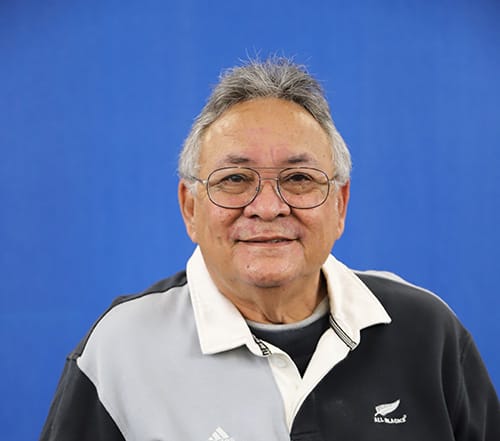
Nisperos – who served as chief counsel for the State Bar and was a deputy district attorney for Alameda County – was involved in Oakland’s Citizen Police Review Board in the mid-1990s and was appointed to Oakland’s police commission in 2017. He then moved to Vallejo and participated in drafting and negotiating Vallejo’s police commission ordinance as a member of the advocacy group Common Ground.
He said that under the Brown Act, the public can review all emails involving the police commission, and is entitled to have a city email address and phone number to reach commissioners and an assigned city staffer.
Nisperos compared the process in Vallejo to Oakland’s timeline for establishing a police commission, noting how quickly Oakland established a website for the public to file concerns about the police department. Vallejo’s municipal code under chapter 2.26 requires a board, commission or committee to fix the time and place of regular meetings and to adopt a work plan that serves to fulfill the purpose of the commission. He said that the public should be able to see a commission start to do its job outside of the control of the police union, and be able to voice their opinions in public meetings.
“We’re doing nothing,” Nisperos said. “They [the city] could be getting these folks ready to do their job under the ordinance, however limited it is.”
Nisperos also blamed Nebb, accusing her of holding up the process in a pattern of “burying” misconduct. He said her office is complicit in effectively allowing the VPOA to control the commission’s lack of operation, and that in his opinion the City Council ought to fire her in order to accomplish the reforms required by the Justice Department.
As for the commission members, he said, “I think they need independent counsel and they need to have staff assigned to help with their agendas. They need to have agenda control to be able to set their own agenda.”
Retired Santa Rosa City Attorney Brien Farrell agreed that the problem lies in Vallejo’s lack of independent oversight, saying that Nebb’s office cannot oversee that process without a conflict of interest. He called the commission ordinance’s provision requiring the city to meet and confer with VPOA before holding meetings a “poison pill.”
“The training of commissioners, the election of a chair … many things can be done unilaterally by a city without meet and confer,” Farrell said. “The provision doesn’t make sense because it doesn’t protect city interests in being able to conduct business or needs to without violating any changes in labor conditions.”
Farrell said the “unreasonable” delay in implementing the commission, especially after the Department of Justice placed many new obligations on the city in 2023, is unacceptable.
“We are not making adequate progress,” Farrell said. “We keep learning there are serious problems no one was aware of when the agreement was entered into. They require full investigation. There’s sworn testimony from witnesses about deep misconduct within the department.”
Before you go...
It’s expensive to produce the kind of high-quality journalism we do at the Vallejo Sun. And we rely on reader support so we can keep publishing.
If you enjoy our regular beat reporting, in-depth investigations, and deep-dive podcast episodes, chip in so we can keep doing this work and bringing you the journalism you rely on.
Click here to become a sustaining member of our newsroom.
THE VALLEJO SUN NEWSLETTER
Investigative reporting, regular updates, events and more