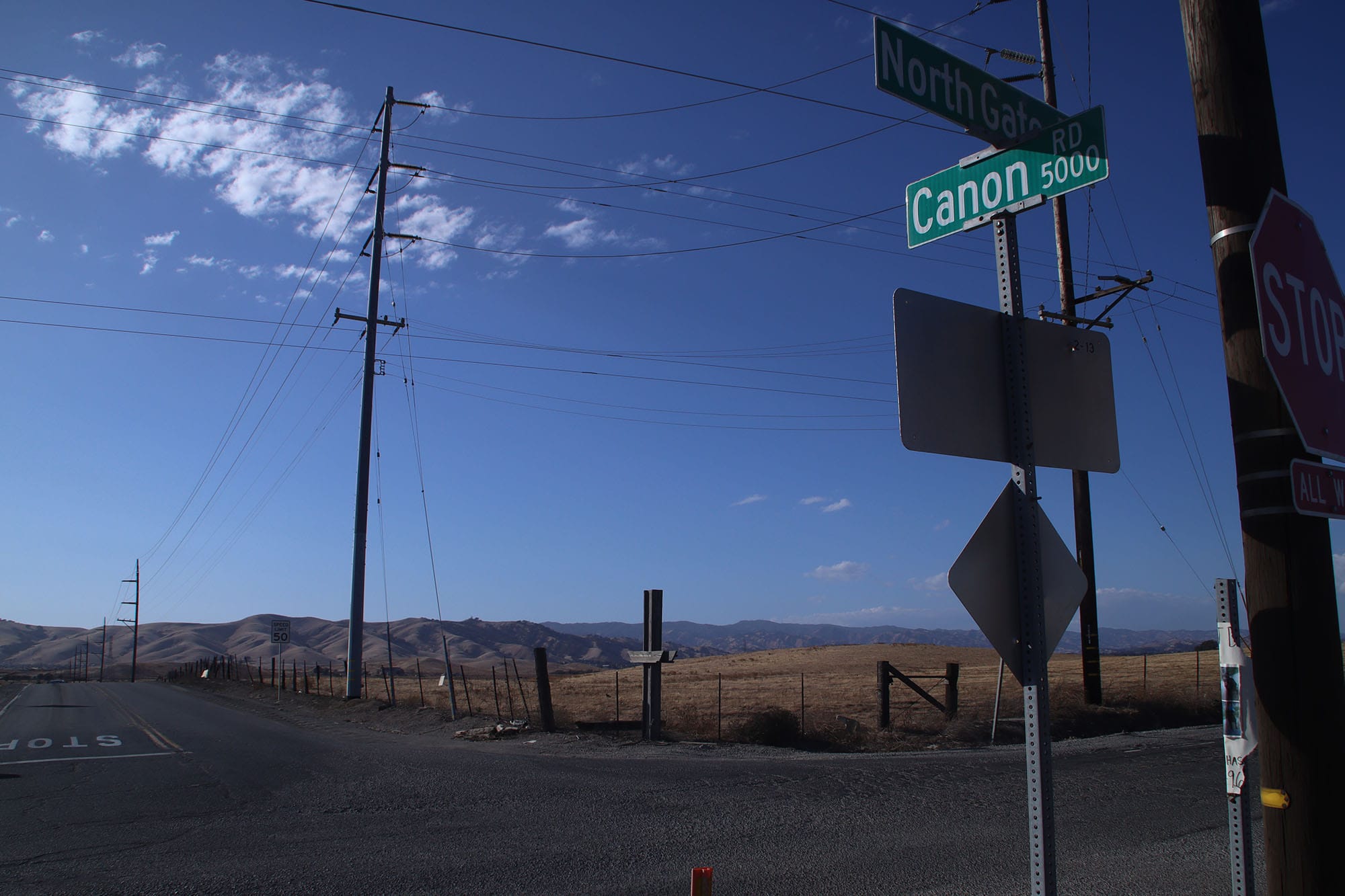
FAIRFIELD – The Fairfield City Council voted unanimously to enact a 45-day citywide moratorium on data centers at a meeting Tuesday in response to community concerns surrounding preliminary plans for a 150 MW data center project in Northeast Fairfield.
During Tuesday’s meeting, Fairfield city manager David Gassaway said that city staff initially suggested that the developers of a planned 300-acre industrial park build a data center because a data center’s electricity needs would be conducive with building out energy infrastructure that could serve as a backup power supply for Travis Air Force Base.
Gassaway said that the city had received a series of grants from the U.S. Department of Defense to examine municipal infrastructure that supports the base. He said that the results of those studies indicated a need for additional power supply infrastructure.
According to Gassaway, NorthPoint Development had been planning to build a warehouse and logistics center under the approved master plan for the industrial park.
“These uses aren’t always the highest and best economic value to a community and to a city,” Gassaway said. “That is what led us to approaching NorthPoint back in 2025 and asking them if there was any interest in a data center.”
Gassaway noted that the city has been running a structural deficit and said that the project could bring significant revenue to the city through sales and utility user taxes. The presentation slides indicated that the investment, development and infrastructure for the data center project represents an overall economic value to the city of $10-20 million per megawatt.
Gassaway said that there are currently no applications for a data center project in Fairfield. But he said that following the city staff’s suggestion, NorthPoint Development requested confirmation from the city that a data center project would fit within a permit that the Planning Commission approved in August 2023.
The permit includes a set of parameters such as water and sewer infrastructure, landscaping, building height and traffic patterns as well as a conceptual land plan with building footprints.
Gassaway said that the master permit allows for two types of industrial zoning, but data centers are not currently identified in the city’s zoning code.
“We sort of fit a square peg into a round hole but it’s something that fits,” Gassaway said. He added that the city staff supports enacting the moratorium because it will allow time to make changes to the zoning code that will regulate data center projects.
California state law allows city governments to enact a temporary 45-day moratorium when a use poses a “current and immediate threat to public health, safety or welfare.” The moratorium can be extended to for a full one-year or a two-year period based on findings that threat still exists. However, 10 days before expiration or extension of the ordinance, the city is required to produce a report explaining what the city has done to address issue.
The moratorium passed Tuesday states that data centers pose a threat to the public based on “impacts related to energy consumption, water, wastewater, land use, air emissions, noise, infrastructure demands, environmental quality, and community aesthetics.” It also states that “approval of a data center project could materially reduce City services available to serve residents, businesses, and other existing and planned uses.”
The ordinance prohibits projects that dedicate 5,000 square feet or more to servers, data storage and associated electrical and cooling equipment or are designed for electrical loads of 1 MW or more. It also prohibits battery storage or backup generation equipment intended to support a prohibited project.
The ordinance does allow servers and computer equipment associated with other primary uses.
In addition to considering the urgency ordinance, Gassaway also asked the council to provide city staff with instructions related to drafting data center regulations that would ultimately take the place of the moratorium.
Gassaway provided a list of recommended regulations, including 3,000 feet of separation from residential areas, a requirement for closed-loop cooling systems that reduce water usage, and noise limited to a specific decibel level. He said that the staff recommends only allowing data centers in the proposed area because, of the city’s available locations, it has the greatest separation from residential or sensitive uses.
Gassaway also recommended limiting data centers to a 100-acre maximum. He noted that the proposed area is 300 acres and said that the limitation would allow space for other preferred uses such as advanced manufacturing.
Finally, Gassaway suggested negotiating a community benefits package and excluding data centers from an existing cap on the city’s utility user tax in order to bolster city revenue.
Several councilmembers requested that the city staff bring back information about how to set an appropriate decibel level regulation.
Many of the councilmembers’ comments reiterated concerns expressed by community members. Councilmember Doriss Panduro asked for more information about fire suppression concerns. She referred to a comment from community member Ed Fisher about the toxicity and flammability of materials used in data centers. Fisher said that he is a former firefighter and resident of the One Lake community, which is one of the residential developments that is closest to the project area.
Community member Michael Jefferson raised concerns that such a large project near Travis Air Force Base could cause reflection that would negatively affect the base. Councilmember Doug Carr said that he would like a clear statement from Travis about whether they are for or against a potential data center project there.
Councilmember Scott Tonnesen said that he would like more information on impacts to groundwater and any dangerous pollutants that a data center project could expose residents to.
Vice Mayor Pam Bertani asked about how the scheduling would work if the council wanted to extend the interim ordinance beyond the initial 45 days.
City Attorney David Lim said that city staff would have to issue the required report no later than Dec. 15 and at that point the council could also vote to approve an extension of the interim ordinance.
Jeremy Weber, who has worked to organise residents who live near the project site to call for a data center moratorium urged the council to approve the ordinance.
“We saw in the election last week that voters across the country overwhelmingly made their opposition to data centers known,” Weber said. “They placed new restrictions on such facilities and elected state leaders who have promised to curb the expansion of data centers. This moratorium represents the will of the people. There's no reason not to support it.”
Independent local news depends on you
The Vallejo Sun is supported by readers who value reliable, in-depth local news. Your support helps us continue investigating important issues and keeping Vallejo informed.
Become a member today- government
- business
- Fairfield
- David Gassaway
- Travis Air Force Base
- NorthPoint Development
- Doriss Panduro
- Michael Jefferson
- Doug Carr
- Scott Tonnesen
- Pam Bertani
- David Lim
- Jeremy Weber
Ryan Geller
Ryan Geller writes about transitions in food, health, housing, environment, and agriculture.
follow me :