VALLEJO – The city of Vallejo’s ability to finance future capital improvement projects like $300 million in deferred maintenance on roads and a new police headquarters faces limitations because of loan terms dating back to the city’s 2011 bankruptcy, according to a report to the City Council on Tuesday.
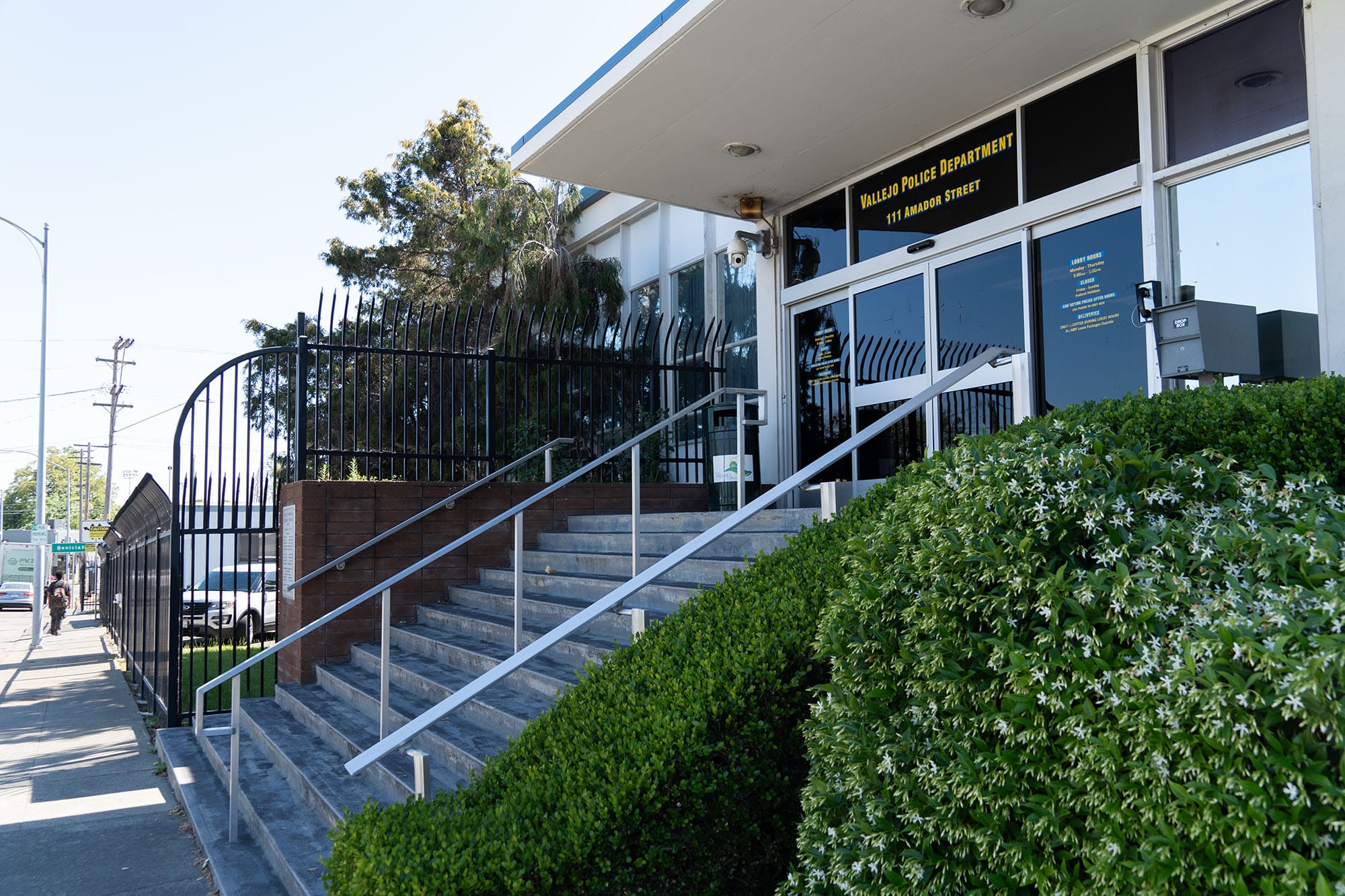
The city has been considering issuing bonds for two major capital improvement projects in recent years. It is seeking to build a new police headquarters building to replace the dated structure at 111 Amador St. The project is estimated to cost $122 million and is a requirement under a police reform agreement with the state Department of Justice.
The city has also started the process of applying for $120 million in bonds for street repairs over the next 10 years. More recently the city has sought annual allocations from Measure P sales tax revenue rather than pursuing a long-term bond.
But according to the terms of a $23.5 million loan from the U.S. Bank National Association, the city can’t borrow more than $170 million as its debt service would exceed 10% of the general fund. The city estimates that it can service a debt of up to $275 million by including $18 million in annual Measure P revenue.
The City Council voted 6-0 Tuesday – with Mayor Andrea Sorce absent – for city staff to approach the bank to renegotiate the loan terms, particularly as the city recently finished repaying one of two large loans following its bankruptcy. But renegotiating the loan could have major drawbacks as its favorable 1.6% interest rate could increase given the current market rates.
The council also requested that city staff bring back a long-term financial plan that considers the city’s outlook in many areas, including public safety and infrastructure. The goal is to determine whether new measures have to be taken to fund future capital improvement projects and whether partnerships with other cities or funding opportunities with the state and federal government could be leveraged.
Councilmember Tonia Lediju said that before going down the refinancing path with capital projects like the headquarters site, the council should consider Vallejo’s overall general fund capacity and come back with five-year projections for different priorities such as public safety and housing. She said this is necessary given the city’s potentially ongoing financial troubles, which she partly attributed to the pullback in federal funds under the current presidential administration.
“We really are missing a leg on the stool when we talk about all of the strategies we need to be projecting,” Lediju said. “Without that data, I personally am not willing to say go try to negotiate something. We really need to do the prudent work around financial modeling before we take that step.”
Councilmember Diosdado "J.R." Matulac cautioned against considering Measure P funds as money to cover debt. He said that the Measure P committee always needs to weigh in first on such uses. The committee has in the past been asked to approve using funds from the measure on various financial needs, and in May turned down a $12 million request from the City Council to supplement street repaving programs, saying the council must clarify its priorities for when to use the funds.
“I want to make sure that we’re not bypassing their voice and expertise on this,” Matulac said of the committee. “We’re talking about their funding without their input.”
The city’s current debt is in good standing and will not mature until 2042, according to KNN Public Finance, a private financial advisor. However, due to the size of the debt, KNN said that funding future potential capital improvement projects will be challenging and the city will need to manage its projects around the constraints under the outstanding bank loan.
The loan also encumbers many city-owned properties, limiting the city’s use of them. The council considered whether the bank could be convinced to release properties to the city which could then be leveraged for new loans or even sold, such as an office building at 400 Mare Island Way that the city purchased to use as a police headquarters before reconsidering the plan after public backlash.
Another option is that when cities don’t have enough available asset value to secure a new loan, they may enter into a project lease where the financed project secures the borrowing. KNN said that the most viable approach will require issuing more bonds during this process to finance up to 3 years of interest, which increases the city’s total and annual debt service costs.
“Despite the additional cost of capitalizing interest, utilizing the financed project as the leased property is a viable approach for the issuance of lease debt and commonly utilized by local governments that have asset constraints,” KNN said.
It is currently unclear if the new police headquarters building could be leveraged in this way. City Manager Andrew Murray said that the architects contracted to develop a plan for the new police headquarters will likely bring a proposal showing how much the building could cost in total to develop for consideration before the summer.
The council last September approved a tentative $1.5 million design for the building, which would be built at the existing site, despite disapproving of its potential for growing costs.
Resident Melvin Cohen said during public comment that the constraints created by the bank loan will deeply affect the city’s choices. He asked that the council consider more creative and flexible options for the future.
“I would encourage you to view this through the lens of (funding) not just through the police headquarters, but through broader capital strategies,” Cohen said. “Negotiated flexibility now creates options for us later and protects the city from being boxed in when emergencies arise.”
Before you go...
It’s expensive to produce the kind of high-quality journalism we do at the Vallejo Sun. And we rely on reader support so we can keep publishing.
If you enjoy our regular beat reporting, in-depth investigations, and deep-dive podcast episodes, chip in so we can keep doing this work and bringing you the journalism you rely on.
Click here to become a sustaining member of our newsroom.
THE VALLEJO SUN NEWSLETTER
Investigative reporting, regular updates, events and more

- government
- Vallejo
- Vallejo City Council
- Vallejo City Hall
- 400 Mare Island Way
- Tonia Lediju
- Diosdado “J.R.” Matulac
- Measure P
- KNN Public Finance
- Andrew Murray
- U.S. Bank
Natalie Hanson
Natalie is an award-winning Bay Area-based journalist who reports on homelessness, education and criminal justice issues. She has written for Courthouse News, Richmondside, ChicoSol News, and more.
follow me :