VALLEJO – Vallejo made some movement on building affordable housing in 2025, but the city has a long way to go to make progress toward its regional housing goals, according to a progress report received by the city’s Planning Commission on Monday.
The report covered the city’s progress on its goals under the Housing Element – a state-mandated plan enacted every 8 years to meet regional housing needs – during the period from Jan. 1 through Dec. 31, 2025.
City staff said that in 2025, Vallejo made progress in several areas, including approving infill residential developments and historic district housing such as 130 single-family homes on four unused baseball fields in East Vallejo. The planning department said that 26 housing development applications were submitted in 2025, proposing 625 homes. The city has also made progress on goals such as advancing transportation safety improvements and roadway rehabilitation, city staff said during the presentation Monday night.
However, those advancements only added up to small progress toward the Housing Element’s goals.
Vallejo only issued building permits for seven homes for very low-income people during 2025, for a total of 27 of these homes from 2022 to 2025. Only 193 homes were credited toward the city’s obligation to create 2,900 affordable homes under the Housing Element, also known as the Regional Housing Needs Allocation, or just 6.65% of its eight-year goal. Of those, 145 were designated as homes priced for people earning above-moderate income, or at least $95,000 for one person under the 2024 Solano County area median income.
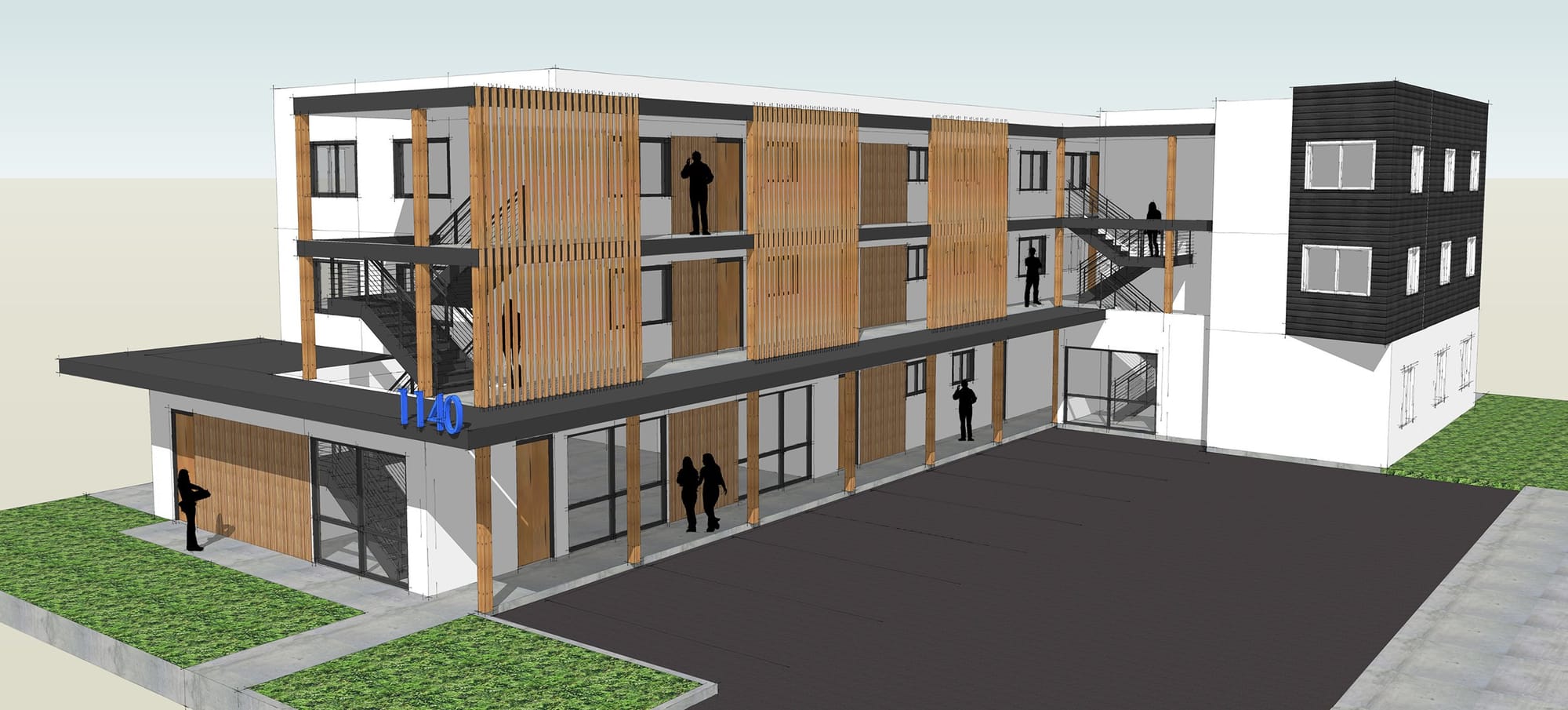
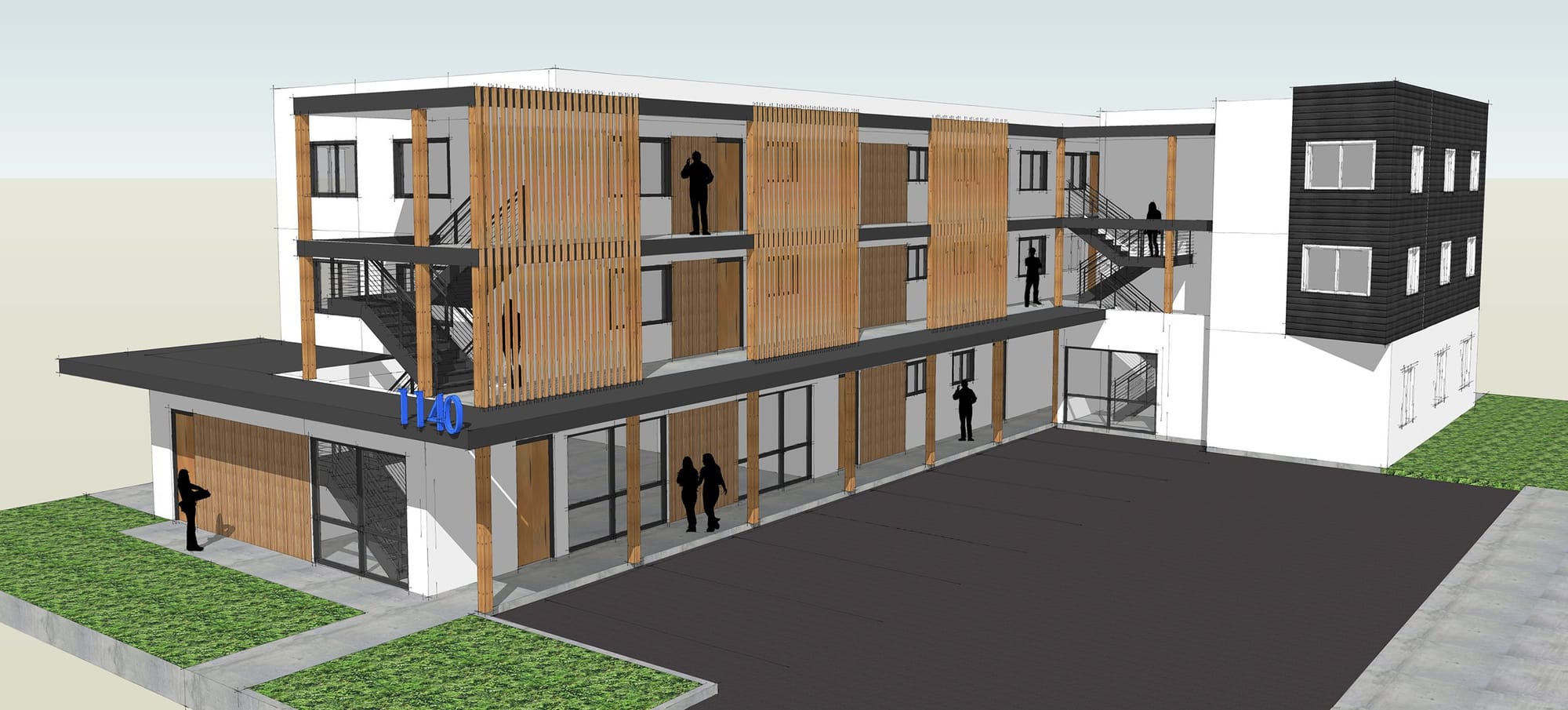
City staff provided the Vallejo Sun the current list of developments underway throughout the city, which shows 1,642 housing units at various stages of development, including 135 low income units. Most of the proposed developments are on the outer edges of the city, largely in South Vallejo. Those range from luxury apartments at 532 Magazine Street, with 132 market-rate homes completed, to a 14-home 100% affordable housing project at 1140 5th St., approved in October.
Cesar Orozco, the city’s planning manager of current development, said that many of these projects are still in the pipeline and at various stages in the development process. For example, the West Harbor Park development at 961 Porter St. will soon offer 24 homes which will be deed restricted to low-income housing, out of a development of 120 homes.
Others are still in review, such as at 5180 Sonoma Blvd., where a developer plans to construct 429 multi-family homes at market rate prices starting in May. A proposal at Borges Lane for 398 residential homes, of which 68 residential homes will be deed restricted for affordable homes, is under environmental review. The city has also been conducting a review of the development underway at 720 and 759 Sonoma Boulevard for 98 multi-family homes restricted to low and extremely low-income households, to determine if it meets General Plan and Housing Element policies.
Staff also within the last year completed an analysis of enacting an inclusionary housing policy in Vallejo, which could require developers to add affordable housing to market rate developments. Hector Rojas, the city’s long range planning manager, said that analysis evaluated different kinds of developments in Vallejo and found that most are “not financially feasible” under existing market conditions.
“Because many projects do not ‘pencil out’ today, the addition of a mandatory on-site affordability requirement could further reduce feasibility and potentially discourage new housing production,” Rojas told Vallejo Sun following Monday’s meeting.
Based on this analysis, the commission and City Council directed staff to proceed with drafting an inclusionary housing ordinance with flexibility, expected to be ready later this year.
Rojas told Vallejo Sun that, if adopted, an ordinance would require new residential developments to provide a set percentage of homes at affordable levels, or allow developers to pay an in-lieu fee that the city would use to fund affordable housing construction elsewhere. This would promote mixed-income communities, distribute affordable units throughout the city and establish a local funding source to support below-market-rate housing, he said.
The city also modified a previously secured fund of $2.4 million in One Bay Area Grants to pay for a new analysis from consultants as it looks to craft potential renter protection and housing stability policies. Staff said that by March 6, they will finish interviews with consultant teams and will next recommend a team to the City Council to manage the $1.3 million update of the Downtown Vallejo Specific Plan, which contains anti-renter displacement policies.
Planning commissioners also raised concerns on Monday that the city’s ability to leverage its own resources, including vacant or blighted properties, could be holding back development.
Commissioner Wanda Madeiros noted that City Councilmember Alexander Matias asked the commission to review the plan for Sonoma Boulevard “to challenge some of the zoning and land use designations along there.” She noted the lack of maintenance of many buildings in the area, in some cases for decades.
Commissioner Tara Beasely-Stansberry said there is a lack of capital for the city to work with, and staff must push for neighborhood mixed-use designation.
“I’ve been screaming from the rooftops about infill, they’ve been doing it in Richmond for years,” Beasely-Stansberry said.
Commissioner Donald Douglass, while complimenting the work of planning department staff, said that Vallejo needs to be better marketed for its natural beauty, comparing it to nearby cities like Walnut Creek.
“This is a fabulous place, it’s just that somehow we’re not selling it well enough,” Douglass said. “I just don’t get the lack of investment. A lot of the things with RHNA, we just haven’t had staff, and we do now.”
Crystal Gallegos, director of the Vallejo Housing Justice Coalition, said in public comment that the commission played an important role in late 2024 by including a focus on renter housing stability within the Housing Element, which at the time was nearly two years overdue for the state.
The city in 2024 had to rework the plan after the California Department of Housing and Community Development rejected it, citing a number of deficiencies including a shortage of sites identified for low-income housing and a concentration of low-income sites in historically disadvantaged neighborhoods.
Gallegos pointed out that Vallejo produced only seven homes for very low-income people which meet the regional housing needs allocation within the last year, and appears to be far from the goal to produce hundreds more.
“The rent burden and overcrowding is not meeting the needs of our residents who are most impacted,” Gallegos said.
Before you go...
It’s expensive to produce the kind of high-quality journalism we do at the Vallejo Sun. And we rely on reader support so we can keep publishing.
If you enjoy our regular beat reporting, in-depth investigations, and deep-dive podcast episodes, chip in so we can keep doing this work and bringing you the journalism you rely on.
Click here to become a sustaining member of our newsroom.
THE VALLEJO SUN NEWSLETTER
Investigative reporting, regular updates, events and more
- Housing
- homelessness
- government
- Vallejo
- Vallejo Planning Commission
- housing element
- Cesar Orozco
- Hector Rojas
- Tara Beasley-Stansberry
- Donald Douglass
- Wanda Madeiros
- Crystal Gallegos
- Vallejo Housing Justice Coalition

Natalie Hanson
Natalie is an award-winning Bay Area-based journalist who reports on homelessness, education and criminal justice issues. She has written for Courthouse News, Richmondside, ChicoSol News, and more.
follow me :