VALLEJO – Vallejo is one step closer to incorporating environmental justice into its general plan — a comprehensive, long-term blueprint that guides how the city will grow and develop until 2040.
The new effort was announced Wednesday evening at an event hosted by the environmental justice organization Fresh Air Vallejo at the Norman C. King South Vallejo Community Center. The project, dubbed “EJ4Vallejo,” is a partnership with the city that will involve scheduling community meetings, brainstorming solutions, and collecting stories and data so that the needs of the community are reflected in any future land use projects and climate resiliency strategies.
The project will run until winter 2026. “The ultimate impact, we hope, is a more empowered community that’s capable of influencing city planning,” said Lorene Allio, a member of Fresh Air Vallejo.
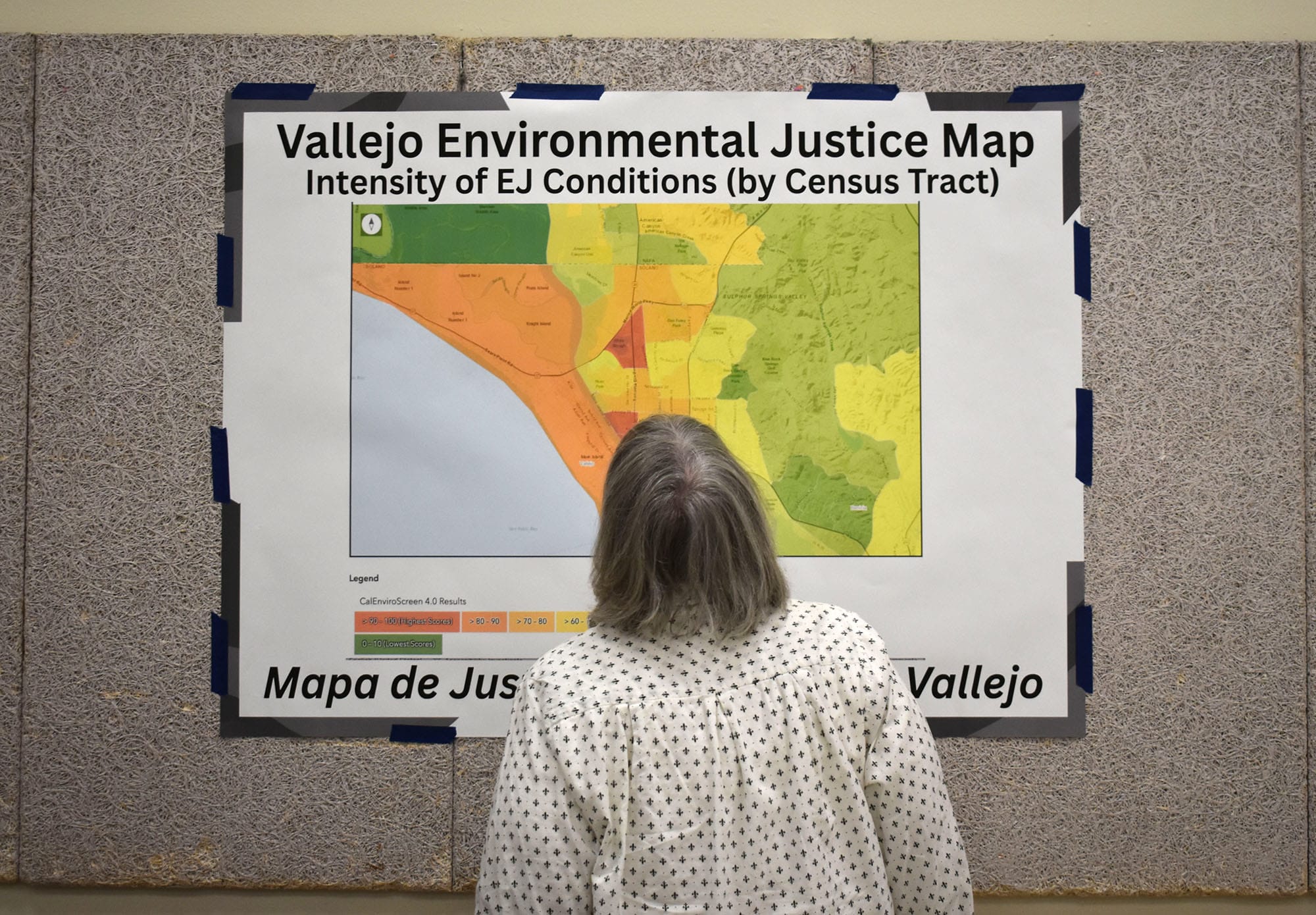
This is all part of the city falling into compliance with California Senate Bill 1000, which went into effect in 2018. SB 1000 requires that local governments engage with the community to identify “disadvantaged communities,” which are areas that experience compounding health risks due to pollution exposure and issues like food insecurity, unsafe homes, and inequitable access to resources. The law also requires that local governments promote civic engagement so that these affected communities have input into future policy decisions.
The California Environmental Protection Agency has a tool that maps out these areas. The data shows that people of color, particularly Latino and Black people, disproportionately bear the burden of living in high pollution areas. The most impacted neighborhoods are 91% people of color, while the least impacted neighborhoods are 67% white.
The disparity is a result of decades of redlining and systemic racism, with communities of color often pushed to live by freeways or refineries. This is what environmental justice — the idea that all people, regardless of race, gender, or income, have the right to the same environmental protections — aims to rectify.
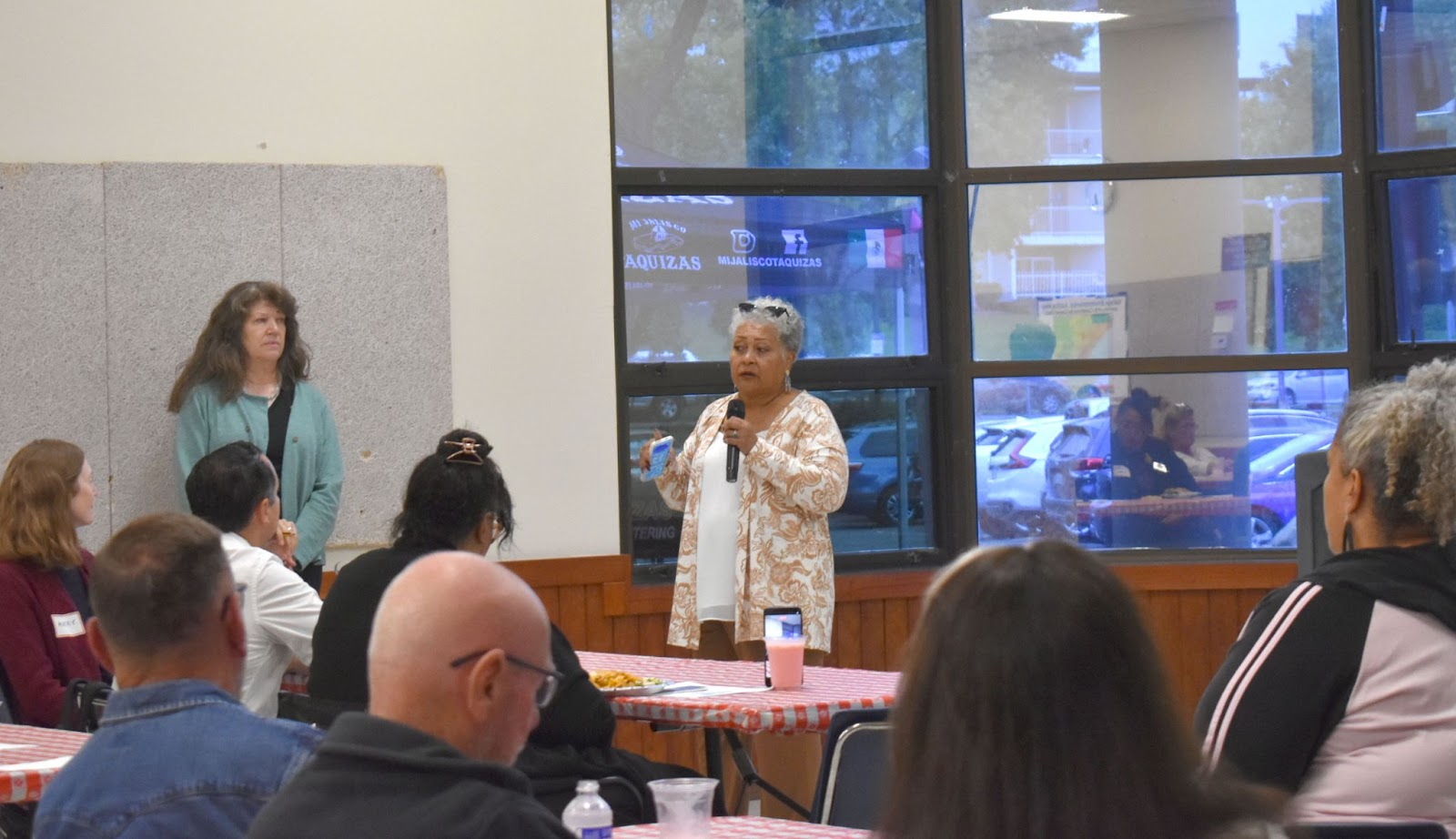
“This is the first time that we've had a policy that we're going to put in place for environmental justice,” said Liat Meitzenheimer, the president of Fresh Air Vallejo. “We want the city to improve, but we want all of the city to improve, not just certain locations.”
Meitzenheimer pointed out that the meeting was held in South Vallejo, which has inordinately high rates of asthma. According to the data agency the Population Reference Bureau, Solano County has the highest rate of childhood asthma in the state. And South Vallejo had nearly triple the rate of asthma emergency room visits compared to the state average in 2023, per the California Department of Public Health.
“You can't be in school and learn if you can't breathe,” Meitzenheimer said. “So it's important for us to identify the areas of the city and look ahead into the future and plan so we can mitigate some of these problems and make the quality of life better for all citizens.”
Louis Michael, the project coordinator for Fresh Air Vallejo and a public health student at Touro University, said these issues hit home for him because his wife grew up in South Vallejo and she has asthma, and now he has two kids here.
“Real people are being impacted by these issues,” Michael said. “It really is something I care about a lot because I want to create a community and a city that is addressing these issues so that in the future, my kids, and their kids, and my great grandkids, don't have to worry about going outside because the air that they're breathing is polluted.”
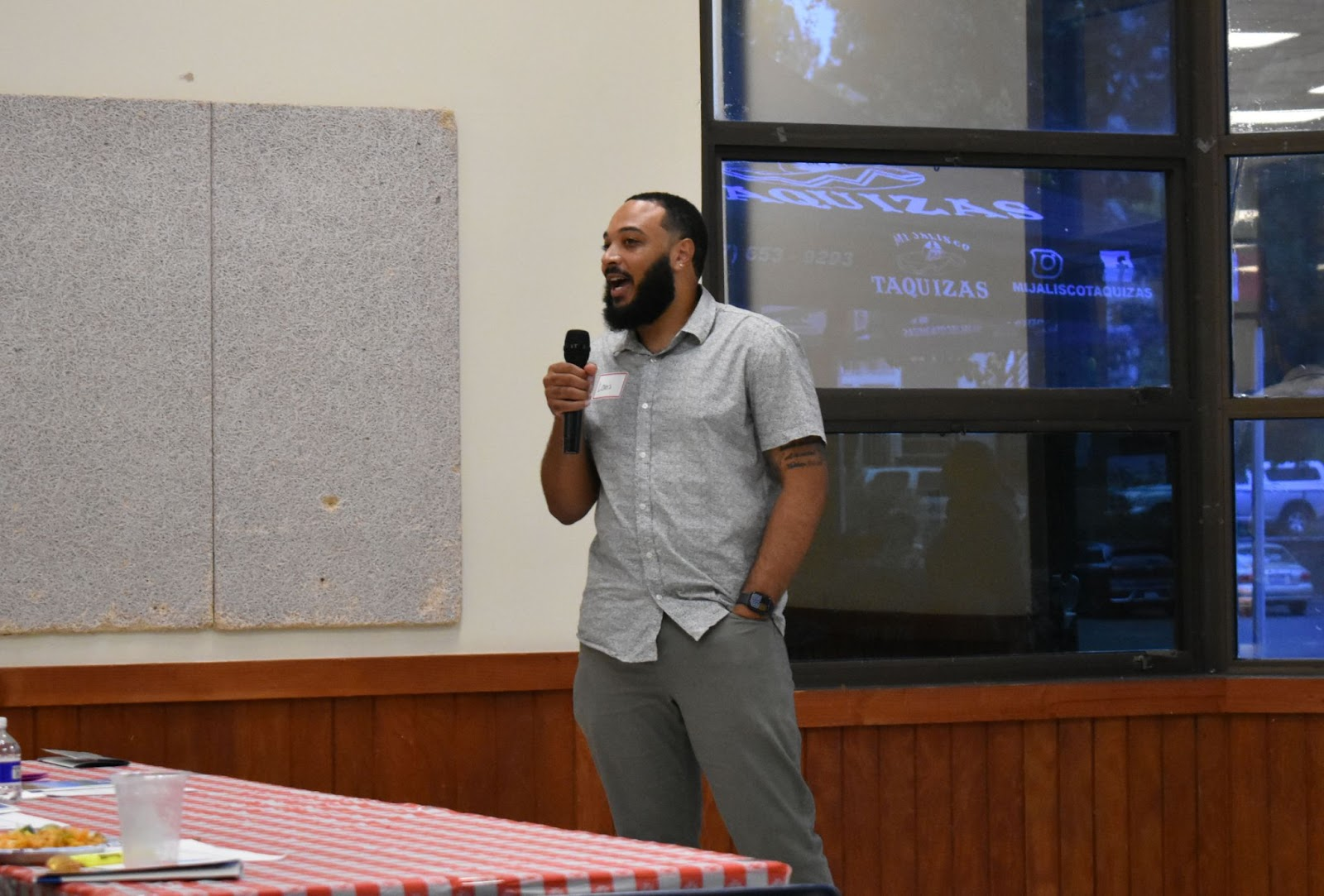
The event was attended by Councilmember Helen-Marie “Cookie” Gordon, as well as city long-range planning manager Hector Rojas. There were also several local organizations in attendance that have partnered with Fresh Air Vallejo to engage and inform the community.
One of those organizations was Diaz & Loera Centro Latino, founded by former City Councilmember Mina Diaz. As a longtime activist, Diaz was immediately interested in the initiative, and said it’s important to include the voices of immigrant and Latino communities, as well as youth. To that end, she advocated for having two Spanish translators at the event for the main presentation; the slides also had both English and Spanish text.
“The people need to be informed [about environmental justice] to be able to make good decisions,” Diaz said. “We need to have this information out in different languages because if a child gets sick, it doesn't discriminate by what race they are.”
Ken Szutu, the founder of the Vallejo Citizen Air Monitoring Network, was there to showcase one of their outdoor sensors, which measures how much particulate matter is in the air, like dust and smoke. Szutu said there are more than 25 sensors positioned around Vallejo, and they connect to the PurpleAir app, which residents can then use to check air quality.
There was also the NAACP Vallejo chapter in attendance. Patricia Hunter, the president of the Vallejo branch, explained that their organization will also be hosting meetings in partnership with this initiative.
Hunter said it’s important to have “trusted messengers” within the community to share information about issues like environmental justice. She said it’s especially important to educate the youth about these issues.
“That’s what we’re here to do, educate and advocate,” Hunter said.
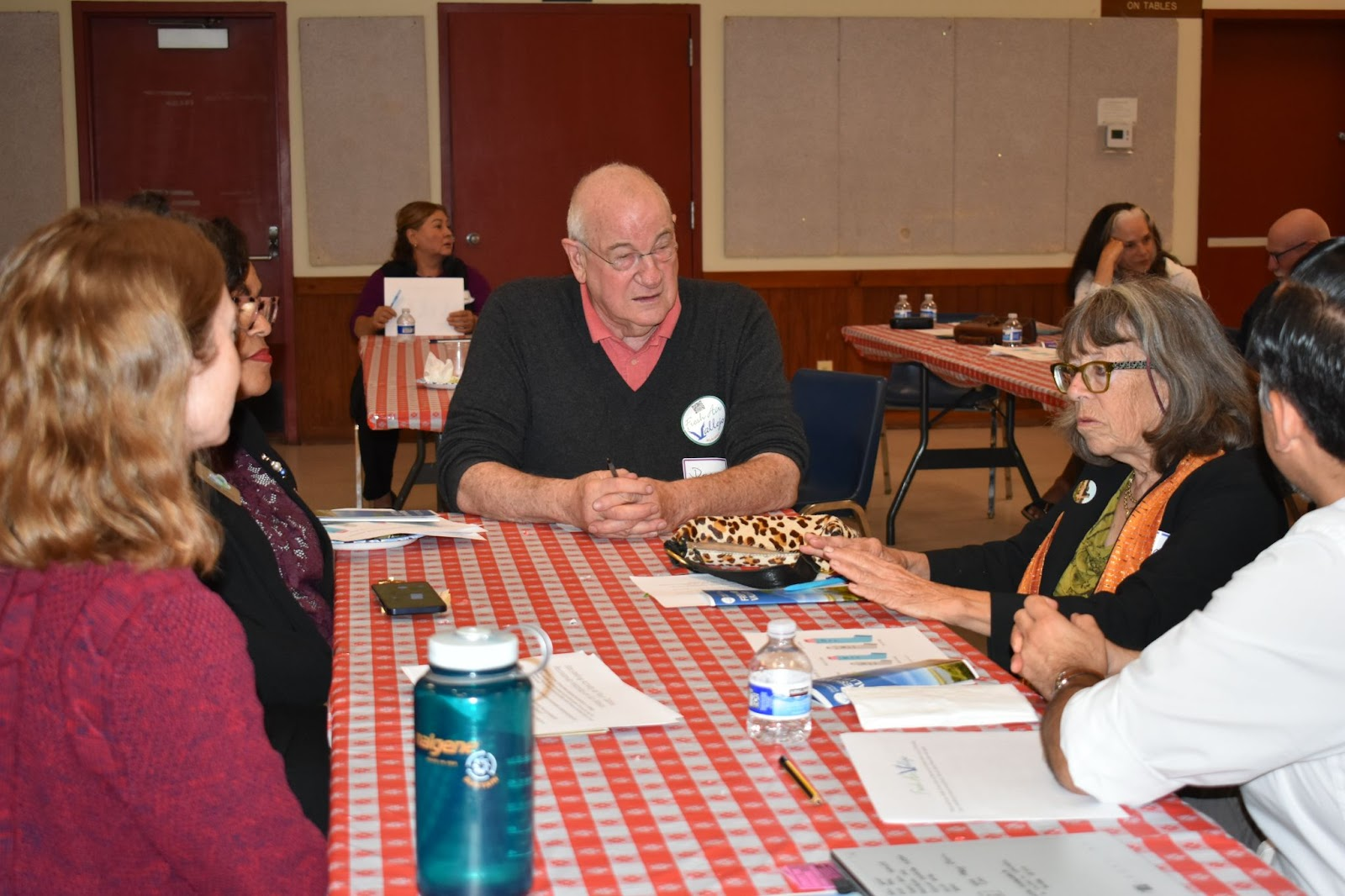
That ethos was echoed by the Center for Urban Excellence, which empowers systems-impacted youth through art, wellness, and workforce development programs. Their organization is not only involved with getting youth engaged in conversations around environmental justice, but also in helping them see the possibility for a greener future.
“We know that green energy jobs, and jobs that focus on sustainability, are the future of not only Solano County and Vallejo, but really the nation,” said Reina Robinson, the CEO of the Center for Urban Excellence. “So we have shifted a lot of our career pathways and our focus is on helping people find those kinds of forward thinking careers.”
Robinson added that the “EJ4Vallejo” project resonates because she grew up with asthma as well. She said there were many times that she fell asleep as a kid and woke up in the hospital because her mom said she couldn’t breathe. “That happened more times than I could count,” she said.
She said that many of the families they serve often feel “voiceless” when it comes to issues as simple as asking their landlords to change out the air filters in the apartment so that they can breathe better.
“The messed up part of it is that as people of color, as poor people, we often know we’re going to get the worst of it because we don't have that political power,” Robinson said.
The “EJ4Vallejo” project is hoping to change that. “For the community to be healthy, we have to have both clear information and clear policy that really reflects the community experience and the community voice,” Allio said. “That's the basics.”
Before you go...
It’s expensive to produce the kind of high-quality journalism we do at the Vallejo Sun. And we rely on reader support so we can keep publishing.
If you enjoy our regular beat reporting, in-depth investigations, and deep-dive podcast episodes, chip in so we can keep doing this work and bringing you the journalism you rely on.
Click here to become a sustaining member of our newsroom.
THE VALLEJO SUN NEWSLETTER
Investigative reporting, regular updates, events and more