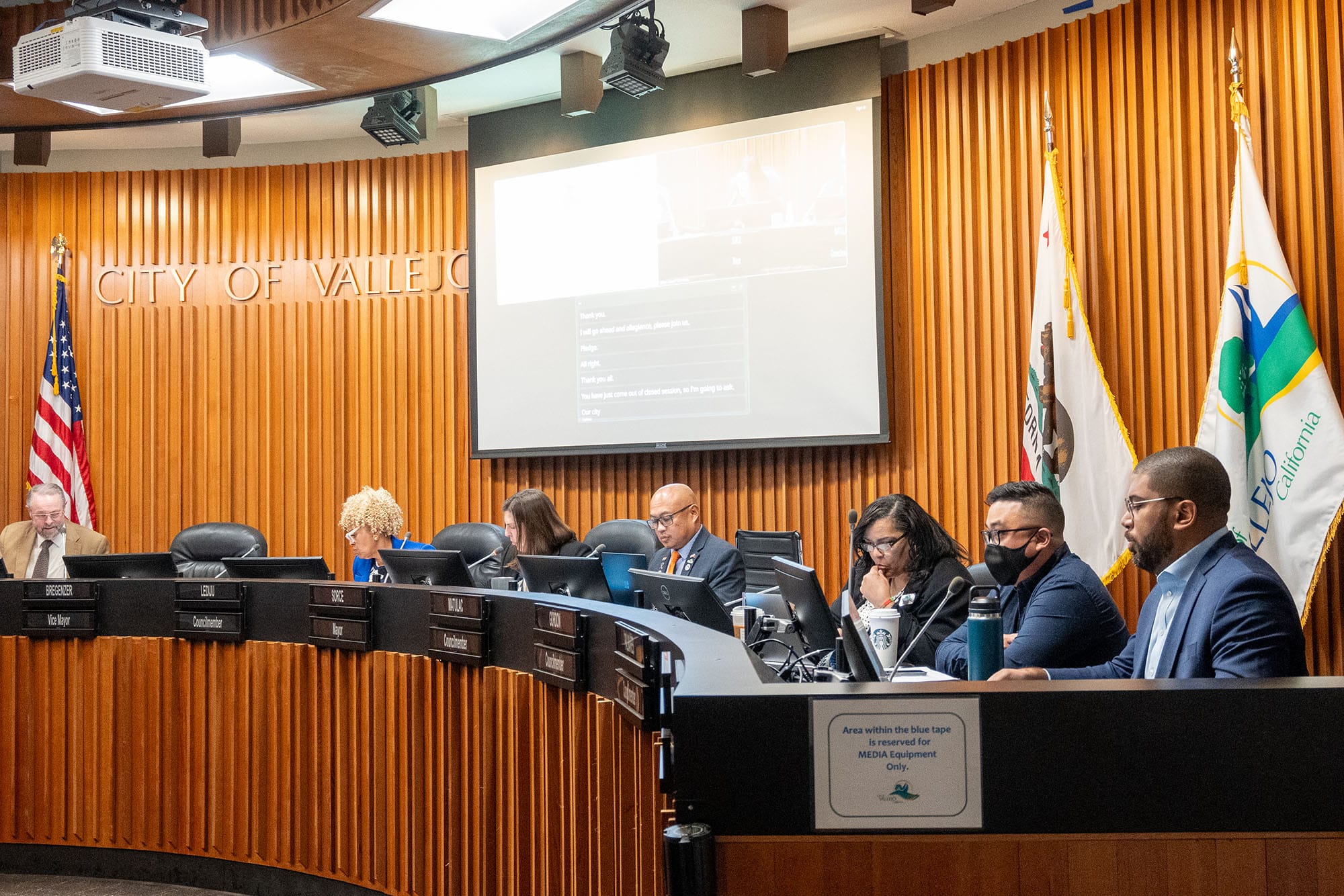
VALLEJO – Vallejo city leaders are considering adjusting or adding new fees for services from several heavily impacted city departments.
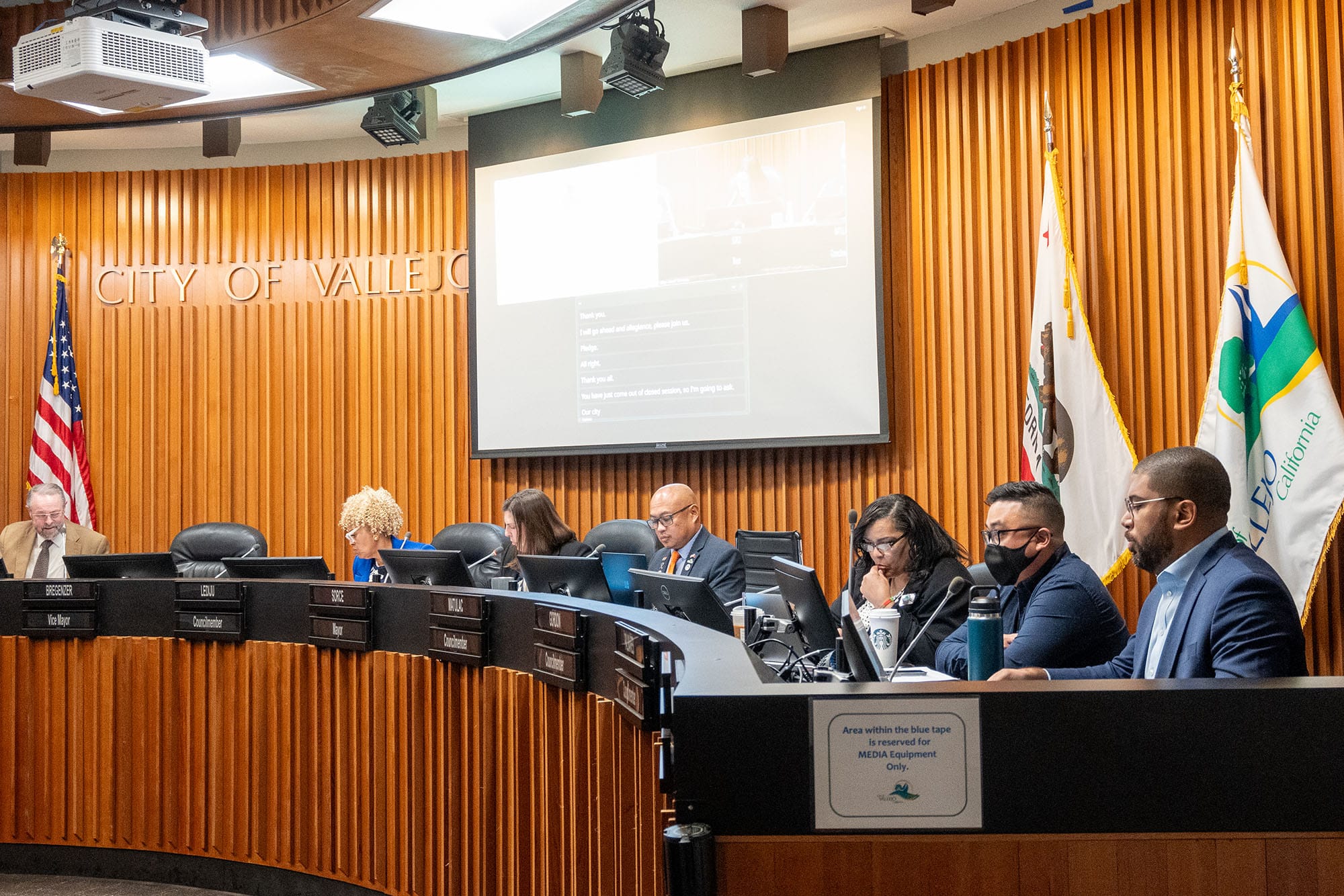
The Vallejo City Council held a public hearing last week to decide whether to amend the master fee schedule and revise fees charged for services performed by the fire, water and planning and development departments.
The city had hired consulting firm MGT to conduct a fee study amid mounting economic uncertainty. The firm found that at current rates, Vallejo recovers only 60% of its overall costs in these departments. To start to make more money from different services, the firm recommended fee changes or additions to bring the city to 100% cost recovery for fire and water, 62% for planning and 80% for building, recovering an estimated $1.4 million.
Its recommendation was to adjust numerous existing fees, increasing in some areas and cutting fees in others in order to move Vallejo closer to the median rates charged in similar cities, MGT said.
However, the council was concerned about how the study was designed and whether the city’s economic development would benefit from raising fees in various areas. The council voted unanimously to consider other options at a future meeting.
Under MGT’s approach, the fire department would recover about $450,000, the building department would recover about $760,000, planning would recover around $139,000 and water would recover around $45,000.
MGT recommended the adjustment of many existing fees, such a 21% increase for a parcel map amendment from $2,339 to $2,827, and a temporary use permit fee increase from $867 to $1,133. It also recommended some new fees, such as a permit fee of $347 for street vendors and $4,243 for minor design reviews in the building division.
Planned development fees have the largest percentage increase among the departments at approximately 450%, MGT said, to hopefully generate approximately $139,000 in new annual revenue.
However, MGT recommended different changes in the other departments, changing the water department’s structure only by moving four of five “reduced pressure installation” fees from a flat rate to an actual cost fee. The water department would also add 20 new fees to its fee schedules, such as $492 for adding water to an accessory dwelling unit. The fire department would also add numerous new fees, such as for services in amusement buildings at $634 or exhibits and trade shows at $445.
City Manager Andrew Murray told the council that fee changes, or creating new fees, are needed as staff in these departments are reliant on fee revenue to perform the services required. Staff are by necessity either paid using fees or by pulling from the general fund, he said.
“These fees are intended to pay for the staff time to perform these services,” Murray said. However, he noted that the study didn’t include a “social values” review to consider how fee changes could impact people, or how they could be used to incentivise desired economic behaviors. He asked the council to consider which fee changes could discourage economic development in the future.
At issue for some councilmembers were long lists of new charges MGT recommended adding to the fee schedule, such as for permits for water heater replacements. Mayor Andrea Sorce said that even with development in mind, equity and safety among fee payers in different situations must be considered.
“Your water heater could break, and you have to replace it,” Sorce said. “And if you do not have $600 to replace it, you don’t have hot water. When folks don’t have a choice and we jack the price up, that could be really problematic.”
Councilmember Alexander Matias said he didn’t think the study touched on real-world applications, and said he wanted to see the city’s Economic Development Strategic Plan followed, to lower fees and reduce entitlements and processing timelines on permitting.
“I’m not hearing enough about economic development and that needs to be a real important part,” Matias said. “I want to see a study around lower fees targeting specific industry ... so we can attract business to our community.”
Sorce said she thinks some developers would pay more for quicker responses to move projects along, and that Vallejo may not be competitive because it doesn’t have the staff to address demands and fees are necessary to address that strain. She said it would be good to consider all trade-offs, such as by surveying contractors and developers about the current process and how they would feel about increasing costs to expedite services.
Resident Anne Carr said during public comment that she was disappointed with the fee study, saying that there is too much of a focus on peer cities which have higher median incomes despite having some lower fees. She emphasized fee schedules which incentivise development, accusing the recommendation of “gouging the public.”
“I think we need to be looking at our fees in terms of what will encourage development, what will encourage motivation,” Carr said. “We need to be looking at, why is it that we are so stagnant economically while the cities around us are doing better in terms of projects? If you want to look at cost efficiency and cost recovery, then go all the way and ask, what would we do if we out-source things?”
Before you go...
It’s expensive to produce the kind of high-quality journalism we do at the Vallejo Sun. And we rely on reader support so we can keep publishing.
If you enjoy our regular beat reporting, in-depth investigations, and deep-dive podcast episodes, chip in so we can keep doing this work and bringing you the journalism you rely on.
Click here to become a sustaining member of our newsroom.
THE VALLEJO SUN NEWSLETTER
Investigative reporting, regular updates, events and more

- government
- Vallejo
- Vallejo City Council
- MGT
- Andrea Sorce
- L. Alexander Matias
- Andrew Murray
- Anne Carr
Natalie Hanson
Natalie is an award-winning Bay Area-based journalist who reports on homelessness, education and criminal justice issues. She has written for Courthouse News, Richmondside, ChicoSol News, and more.
follow me :