VALLEJO – The Vallejo City Council asked city staff for a plan to balance the 2026-27 budget, which faces a projected $20 million deficit.
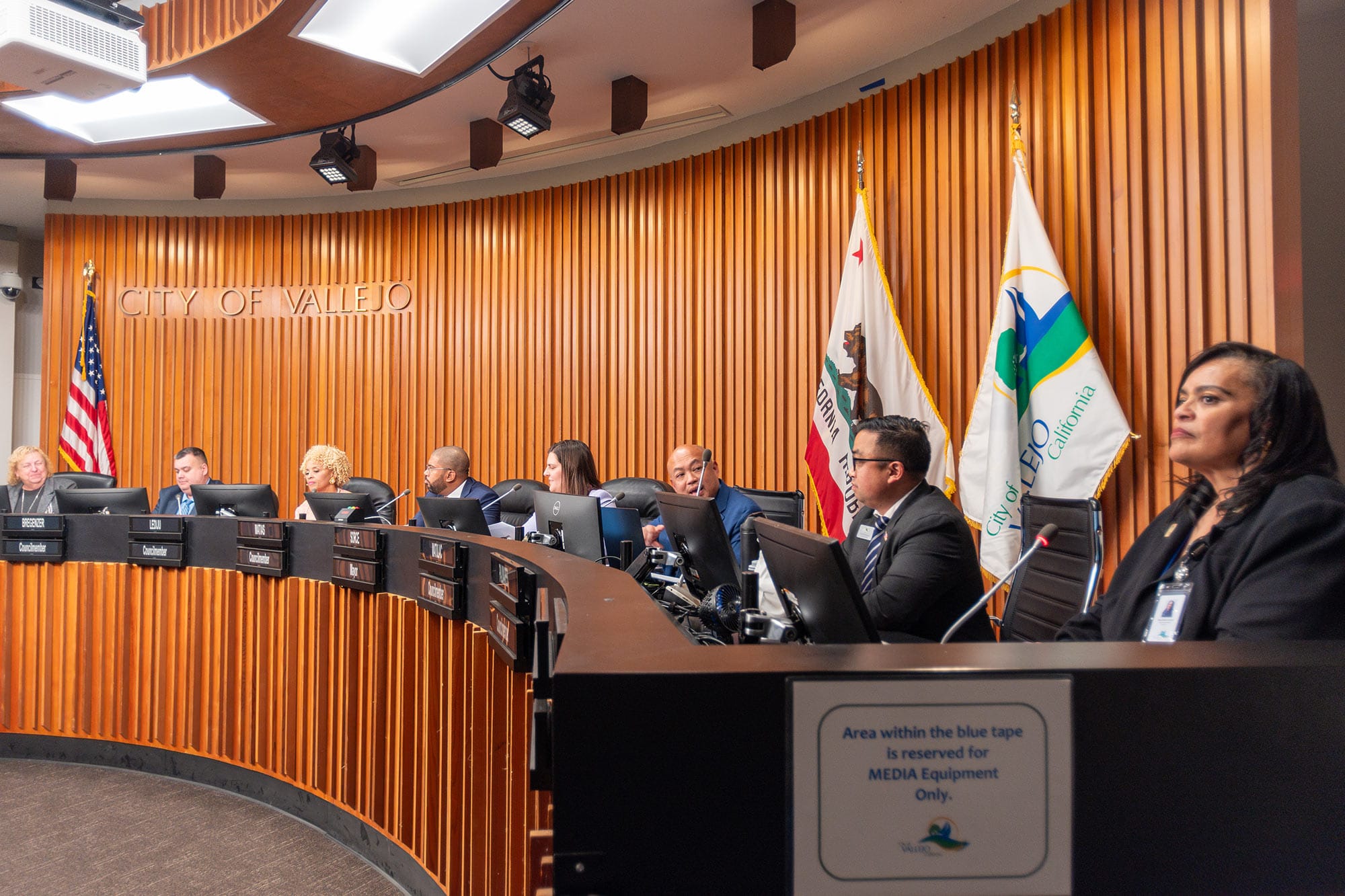
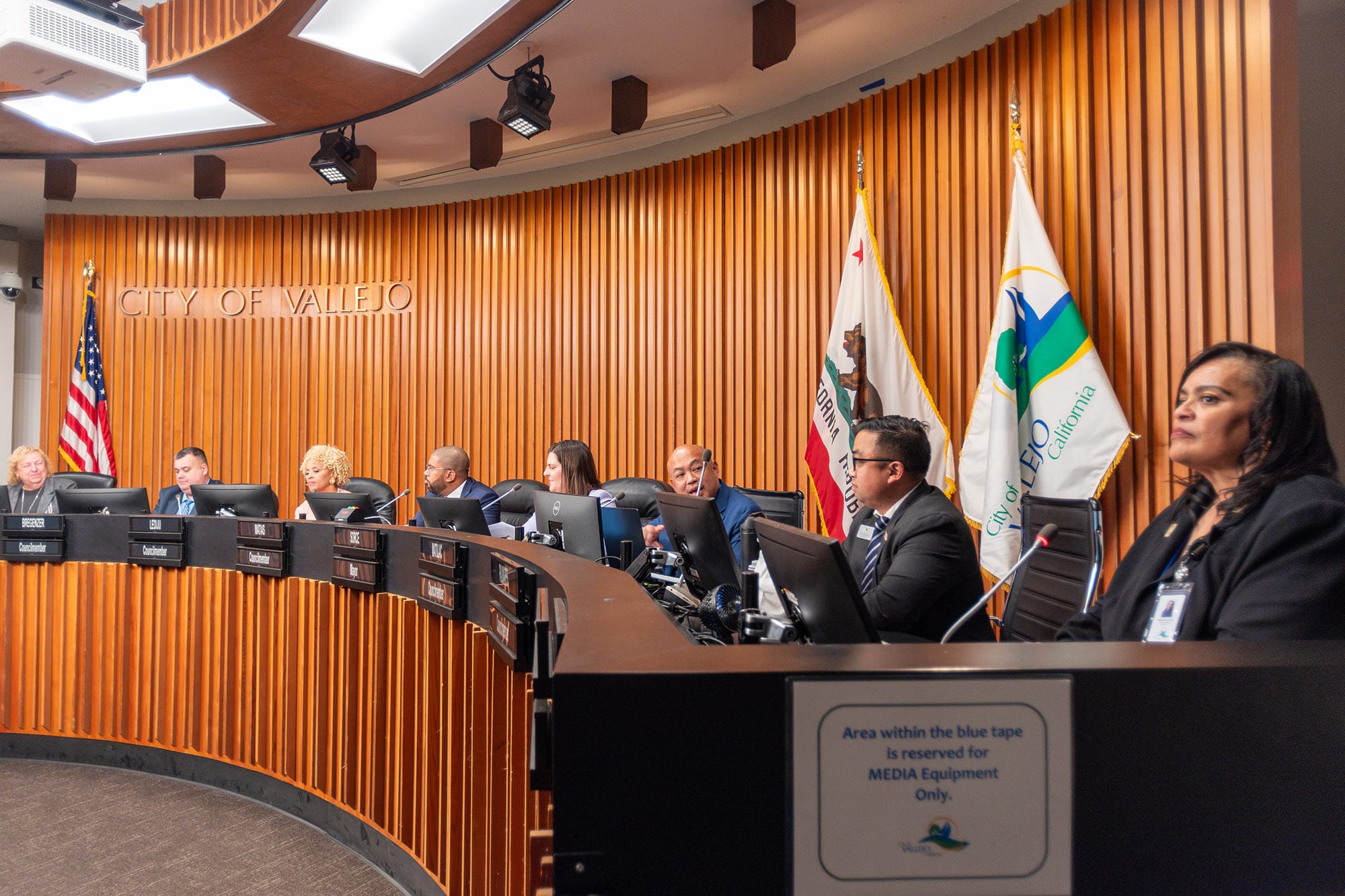
The council voted unanimously during its meeting Tuesday to direct staff to plan for cost reductions to address the structural deficit by March 10.
The vote came during a discussion of mid-year budget adjustments for the 2025-26 budget, which ends in June. City staff will have to show how those requested adjustments will fit into a larger fiscal management plan.
Councilmember Alexander Matias said that the city’s reliance on multiple sales tax measures to address financial struggles has brought the city to this point, adding that staff must make more urgent moves ahead of May to recommend sustainable structural changes.
Matias said the city has consistently for years spread itself too thin on too many costs without a clear plan forward. “When you spread yourself too thin, that means you can’t really focus on getting one thing done really well,” he said.
“I don’t really feel like we’ve prioritized economic development,” Matias added. “We’re not really putting any marketing plans together to attract business.”
The city’s finance department presented a “status quo” forecast for the city budget, which assumes that current service levels remain in place, vacant positions are filled at a normal pace and existing revenue sources will continue, according to acting finance director Nalungo Conley.
Conley projected a shortfall of at least $20 million if the city continues on the current trajectory. The city said in a press release this week that the shortfall is due to several factors, including “years of slower-than-expected revenue growth, rising costs in key areas, and reliance on one-time solutions to balance previous budgets.”
Last spring the city council made more than $1 million in cuts in response to rising costs and stagnant revenue to avoid dipping into reserves and heavily relying on 2022’s Measure P sales tax measure to cover necessities such as road repairs. Vallejo faces the same challenges as many California cities, such as shrinking home sales and property tax revenue.
The city froze several city positions to balance the budget. However, on Tuesday, city staff sought to fill some of those positions to meet basic operational needs in the economic development, finance and human relations departments.
Several councilmembers put City Manager Andrew Murray on the spot for those requests, asking if the positions could be listed in order of priority. Conley said that without a labor officer, that could not be done.
Councilmember Tonia Lediju asked Murray what the real solutions will be to close financial gaps with a solid budget to operate on.
“We need to make some choices about these positions, and as the city manager I would expect you to tell me, what are the service impacts if we don’t do x, y and z?” Lediju said. She said she has asked multiple times for a report on which staff positions are needed to help determine the health of future fiscal years, saying, “That has not ever been done.”
Lediju added that the city has already paid more than $5 million in overtime this fiscal year, over the budgeted amount. Vallejo Police Department staff in patrol and communications use up the most overtime, according to the city.
“We have continuously said we cannot balance our budget on salary savings,” Lediju said. “We have to change how we do our budget.”
Councilmember Diosdado Matulac said the city should have been more proactive to try to fill the positions frozen in June, particularly the economic development manager position. Murray said this could not be done until the mid-year adjustment because the council froze them.
Matulac also pointed out that Measure P funds need to be clearly expressed to the public as not available for staff salaries. The council earlier in the evening unanimously approved spending $11.5 million in Measure P funds, largely for street paving. Construction is anticipated to begin during the summer using these funds.
In public comment, resident Louis Michael said city staff need to show they are working toward making hard tradeoffs with clear communication to the public.
“The staff report noted the projected baseline shortfall of more than $20 million and that’s not small,” Michael said. “When we’re making adjustments tonight I'm trying to understand the trajectory we’re setting. The staff materials note a revenue growth of only 1.3% while expenditures grow significantly. If these are ongoing commitments, then they compound next year’s structural gap.”
Resident Melvin Cohen said the current deficit reflects longstanding issues with long-term economic growth.
“That just reveals a broader structural pattern,” Cohen said. “It’s about whether our revenue structure is calibrated to sustainably support the services and outcomes we expect the city to deliver.”
Conley said that the proposed 2026-27 budget will come to the city council on May 15. Following revisions, a new proposal will return for review June 9.
Before you go...
It’s expensive to produce the kind of high-quality journalism we do at the Vallejo Sun. And we rely on reader support so we can keep publishing.
If you enjoy our regular beat reporting, in-depth investigations, and deep-dive podcast episodes, chip in so we can keep doing this work and bringing you the journalism you rely on.
Click here to become a sustaining member of our newsroom.
THE VALLEJO SUN NEWSLETTER
Investigative reporting, regular updates, events and more

- government
- Vallejo
- Vallejo City Council
- Vallejo City Hall
- Nalungo Conley
- L. Alexander Matias
- Andrew Murray
- Tonia Lediju
- Measure P
- Diosdado “J.R.” Matulac
- Louis Michael
- Melvin Cohen
Natalie Hanson
Natalie is an award-winning Bay Area-based journalist who reports on homelessness, education and criminal justice issues. She has written for Courthouse News, Richmondside, ChicoSol News, and more.
follow me :