
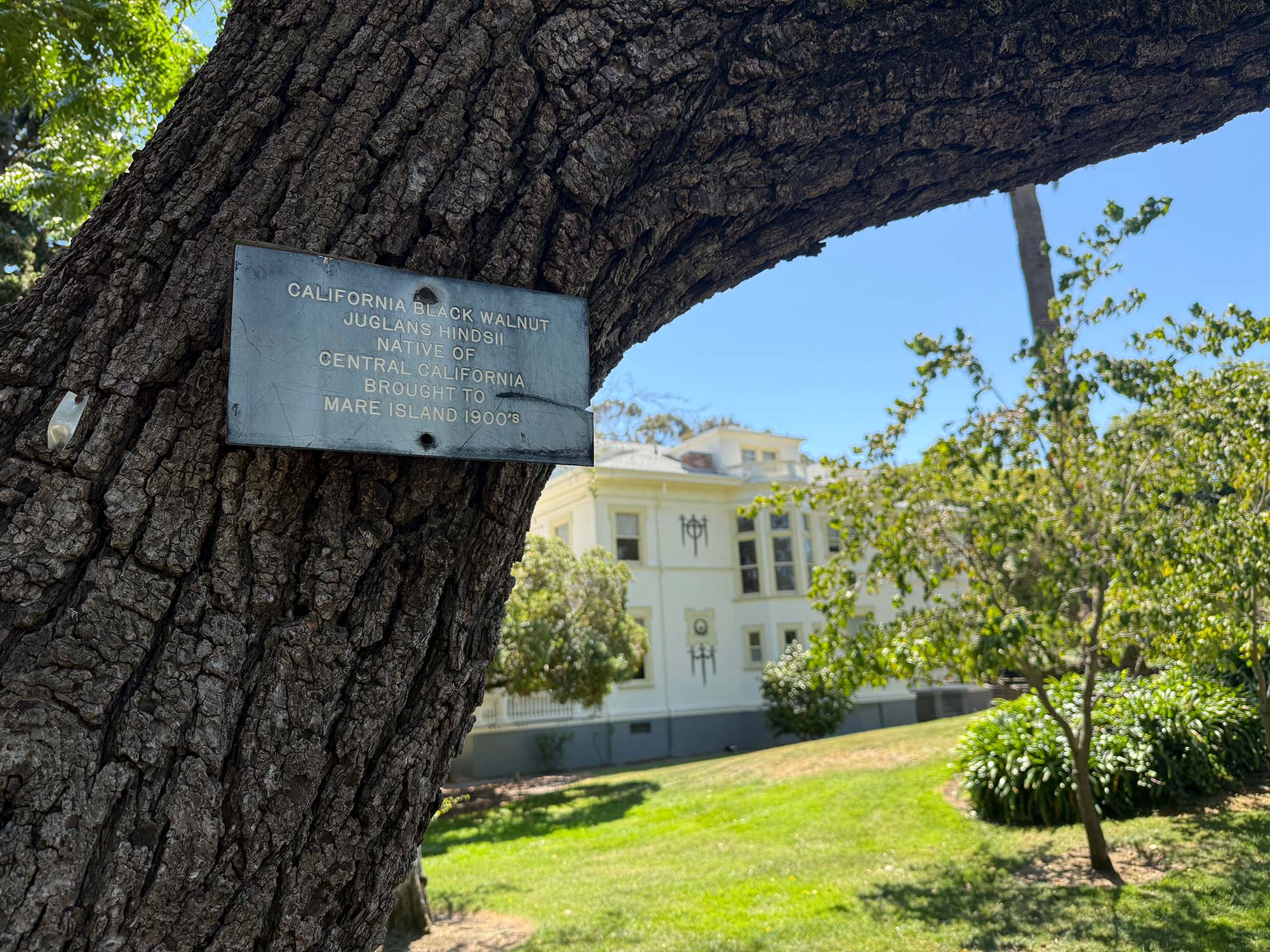
VALLEJO – Mare Island’s story is often told through shipbuilding and the naval base. A growing series of tree tours is adding another lens: the island’s living collection of trees gathered from around the world and planted across Alden Park and the surrounding historic core.
Rebecca Kotch, director of marketing for Mare Island Company, said the tours began two years ago with a simple idea tied to a new neighborhood hub. After the company opened Quarters Coffee House on Walnut Avenue, staff leaned into an island-wide “tree motif” they were seeing everywhere, from historic buildings to the park itself.
They worked with arborist Sarah Gaskin to design a guided walk that starts at the café and proceeds down Walnut to Alden Park. The company also produced a brochure that highlights a selection of notable specimens for self-guided visits, available for free inside the coffee shop.
Alden Park’s trees trace back to the early years of the base. Historical accounts describe Mare Island’s first commander, David G. Farragut, arriving in 1854 to relatively flat, sparsely vegetated land. By the 1860s, Cmdr. James Alden encouraged Navy captains to bring back trees from their overseas voyages, a practice credited with establishing the park's diverse plantings.
Today nearly 200 tree species live across Mare Island, many clustered in and around Alden Park, illustrating the scope of that 19th-century effort.
Gaskin, a registered consulting arborist and vice president at A Plus Tree, helps lead the island walks. On the tour, she points out familiar species alongside unusual ones that spark safety and stewardship conversations. One example is the bunya bunya (Araucaria bidwillii), a conifer native to Australia that produces exceptionally large cones. Mature bunya cones can reach roughly a foot in diameter and weigh around 10–20 pounds, which is why property stewards rope off areas or remove cones during drop season in high-traffic zones.
Another stop highlights southern magnolia (Magnolia grandiflora). Magnolias are roughly 95–100 million years old and they evolved sticky, beetle-mediated pollination long before more modern bees, a detail Gaskin uses to connect botany with history.
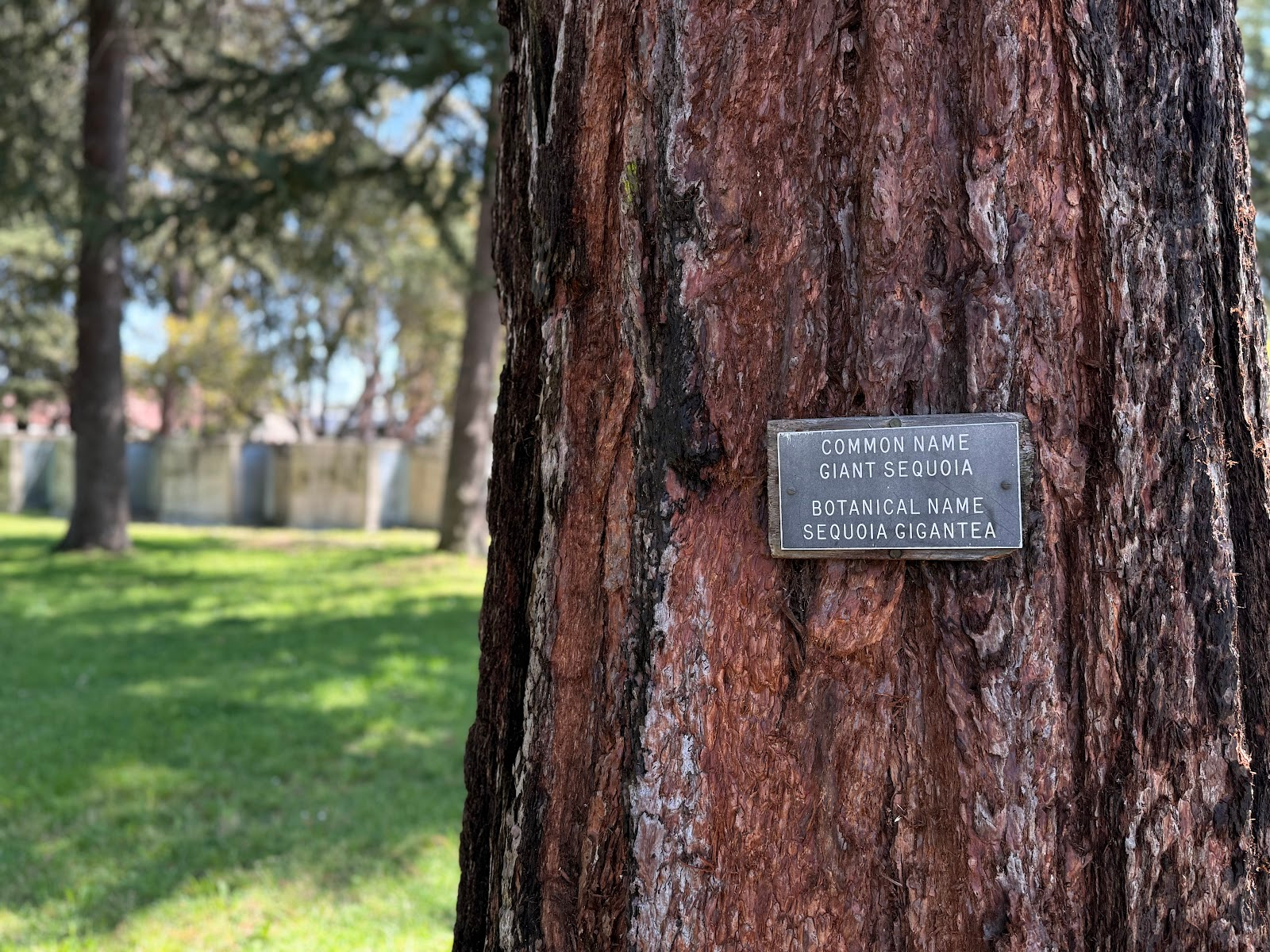
Kotch also points visitors to California natives, including giant sequoia plantings (Sequoiadendron giganteum), the world’s most massive tree by trunk volume. The General Sherman tree in Sequoia National Park is the largest known living single-stem tree by that measure.
Kotch said this year’s programming tested two formats: a standard talk-and-walk for older teens and adults, and a hands-on version where families collected leaves and small fallen materials to assemble art back at the café. Attendance patterns, she said, suggest that the creative workshop approach appeals to adults as much as children, which may guide future scheduling.
Gaskin said Alden Park’s layout, historic ordnance displays set amid shady paths and mature canopy, makes it an accessible site for urban-forestry education. She focuses her commentary on how to “read” trees in everyday life: how different species grow, where hazards show up, and why regular maintenance matters on public and private property.
She added that Alden Park’s Bunya specimens stand across from the island’s former administration building and that, on Mare Island Company property, staff contract arborists to address cone drops when needed. The City of Vallejo maintains Alden Park itself, she noted.
For residents interested in self-guided options, the Mare Island Historic Park Foundation runs “Open Mare Island” days that begin at Quarters Coffee House. Docents are stationed at historic sites and maps are provided; Mare Island Co. collaborates on those events.
Kotch said the company is also updating its free “Mare Island Navigator” app to expand listings across four categories: History, Nature, Food & Drink, and Art, and to add interpretive points on historic ships along the waterfront. The app is designed to help visitors connect an afternoon walk in Alden Park with other nearby sites and amenities.
For many locals, the draw is as simple as a walk close to home. Gaskin said she routinely meets Vallejo residents who use the park’s pathways to walk dogs or bring visiting family, and that the tours often prompt people to notice street trees and parks differently when they return to their own neighborhoods.
- Guided tours: Mare Island Co. has offered tree tours in spring. Kotch said the company is exploring a spring-and-fall cadence in 2026. For dates, she directs people to the Mare Island Co. newsletter sign-up on the company website.
- Self-guided: Pick up the Trees of Mare Island brochure at Quarters Coffee House, 1015 Walnut Ave., and walk Alden Park at your own pace, or attend an Open Mare Island self-guided day hosted by the Mare Island Historic Park Foundation.
Before you go...
It’s expensive to produce the kind of high-quality journalism we do at the Vallejo Sun. And we rely on reader support so we can keep publishing.
If you enjoy our regular beat reporting, in-depth investigations, and deep-dive podcast episodes, chip in so we can keep doing this work and bringing you the journalism you rely on.
Click here to become a sustaining member of our newsroom.
THE VALLEJO SUN NEWSLETTER
Investigative reporting, regular updates, events and more