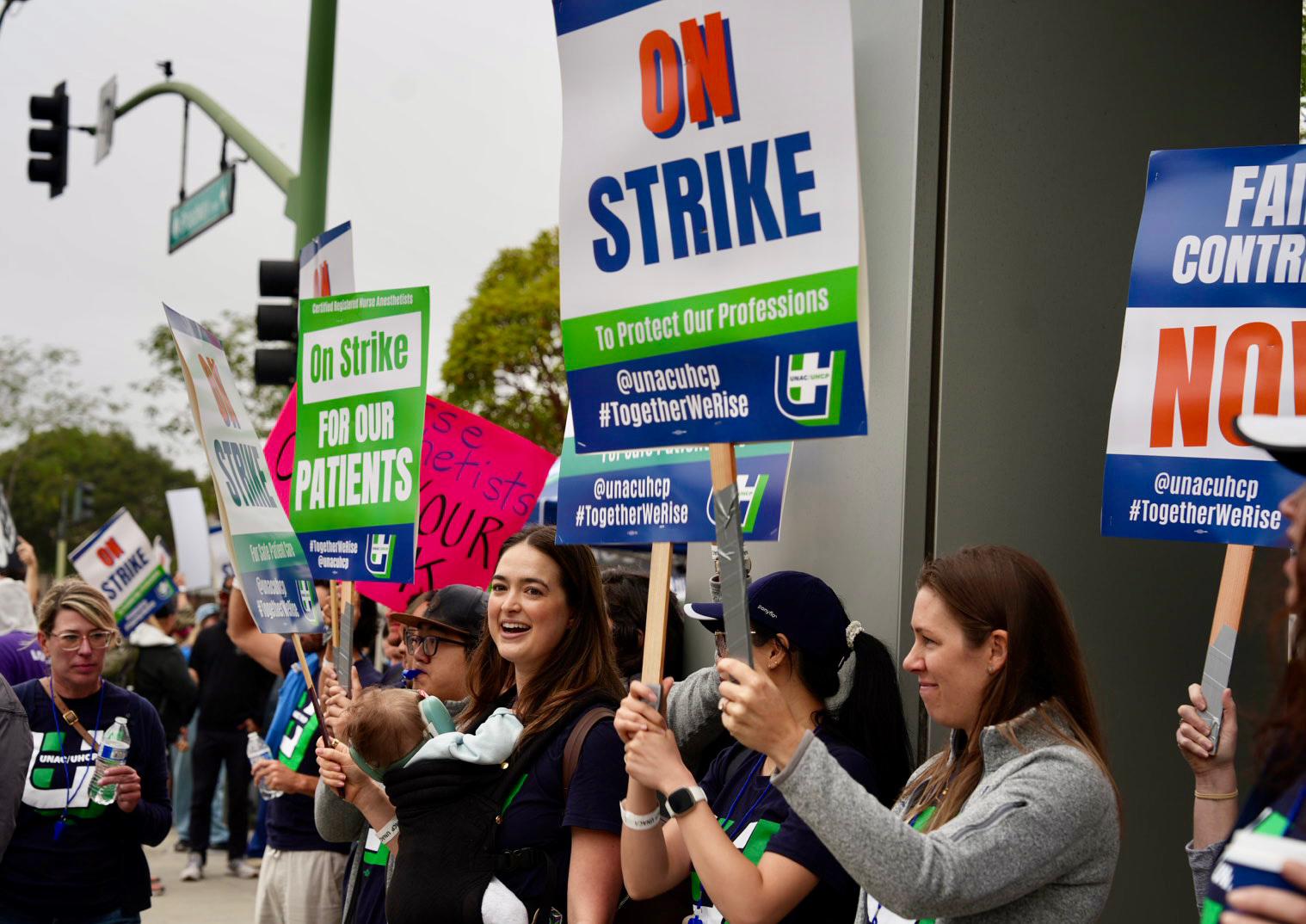
VALLEJO – Certified nurse midwives at Kaiser Permanente facilities in Northern California, now in their 18th month of negotiating their first union contract, staged two strikes this year and say they’re pushing for fair pay, benefits, and schedules that are flexible around the needs of the patients.
The midwives organized last year as a new unit under the Alliance of Health Care Unions, a coalition of labor organizations led by the United Nurses Associations of California/Union of Health Care Professionals. The union has been around since the 1970s, and it represents a variety of healthcare specialists like physical therapists, physician assistants, and speech language pathologists. Despite Kaiser employing midwives for decades, they previously had not organized in Northern California.
But the midwives say Kaiser continues to undervalue them. They allege that management has proposed cuts to their retirement plans, moving them from salaried to hourly workers, and paying them less than what they’re currently making. They say management also suggested rigid schedules, which would be difficult to follow given that there’s usually only one midwife on the floor at a time.
“If someone is on leave or sick, for the most part, we backfill ourselves. We have to sometimes trade shifts around in order to make sure that we're covering the service,” explained Hannah Bronsky Peña, a certified nurse midwife at both the Vallejo and Vacaville Kaiser facilities. “We don't have an army of midwives waiting to just get called into work.”

Bronsky Peña said it's the midwives who make their own decisions on when it’s safest to take breaks, depending on how their patients are doing. But the latest proposals would take away that professional autonomy and require a consistent schedule, which could potentially worsen care.
For example, if there’s only one midwife on the floor and the physician is tied up doing something like a C-section, “They haven’t been able to tell us how we can safely take our breaks while the patients are looked after,” said Bronsky Peña.
The bargaining committee called the management’s proposals disrespectful, and in response the midwives, along with nurse anesthetists, held a one-day strike on Sept. 8. They then joined the union's 31,000 members in California for a five-day strike in October, after the national Alliance contract expired at the end of September.
“We believe that what we’re asking for is reasonable,” said Bronsky Peña. “What we're asking for will help create a healthy, sustainable, strong midwifery workforce for Kaiser and for the patients.”
In an emailed statement, Kaiser Permanente said that for the past few months it’s been negotiating with the Alliance for a new national agreement that would cover nearly 61,000 employees, while also carrying on local negotiations with the 157 certified registered nurse midwives in Northern California who are not yet covered under the national agreement.
“The real issue is wages—the Alliance is demanding significantly higher increases than the 21.5% across-the-board wage increases over a 4-year contract we are offering. Furthermore, there are no wage reductions in our proposal,” Kaiser stated.
“Contract negotiations are highly complex and sensitive work,” Kaiser added. “We continue our commitment to working through all bargaining interests in the most productive forum possible – at the bargaining table. We remain focused on reaching an agreement, if possible, that supports our employees’ well-being and allows us to continue providing high-quality health care that is affordable.”
Midwifery is an ancient practice

In a modern day hospital setting, a certified nurse midwife is someone who has a registered nurse license and is highly trained to care for a patient during pregnancy and labor. This is different from an obstetrician, who is a doctor, or a doula, who is a non-medical professional who provides emotional support.
The act of midwifery — providing care during pregnancy and childbirth — has been around for as long as humans have been giving birth. According to a review in the Journal of Research in Nursing and Midwifery, midwifery is the oldest holistic profession in the world and has long been at the center of community-based healthcare.
In the prehistoric era, women learned how to care for each other during pregnancy and childbirth by watching other mammals. In ancient Egypt and Rome, midwifery became a respected female vocation and study; they came up with technologies to help with labor, like using herbs and a birthing stool. They also provided support for low-income women giving birth.
In the Middle Ages, the rise of Christian patriarchy meant that female midwives endured mistreatment, were often labeled witches, and had their ability to work restricted by the church. But midwifery persisted, and it was common in many countries up until the 1800s.
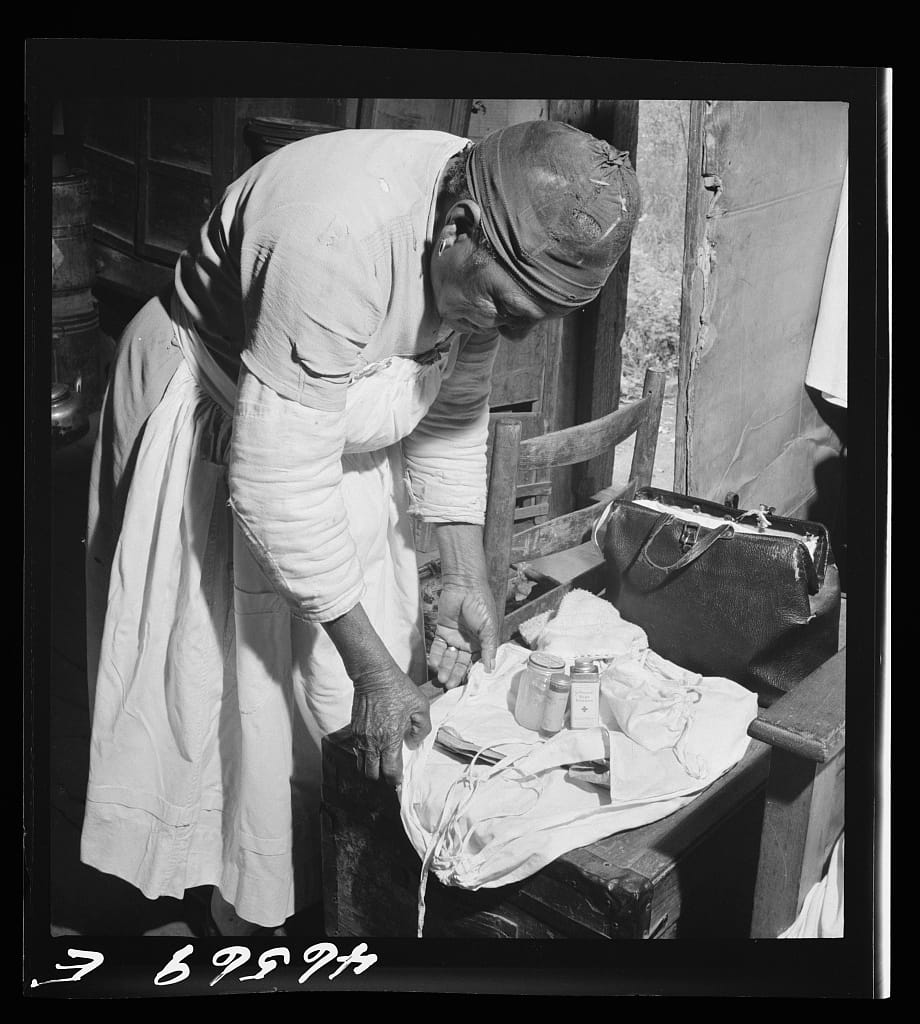
In the 19th century in America there was a coordinated shift towards favoring male doctors and using surgical interventions for childbirth. Seeing the profession as profitable, many doctors sidelined the midwives, often discrediting their knowledge. They introduced using tools like sedatives and forceps to speed up labor, which often damaged the woman’s organs and caused agony. They set up obstetrics — the study of childbirth — schools for men, and some academics even suggested that midwifery be abolished.
While midwifery continued in rural and low-income communities, their numbers saw a steep decline as male physicians took over the profession. It wasn’t until second-wave feminism in the 1960s that midwifery programs made a comeback, as more women demanded better care that centered their emotions, experiences, and needs.
Despite pushback from male obstetricians, Kaiser hired its first certified nurse midwife in 1971 at the Portland, Oregon, facility. Another midwife was hired shortly after. The Board of Medical Examiners blocked them, insisting on physician-only deliveries, but the midwives persisted. By 1980, the Orange County-Anaheim Kaiser had a pilot program for bringing midwives into the practice; this was adopted by the facilities in Northern California in 1990.
Today, midwives and obstetricians at Kaiser work together to provide pregnancy care and help a patient safely deliver a baby. While an obstetrician specializes in surgery and high-risk births — like if the patient is having twins — a midwife can provide support for low-risk, vaginal births.
“The collaborative care model really works, because you have physicians who are the experts in surgical intervention and complications in pregnancy,” said Bronsky Peña. Meanwhile, she said midwives are the “experts in normal” — as in, they’re rooted in the thousands of years of experience of how women have traditionally given birth. “We have a very watchful eye for things that could go wrong.”
Bronsky Peña said that simply having a midwife on the floor improves the culture of maternity care because they’re attuned to a woman’s concerns and needs.
Over 97% of the midwives in California are women, and over half of them work in low-income areas serving patients of color, according to a 2024 California Health Care Foundation study. There are about 331 of them operating in the Bay Area.
Studies show that having a midwife in the hospital improves health outcomes, including lower mortality for the mothers and newborns, fewer low-weight births, and a lower chance of needing a medical intervention like a C-section.
“We’re really at the bedwide working with the patient and helping them cope with labor,” said Bronsky Peña. She said midwives hop between patients, listening to their worries, checking medications, and encouraging them to move into different positions and walk around. “Consistently the feedback we hear is that people really feel heard and taken care of, like somebody was really there with them during the birthing process.”
With the ongoing contract negotiations, the midwives are still fighting to ensure that Kaiser executives understand their value.
“I am in this profession because I love the work, and I think that that's true for a lot of my midwifery colleagues,” Bronsky Peña said. “We really care about the patients, their outcomes, and about maternity care in general. So the things that we are negotiating and asking for is really because we want a really strong and sustainable workforce that's going to be there for a long time to care for the patients.”
Before you go...
It’s expensive to produce the kind of high-quality journalism we do at the Vallejo Sun. And we rely on reader support so we can keep publishing.
If you enjoy our regular beat reporting, in-depth investigations, and deep-dive podcast episodes, chip in so we can keep doing this work and bringing you the journalism you rely on.
Click here to become a sustaining member of our newsroom.
THE VALLEJO SUN NEWSLETTER
Investigative reporting, regular updates, events and more