VALLEJO — People released from jail or prison often find that it’s extremely difficult to get a job. Having well paying and stable employment is a critical factor in reducing recidivism, yet is exactly what’s often out of reach to those returning home from incarceration.
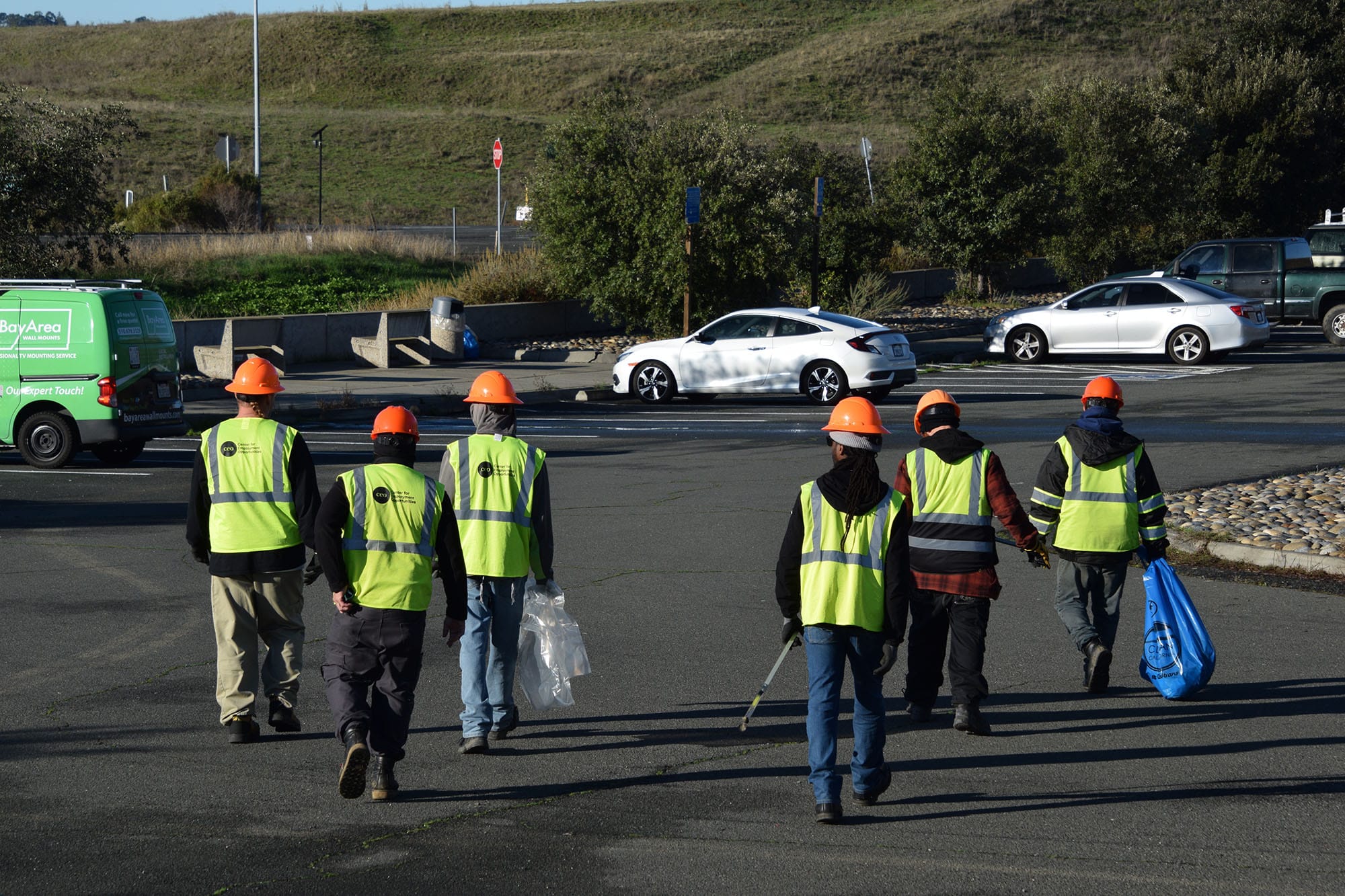
For the last six years, the Center for Employment Opportunities, has been working to provide those opportunities to justice-impacted Solano residents. The nonprofit offers daily pay doing freeway clean-up to provide temporary employment while their participants build up their resumes and find higher-paying jobs.
“You ever been on a treadmill? You just run in place,” said Dylan Conley, 29, a site supervisor on one of the clean up crews. Finding employment with a record, “it’s almost the same thing, with no end result,” he said. “The only thing that you get is just pain in the end.”
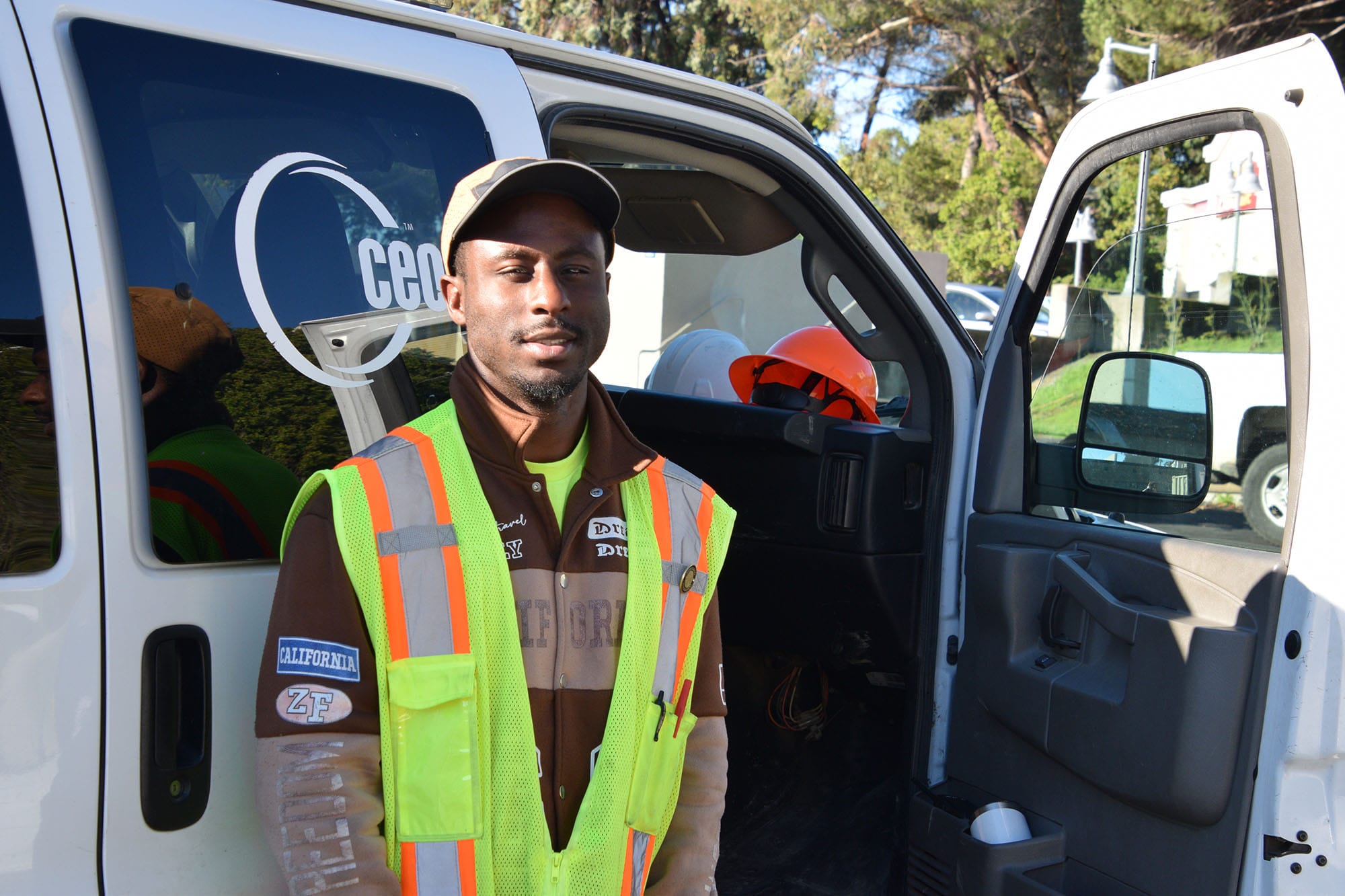
“Even if they give you that chance, and you’ve been going through all this hell, by that time, you might go backwards,” said Conley. "That may be, go back to committing crime, go back to drug use, to whatever it was.”
The California Department of Corrections and Rehabilitation’s latest report found recidivism rates for people released in 2019-2020 to be 39%.
A study by the Council on Criminal Justice credits being employed of reducing recidivism up to 61%. CEO was founded in the 1970s to help build that bridge and now operates in 30 cities across twelve states. It established its Solano office in 2019.
CEO Solano site director Veronica Tatuani said that in an already scarce job market, justice-impacted people “have it the hardest finding employment, definitely finding housing, everything like that. Your background is constantly coming up.”
While CEO’s mission is to place participants in long-term gainful employment, the immediate income their work provides may have the greatest direct impact to participants. Tatuani said that the two most common things participants save up for is stable housing and a car.
“It's expensive to live here, plain and simple,” said Tatuani. “Participants here, they need this money immediately so that they can pay for the food that they're going to eat later tonight, to support their families. So it's very important that they do get that daily pay.”
Donning bright orange vests, metal claws and big bags, picking up trash on the side of the freeway, the work CEO offers its participants is not a dream job. But those doing it are grateful just to have a job.
On a good day a worker might find a $20 bill by the side of the road. “Finders keepers” said Richard Matthews, 57, who had been working on a highway clean up crew for over a month and often wonders how people lose their money while driving. Most of the time he’s just trying to not get hit by a car as they fly past. Matthews is using the money he’s making to save up for a car himself.
“It's hard to find work in Solano County, period, and especially if you don't have a car,” said Matthews. “Me, looking for a job in Vallejo, it's almost impossible.” Matthews recently was hired by UPS but was then let go once his background check came back.
“I tried to get a new job. Guess my past stopped that, so I’m back at CEO,” he said.
Four days a week CEO participants work on the clean up crews while one day is reserved for professional development like interview practice, resume building and job training.
CEO has had close to 150 participants this year. Of last year’s participants, 70% of them who found jobs still have their jobs, according to CEO. “To us, that's a huge success,” Tatuani said.
Fred Green Jr., 35, has been with CEO for over a month. The program recently helped him get his drivers license. He said he’d love to become a professional truck driver operating big-rigs.
He called the program “a breath of fresh air,” after getting laid off from several jobs once his background checks came back, ending up unemployed for a long stretch of time.
In January 2018, California passed The Fair Chance Act, also known as the Ban the Box law, which prevents employers from asking about previous conviction history in job applications. Regardless, employers and landlords still often conduct background checks. Many jobs remain inaccessible to those with previous convictions.
“It sucks when you’ve changed, when you’re in the process of changing, and you just don’t get that opportunity to prove that,” said Green.
“I am really grateful for CEO, because they’ve given me the opportunity to not just show an employer, but show myself that I’m capable of doing this,” said Green.
CEO helps participants find jobs with “second chance employers” who accept applicants with previous convictions. For most jobs though, “as soon as you say you’ve been in jail, it's over,” said Conley.
While it is possible to clear a record of a certain crime, doing so requires an attorney, which requires money, which requires a job, “which is already not trying to hire you,” said Conley.
He describes the sense of stigma around having been incarcerated as feeling like “you don’t deserve to have any type of like, get back into life, into society.”
For Conley, even though he makes more money than the clean up crew workers he’s in charge of, he too talks of struggling economically, paying over $2,200 a month for an apartment in Fairfield.
“You see the money, but it's not really yours. You know what I'm saying?” said Conley. “It's just after bills, just the cost of living, you don't really have enough money to do anything. You have enough money to literally just survive.”
Conley is grateful for his job and gives it credit for allowing him to stabilize his life. “From like 18 to 28 I've been homeless, couch surfing, jumping house to house, trying to figure it out. Living in my car. Just never had nothing fully stable,” said Conley. “There's always been homeless, homeless, homeless.”
“Like, I think the American dream of work, work, work, buy a house, buy a car, support your family is just dead. It's 100% dead,” he said.
Before you go...
It’s expensive to produce the kind of high-quality journalism we do at the Vallejo Sun. And we rely on reader support so we can keep publishing.
If you enjoy our regular beat reporting, in-depth investigations, and deep-dive podcast episodes, chip in so we can keep doing this work and bringing you the journalism you rely on.
Click here to become a sustaining member of our newsroom.
THE VALLEJO SUN NEWSLETTER
Investigative reporting, regular updates, events and more